Illegal Immigrant Payoff Prohibition Act This bill prohibits the payment of a settlement to an alien for a civil action brought against the United States in connection with the alien's inadmissibility to, or unlawful presence in, the United States.
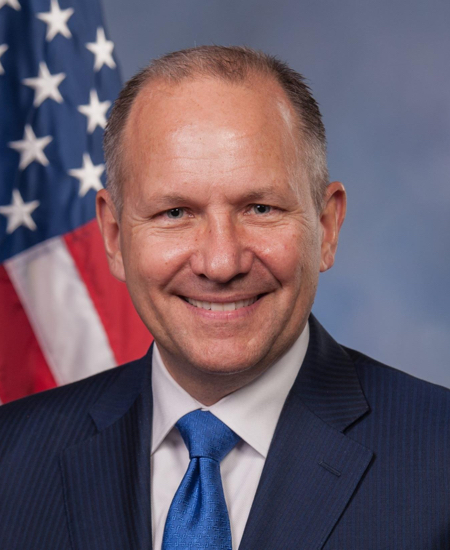
Rep. Lloyd Smucker
Sponsored bills
CARA 3.0 Act of 2021 This bill addresses substance use disorders by expanding access to treatment and recovery services, providing for housing protections, and requiring other activities. Specifically, the bill reauthorizes, establishes, and expands support for treatment and recovery services. This includes increasing access to treatment in the criminal justice system and other settings and for particular populations, such as pregnant and postpartum individuals and youth and young adults. Additionally, the bill expands Medicare and Medicaid coverage for treatment, including by expanding telehealth access to medication to treat substance use disorders. The bill also temporarily requires that non-opioid pain treatment options be reimbursed separately, instead of on a packaged basis, under Medicare. As a condition of receiving certain federal funding, states must mandate the use of prescription drug monitoring programs (PDMPs) by prescribers and dispensers and impose additional PDMP requirements. Moreover, prescribers of potentially addictive drugs must complete continuing education requirements. The bill also revises the registration process for providers who prescribe certain medications to treat substance use disorders, including by eliminating the provider's patient limit for such medications. In addition, the Substance Abuse and Mental Health Services Administration must carry out activities to promote access to high-quality recovery housing. The bill also sets out protections for individuals with substance use disorders who live in, or apply to live in, federally assisted housing. Furthermore, the bill requires other activities to address substance use, such as support for workforce education and training; public awareness campaigns and similar outreach; and research on prevention strategies, insurance coverage, and treatment modalities.

Workforce for an Expanding Economy Act This bill establishes a new nonimmigrant visa for temporary nonagricultural workers (H-2C visa) to fill jobs that have remained open for a certain amount of time and are located in an area where the unemployment rate is 4.9% or less. This visa shall only be available for certain occupations, and those requiring a bachelor's degree or higher level of education shall not be eligible. The bill imposes various requirements related to H-2C positions, such as requiring that the employer make certain efforts to recruit a U.S. worker beforehand. The employer must register the opening before filling it with an H-2C worker, and the Department of Homeland Security (DHS) shall maintain a publicly available registry of registered positions. For the first fiscal year after the bill's enactment, no more than 65,000 positions may be registered. For subsequent fiscal years, the number shall be increased or decreased depending on how many positions were registered the previous year and how quickly the allotment was filled. A certain number of allocations shall be reserved for small businesses. An employer seeking to hire H-2C workers shall register with DHS and provide documentation establishing that the employer meets various qualifications. An employer may become ineligible for registration for certain actions, such as having been penalized for a pattern of willful violation of wage and hour laws. H-2C workers shall not be entitled to certain federal public benefits. The Bureau of the Census shall report to Congress on the impact of the H-2C program.
H-2B Returning Worker Exception Act of 2021 This bill modifies the H-2B (temporary nonagricultural workers) nonimmigrant visa program, including by exempting certain workers from an annual numerical limit on such visas and requiring civil penalties for program violations. Under this bill, if a worker seeking a H-2B visa has been counted toward the 66,000 annual cap on such visas in one of the three preceding fiscal years, that worker shall not be counted against the cap again. Furthermore, the Department of Homeland Security (DHS) must impose a civil monetary penalty on an employer for (1) failing to meet requirements related to an H-2B visa petition, or (2) making a willful misrepresentation of material fact in such a petition. DHS must also ensure the establishment of an electronic platform (1) for employers to submit and request approval of an H-2B petition, and (2) to act as a single point of access for applicants and the relevant government agencies. The Department of Labor must maintain a publicly available online database of all job orders by H-2B employers. Furthermore, Labor may take certain actions to enforce program requirements, such as imposing penalties and seeking injunctions. The bill provides statutory authority for the current practice of limiting the program to workers who are nationals of countries approved by DHS. DHS may make exceptions to this limitation in individual cases if it is in the U.S. interest to do so. DHS shall select approved countries based on various factors, such as the rate of overstay by H-2B visa holders from each country.
Mahsa Amini Human rights and Security Accountability Act or the MAHSA Act This bill requires the President to impose property- and visa-blocking sanctions on certain persons (individuals and entities) affiliated with Iran. The President must make determinations about whether certain existing sanctions apply to specified persons and impose the applicable sanctions, including determinations concerning (1) the Supreme Leader of Iran and any official in the Office of the Supreme Leader of Iran, (2) the President of Iran and any official in the Office of the President of Iran, and (3) any entity overseen by the Office of the Supreme Leader of Iran which is complicit in supporting human rights abuses or terrorism.
This bill generally requires fiduciaries of employer-sponsored retirement plans to make investment decisions based only on pecuniary factors (i.e., factors that a fiduciary prudently determines are expected to have a material effect on the risk and return of an investment based on appropriate investment horizons consistent with the plan's policies and objectives). The bill allows nonpecuniary factors to be considered when selecting investment options for certain participant-directed retirement plans if specified requirements are met (e.g., the investment option is not a default investment). Further, if a plan includes investment options based on nonpecuniary factors, it also must include investment options that are not based on any such factors.
This bill prohibits the use of additional funds appropriated to the Internal Revenue Service under the Inflation Reduction Act of 2022 for audits of taxpayers with taxable incomes below $400,000.
This bill designates the facility of the United States Postal Service located at 3900 Crown Road Southwest in Atlanta, Georgia, as the John R. Lewis Post Office Building.
Family and Small Business Taxpayer Protection Act This bill rescinds unobligated amounts appropriated to the Internal Revenue Service by the Inflation Reduction Act of 2022 for its enforcement and other activities.
Maddy summaryThis bill designates the Department of Veterans Affairs clinic in Mishawaka, Indiana, as the "Jackie Walorski VA Clinic" to honor former U.S. Representative Jackie Walorski, who served on the House Committee on Veterans' Affairs and advocated for veterans. The law requires all federal references - including laws, documents, and maps - to use the new name for the clinic, effective upon enactment. It does not change the clinic’s services, funding, or operations, as it is a purely commemorative naming resolution.