

Maddy summaryThis bill requires U.S. government agencies to develop strategies to combat "transnational repression" - actions by foreign governments or their agents to intimidate, coerce, or harm diaspora and exile communities outside their home countries. It mandates the State Department to create an interagency strategy, amend annual country reports to include information on transnational repression tactics, and provide training for diplomatic and law enforcement personnel. The bill also establishes sanctions against foreign governments or individuals responsible for transnational repression, including blocking property and denying visas. These provisions directly affect diaspora communities facing foreign government harassment and U.S. agencies tasked with protecting them.
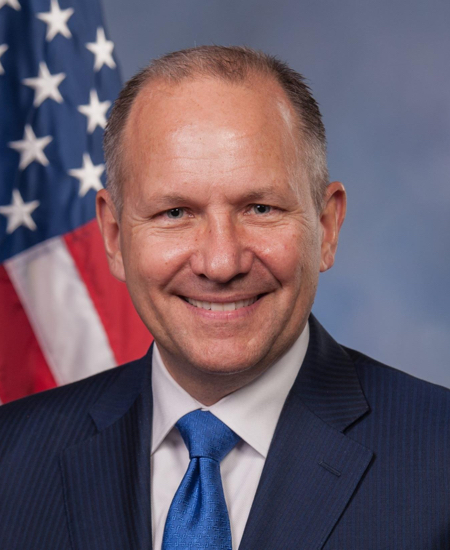
Rep. Lloyd Smucker
Sponsored bills
Access to Safe Contraception Act of 2023 This bill prohibits states from banning any form of contraception that is approved by the Food and Drug Administration. The bill does not preempt state laws that protect the right of any entity to opt out of providing contraception due to the entity's religious or moral beliefs.
Maddy summaryThis bill requires that AM radio receivers be included as standard equipment in all new motor vehicles (such as cars and trucks) sold in the United States, with a rule to be issued by the Department of Transportation within one year. The rule must ensure AM radio is easily accessible on the dashboard and allows manufacturers to use digital AM radio technology instead of traditional AM. During the one-year period between the bill's enactment and the rule's effective date, manufacturers must clearly label vehicles without AM radio. The bill also directs a study to evaluate whether an alternative system could deliver emergency alerts as reliably as AM radio across the country, especially during crises.
Maddy summaryThe Responsible Borrowing Act of 2023 allows colleges to set lower annual or lifetime borrowing limits for students in specific programs if debt levels appear excessive relative to graduate earnings. Institutions may use data from the Bureau of Labor Statistics (average regional starting salaries) or the College Scorecard (median earnings for program graduates) to determine these limits, or adjust based on enrollment status, credential type, or program year. Students whose loans are capped can request an increase, but institutions retain discretion. This applies only to new students starting after June 2024 and prohibits limits based on protected characteristics like race or gender.
Processing Revival and Intrastate Meat Exemption Act or the PRIME Act This bill exempts from federal inspection requirements animals and meats that are slaughtered and prepared at custom animal slaughter facilities for distribution within the state. Under current law, a custom slaughter exemption applies if the meat is slaughtered exclusively for personal, household, guest, or employee uses. Specifically, the bill expands the federal inspection exemption to include the slaughter of animals or the preparation of carcasses, meat, and meat food products that are slaughtered and prepared at a custom slaughter facility in accordance with the laws of the state where the facility is located; and prepared exclusively for distribution to household consumers in the state or restaurants, hotels, boarding houses, grocery stores, or other establishments in the state that either prepare meals served directly to consumers or offer meat and food products for sale directly to consumers in the state. The bill does not preempt any state law concerning (1) the slaughter of animals or the preparation of carcasses, meat, and meat food products at a custom slaughter facility; or (2) the sale of meat or meat food products.
Maddy summaryThe PAST Act of 2023 amends the Horse Protection Act to ban specific devices used to cause pain (soring) in horses at shows, particularly affecting Tennessee Walking Horses, Racking Horses, and Spotted Saddle Horses. It defines prohibited "action devices" (like boots or chains causing friction) and requires licensed, conflict-free inspectors at events to enforce rules. The bill increases penalties for violations to up to $5,000 fines or 3 years in jail, and mandates longer disqualifications for repeat offenses (180 days → 1 year → 3 years). Horse show organizers, exhibitors, and participants must comply with these new inspection and penalty requirements.
Maddy summaryHR 3238, the Affordable Housing Credit Improvement Act of 2023, updates the Low-Income Housing Tax Credit (LIHTC) program to increase the availability of affordable housing across the United States. The bill makes several key changes including increasing state funding formulas, modifying tenant eligibility rules to better serve vulnerable populations (such as domestic violence victims and students), and expanding credit eligibility for projects in rural and Native American communities. Specific provisions raise the credit for properties serving extremely low-income households, clarify rules around tenant income increases, and require housing providers to protect victims of domestic violence. The bill also updates terminology from "low-income" to "affordable" throughout the tax code and enhances program transparency through data sharing requirements. These changes aim to make the LIHTC program more effective at creating and preserving affordable housing units for low-income households nationwide.
Maddy summaryThe Beagle Brigade Act of 2023 establishes a National Detector Dog Training Center to train dogs and handlers for detecting foreign pests and diseases threatening U.S. agriculture and natural resources. The Center will collaborate with agencies like U.S. Customs and Border Protection and state agriculture departments to safeguard farms and ecosystems. It requires annual funding for operations and mandates a congressional report within one year detailing pest threats, Center effectiveness, and recommendations for improving detection capabilities. The law directly affects agricultural protection efforts by enhancing canine-based prevention of invasive species.
Maddy summaryThe Protecting Taxpayers and Victims of Unemployment Fraud Act allows states to retain 25% of funds recovered from fraudulent unemployment claims (for pandemic-related benefits) to improve fraud prevention systems. States can use these retained funds to modernize unemployment systems, hire fraud investigators, reimburse administrative costs, or conduct other fraud prevention activities. The bill requires states to use specific data matching systems like the National Directory of New Hires to detect fraud more effectively. It modifies federal rules to ensure states can use recovered funds without violating deposit requirements. This legislation aims to reduce unemployment fraud while protecting taxpayers and victims of fraud.
Medicaid Primary Care Improvement Act This bill specifies that state Medicaid programs are authorized to provide primary care services through direct primary care arrangements (i.e., arrangements in which primary care providers receive a fixed periodic fee for their services). The Centers for Medicare & Medicaid Services must report on the extent to which state Medicaid programs contract with independent providers.