

Maddy summaryHR 6315, the VA Billing Accountability Act, requires the Department of Veterans Affairs (VA) to notify veterans of required copayments within 180 days for VA-provided care or 18 months for non-VA care. If the VA fails to meet these deadlines due to its own error, veterans may qualify for a waiver of the payment or a payment plan. The bill directly affects veterans who received care but were delayed in being notified about payment obligations. It also mandates the VA to review and improve its billing procedures within 180 days of enactment.
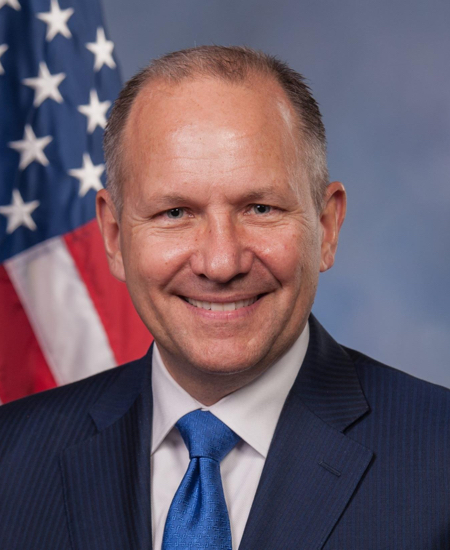
Rep. Lloyd Smucker
Sponsored bills
Maddy summaryThe Workforce Reentry Act (HR 6472) creates federal grants to help people recently released from prison or jail (within 2 years) find stable jobs. It provides funding for eligible organizations - like nonprofits, local governments, employers, or schools - to offer job training, mentoring, job placement, and work-based learning programs. Grantees must use evidence-based practices, track outcomes like employment and earnings, and cannot use funds for direct substance abuse or housing services (though they can coordinate with providers offering these). The bill requires grantees to contribute matching funds (25% for first grants, 50% for renewals) and limits administrative costs to 5% of grant funds.
Maddy summaryHJRES 103 is a congressional resolution seeking to block a Department of Labor rule updating the Davis-Bacon Act regulations. It specifically targets the rule published in the Federal Register on August 23, 2023 (88 Fed. Reg. 57526), which would have modified requirements for paying prevailing wages on federal construction projects. The resolution invokes Chapter 8 of Title 5, U.S. Code, to formally disapprove the rule, stating it "shall have no force or effect" if passed. This procedural measure directly affects federal contractors and the Department of Labor, aiming to prevent the implementation of the updated wage regulations.
Maddy summaryThis bill would authorize the U.S. government to confiscate Russian sovereign assets held in U.S. jurisdiction and use those funds to support Ukraine's reconstruction and humanitarian needs following Russia's invasion. It prohibits releasing these blocked assets until Russia fully compensates Ukraine or agrees to an international compensation mechanism. The bill establishes a "Ukraine Support Fund" to hold confiscated assets and requires regular congressional reporting on how these funds are allocated for Ukraine's recovery. It also includes provisions for international coordination with allies on sanctions and asset management related to Russia's invasion of Ukraine.
Maddy summaryThe SHIP Act imposes sanctions on foreign entities that knowingly handle Iranian petroleum, targeting those involved in port operations, transportation, refining, or ship-to-ship transfers of Iranian oil. Starting 90 days after enactment, the President must block assets, deny visas, and impose penalties on individuals or companies engaging in these activities, including family members or owners of sanctioned entities. It requires annual reports tracking Iran's oil exports, revenues, and key players like shipping companies and ports. The sanctions terminate if the President certifies Iran has stopped supporting terrorism and dismantled weapons programs.
Maddy summaryThe ADOPT Act of 2023 makes it a federal crime for unlicensed individuals or organizations to provide adoption intermediary services, place adoption advertisements, or offer payments exceeding $500 to parents placing children for adoption. It directly affects prospective adoptive parents, placing parents, and unlicensed adoption facilitators by prohibiting these activities while exempting licensed agencies and attorneys. Key provisions criminalize unlicensed brokering, restrict certain advertising, and limit payments to placing parents, with penalties including fines up to $100,000 or 5 years in prison per violation. The law aims to prevent exploitation and commodification of children in domestic adoptions by requiring services through licensed providers.
Maddy summaryThis bill prohibits federal funding for Planned Parenthood Federation of America and its affiliates, clinics, or related entities. It directs that funds previously allocated to Planned Parenthood must instead support other providers - including community health centers, hospitals, and clinics - that offer women’s health services like contraception, cancer screenings, and prenatal care. The bill explicitly states it does not reduce overall federal funding for women’s health care or affect existing abortion-related funding restrictions in appropriations laws. It ensures continued access to these services through alternative providers, particularly in underserved communities.
Maddy summaryHR 6089, the Energy Choice Act, prevents state and local governments from banning or restricting the connection of energy services based on the type of energy used. It prohibits regulations that block connections for natural gas, renewable gas, hydrogen, electricity, or other specified fuels like renewable diesel or petroleum products. The bill directly affects energy providers and end-users by ensuring local rules cannot prevent them from using or connecting to different energy sources. This creates a uniform standard for energy service connections across jurisdictions, without mandating specific energy types.
Maddy summaryHRES 798 is a House resolution condemning support for Hamas, Hezbollah, and other terrorist organizations at colleges and universities. It states such support may create a hostile environment for Jewish students, faculty, and staff, citing incidents like blaming Israel for the October 7 Hamas attack. The resolution urges the Secretary of Education to direct the Office for Civil Rights to investigate and take action where appropriate. This non-binding resolution expresses the House's position but does not create new law or policy changes.
Maddy summaryThis bill excludes veterans' disability and dependency payments from income calculations for HUD housing assistance programs. It directly affects veterans and their families receiving disability compensation under Title 38, U.S. Code, by ensuring these benefits don't reduce their eligibility or housing assistance amounts. Specifically, it prevents HUD from counting these payments when determining eligibility, benefit amounts, or rent calculations for assisted housing. The policy change applies solely to HUD-administered housing programs, not other federal benefits.