

Maddy summaryHR 6853, the SOS Act, requires the Congressional Budget Office to include a new graph in annual reports about Social Security trust funds. The graph must compare projected payments under a 1985 law (section 257(b)(1)) with actual outlays from current law. This procedural bill affects how Congress reports on Social Security funding, adding transparency about payment assumptions versus current spending. It does not change eligibility or benefit amounts for seniors or disability recipients.
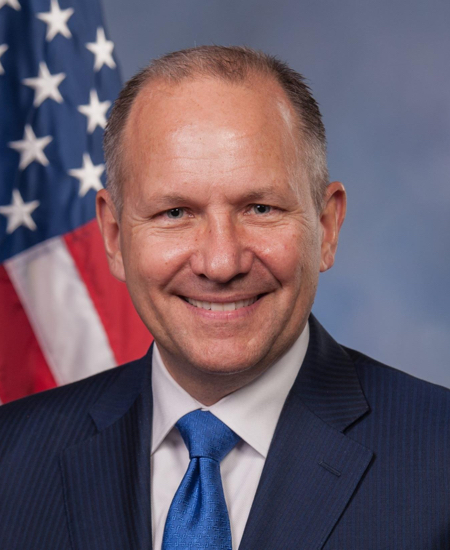
Rep. Lloyd Smucker
Sponsored bills
Maddy summaryHR 1147, the Whole Milk for Healthy Kids Act of 2023, allows schools participating in the National School Lunch Program to offer whole milk as an option during lunch. It amends the school lunch law to explicitly permit schools to serve flavored and unflavored whole milk alongside reduced-fat, low-fat, and fat-free milk choices for students. The bill also requires the Secretary of Agriculture to adjust meal regulations to account for saturated fat from whole milk, ensuring it doesn't count against meal fat limits. This change directly affects participating schools and the students who receive school lunches, expanding their milk beverage options.
Maddy summaryHR 6833 amends the Work Opportunity Tax Credit (WOTC) to increase benefits for employers hiring from targeted groups. It raises the credit rate from 40% to 50% for qualified wages, with higher limits for veterans (up to $24,000/$48,000 in first/second year) and removes an age cap for Supplemental Nutrition Assistance Program (SNAP) recipients. The bill also adjusts rules for summer youth workers (capping credits at $3,000 annually) and long-term welfare recipients. These changes apply to individuals starting work after December 31, 2023.
Maddy summaryThis bill establishes tax relief for qualified residents of Taiwan earning income in the United States by reducing tax rates on interest, dividends, and royalties to 10% or 15% (instead of the standard 30%). It also exempts certain wages and income from entertainment activities under $30,000 from U.S. taxation. To qualify, individuals must meet specific residency requirements, and entities must demonstrate substantial business activity in Taiwan. The bill modifies withholding tax procedures to implement these new rates and requires reciprocal tax benefits from Taiwan to be in place.
Maddy summaryHJRES 88 is a resolution seeking to block a Department of Education rule that would have improved income-driven repayment options for federal student loan borrowers. The rule, published in the Federal Register on July 10, 2023, targeted the William D. Ford Direct Loan Program and the Federal Family Education Loan (FFEL) Program. This resolution uses the Congressional Review Act process to disapprove the rule, preventing it from taking effect and preserving the current repayment structure. If enacted, it would stop the proposed changes to repayment terms without altering existing loan policies.
Maddy summaryThe DETERRENT Act requires institutions of higher education to disclose foreign gifts and contracts meeting specific value thresholds ($50,000 or more) to the Department of Education, with special rules for contracts involving "foreign countries of concern" or "foreign entities of concern." It creates a public database of these disclosures, mandates faculty and staff to report foreign gifts related to research, and establishes a waiver process for institutions seeking to contract with prohibited foreign entities. Institutions that fail to comply face fines ranging from 1% to 100% of their federal funding, depending on the violation and whether it's a first or repeat offense. The bill applies primarily to institutions receiving significant federal funding, particularly those with substantial research programs. It aims to increase transparency around foreign influence in higher education while maintaining academic freedom.
Maddy summaryThe Nuclear Fuel Security Act of 2023 establishes three key programs to increase domestic production of nuclear fuel, specifically high-assay, low-enriched uranium (HALEU) and low-enriched uranium (LEU), to support advanced nuclear reactor development. The Department of Energy must establish a Nuclear Fuel Security Program to boost domestic production, expand the American Assured Fuel Supply Program to maintain uranium reserves for supply disruptions, and create a dedicated HALEU for Advanced Nuclear Reactor Demonstration Projects Program. This program requires the Department to make specific quantities of HALEU available to reactor developers by set deadlines (3 metric tons by 2024, 8 more by 2025, and 10 more by 2026). The bill directs the Department to prioritize domestic uranium production where possible or partner with allied countries when domestic options aren't available, while ensuring reasonable compensation for fuel provided and avoiding market disruption.
Maddy summaryThe Immigration Visa Efficiency and Security Act of 2023 caps family-based immigrant visas for any single country at 15% (2% for dependent areas) of total visas annually, addressing longstanding visa backlogs for certain nations. It establishes new requirements for H-1B employers, including posting job openings on a Department of Labor website, meeting specific wage requirements (minimum $90,000 or prevailing wage), and preventing discrimination against workers. The bill also creates enhanced procedures for investigating H-1B violations, increases penalties for noncompliance, prohibits certain visas for nationals of "foreign adversary countries," and establishes a new pathway for employment-based immigrants to adjust their status with specific job requirements during the process.
Maddy summaryThis bill allows ordained ministers, members of religious orders, and Christian Science practitioners who currently have Social Security exemptions to revoke that exemption. They can file an application by the due date of their second tax year after December 31, 2025 (2027), choosing to pay Social Security taxes starting in 2026 or 2027. Once revoked, the exemption cannot be reinstated, and late filings require back payment of taxes for the affected year. The IRS must also create a plan within 90 days to inform clergy about this option.
Maddy summaryThis bill creates a national registry to link state and tribal "responsible father registries," allowing possible biological fathers to register in one state and receive notice if they might be fathers in another state where a child is being placed for adoption. Adoption agencies, courts, and child welfare authorities would access the registry to identify possible fathers and prevent adoption delays caused by untimely notice. The registry aims to support timely permanent placements for children while protecting mothers' privacy - especially in cases of domestic violence or rape - by reducing the need for mothers to identify possible fathers. States without registries would receive guidance to establish them, and the registry would require a fee for searches.