

Working to Integrate Networks Guaranteeing Member Access Now Act or the WINGMAN Act This bill directs the Department of Veterans Affairs (VA) to provide veterans with the option to grant read-only access to their records in the databases of the Veterans Benefits Administration to covered congressional employees. The covered congressional employees must be employed in the office of the Member of Congress who represents the district where the veteran resides. Under the bill, a covered congressional employee is (1) a permanent, full-time employee of a Member of Congress who is responsible for assisting constituents with federal agencies and departments; (2) designated by the Member; and (3) someone who satisfies the criteria required by the VA for recognition as an agent or attorney. However, the bill specifies that a covered congressional employee may not be recognized as an agent or attorney with respect to veterans' benefit claims.
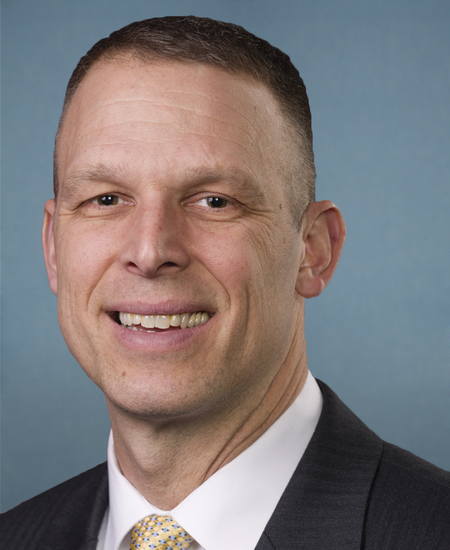
Rep. Scott Perry
Sponsored bills
This resolution requests the President and directs the Secretary of State to transmit to the House of Representatives copies of all documents and other materials, both classified and unclassified, in their possession that refer or relate to certain aspects of the withdrawal from Afghanistan.
TCJA Permanency Act This bill makes permanent provisions affecting individual and business taxpayers that were enacted in 2017 by the Tax Cuts and Jobs Act and are scheduled to expire at the end of 2025. The bill makes permanent reductions in individual and capital gain tax rates. The bill increases the standard tax deduction for individual taxpayers. It also increases and modifies the child tax credit and raises the contribution base for the tax deduction for charitable contributions. The bill allows additional contributions to ABLE accounts (tax-exempt accounts designed to enable individuals with disabilities to save and pay for disability-related expenses). It exempts from taxation combat zone benefits of members of the Armed Forces serving in the Sinai Peninsula of Egypt and limits the deduction for moving expenses to active duty members of the Armed Forces. Additionally, the bill expands the types of elementary and secondary school expenses eligible for payment from qualified tuition programs (529 programs); lowers to $750,000 the amount of mortgage debt eligible for an interest expense tax deduction; reinstates after 2023 the exclusion of income from the gross income of student loan borrowers for loan debt discharged due to death or total and permanent disability; makes permanent the limitation on the tax deduction for state and local taxes and denies a deduction for foreign real property taxes; makes permanent the tax deduction of the income of certain pass-through business entities; repeals the tax deduction for personal tax exemptions and the exclusion of employer-provided bicycle commuter fringe benefits; terminates certain miscellaneous itemized tax deductions; doubles the estate and gift tax exemption amount; and makes permanent the increase of the alternative minimum tax exemption amount for individual taxpayers.
Improving Seniors' Timely Access to Care Act of 2022 This bill establishes several requirements and standards relating to prior authorization processes under Medicare Advantage (MA) plans. Specifically, MA plans must (1) establish an electronic prior authorization program that meets specified standards, including the ability to provide real-time decisions in response to requests for items and services that are routinely approved; (2) annually publish specified prior authorization information, including the percentage of requests approved and the average response time; and (3) meet other standards, as set by the Centers for Medicare & Medicaid Services, relating to the quality and timeliness of prior authorization determinations.
Revoking Engine and Vehicle Requirements Act of 2022 This bill amends the Clean Air Act by repealing the provision that authorizes states (i.e., California) to be waived from the prohibition against adopting or attempting to enforce emission control standards on new motor vehicles.
Options for Ownership Act This bill directs the Department of Transportation to withhold 15% of federal highway funding from a state that prohibits the sale of motor vehicles that are not zero-emission vehicles. It does not apply to states that impose a fee on motor vehicles that is comparable in revenue to a gasoline tax.
Maddy summaryThis bill prohibits the use of federal funds from the Department of State, USAID, or other agencies for the World Economic Forum. It directly prevents U.S. government funding from being allocated to the World Economic Forum. The bill is procedural, blocking potential financial support without creating new policies or affecting other entities.
Protecting the Permian Basin Act of 2022 This bill eliminates a program administered by the Environmental Protection Agency (EPA) that provides incentives for petroleum and natural gas systems to reduce their emissions of methane and other greenhouse gases. It also repeals a charge on methane emissions from specific types of facilities that are required to report their greenhouse gas emissions to the EPA's Greenhouse Gas Emissions Reporting Program.
Protecting Dogs Subjected to Experiments Act This bill prohibits the National Institutes of Health from funding biological, medical, or behavioral research that involves testing dogs.
Build More Pipelines Act The bill provides statutory authority for the rule published on July 13, 2020, by the Environmental Protection Agency (EPA) entitled Clean Water Act Section 401 Certification Rule . Under Section 401 of the Clean Water Act, an applicant for a federal license or permit to conduct an activity that may result in any discharge into navigable waters must also obtain a certification—or waiver of such certification—from a relevant state, intrastate agency, or Indian tribe that the proposed activity will not violate certain water quality requirements of the state or Indian tribe. The rule revised existing regulations, including by limiting the scope of the certification review process as well as the time frame for a state, interstate agency, or Indian tribe to issue a certification.