

Maddy summaryThe Bullets Not Batteries Act (HR 7601) prohibits the use of federal authorities under the Defense Production Act of 1950 for electric vehicles, electric vehicle batteries, charging infrastructure, and related critical minerals. This means federal agencies cannot use this law to fund or support electric vehicle projects or the minerals needed to build them. The bill directly affects how the government allocates resources through the Defense Production Act, excluding electric vehicle initiatives from eligibility. It does not change other federal programs that may support electric vehicles.
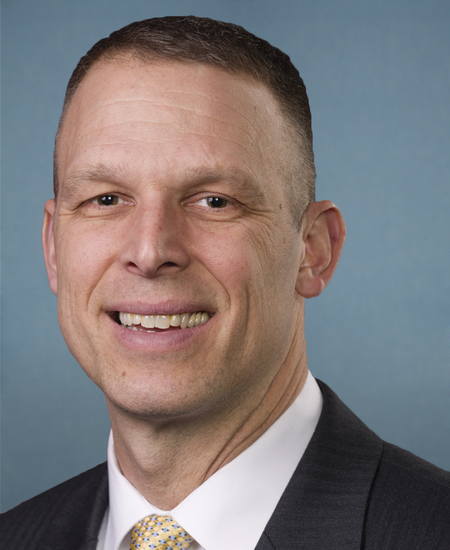
Rep. Scott Perry
Sponsored bills
Maddy summaryThis bill amends the Defense Production Act to prohibit the President from using authority under Section 303(a) to purchase or commit to purchasing solar panels. It specifically restricts the use of defense production funds for crystalline silicon photovoltaic cells or modules. The provision directly affects federal procurement decisions under the Defense Production Act, limiting the President's ability to allocate resources for solar panel acquisitions during national emergencies.
Let Injured Americans Be Legally Empowered Act or the LIABLE Act This bill prohibits COVID-19 vaccine manufacturers from being immune under federal law from lawsuits relating to their vaccines. Specifically, the bill prohibits any federal law from providing immunity for COVID-19 vaccine manufacturers from civil suits or liability, or limiting liability, with respect to the administration or use of their vaccines. Additionally, individuals may not be precluded from bringing a civil suit against a COVID-19 vaccine manufacturer because the individual sought or received compensation through specified federal vaccine injury compensation programs, nor does the bill preclude individuals from seeking compensation through these programs. The bill applies to vaccine administrations that occur before, on, or after the bill's date of enactment.
Maddy summaryThe MOVE Act of 2023 requires federal agencies with underused offices (using ≤9% of their building capacity, as identified in a July 2023 GAO report) to consolidate into the GSA Headquarters Building in Washington, D.C., aiming for at least 60% building utilization. It mandates a consolidation plan within one year of enactment, with implementation starting one year after plan submission. If consolidation isn’t completed within three years, GSA must move its staff to another federal building and prepare the GSA Headquarters Building for sale at fair market value. Proceeds from sales would go to the Federal Buildings Fund, with no specified new spending. This directly affects agencies using minimal office space and the GSA’s headquarters property.
Maddy summaryThe Airport Immigration Enforcement Act (HR 7445) prohibits the Federal Aviation Administration from authorizing airport space to house undocumented migrants and bans federal funds from being used for this purpose. The bill directly affects the FAA and federal programs that might fund migrant housing at airports. Key provisions include a direct ban on the FAA approving airport facilities for this use and a prohibition on federal spending for housing undocumented migrants in airport settings. This legislation would prevent public airport resources and federal money from being allocated to house undocumented migrants at airports.
Maddy summaryHR 7450, the Protecting Privacy in Purchases Act, prohibits payment card networks and covered entities (like payment processors) from requiring or assigning merchant category codes that specifically identify firearms retailers as different from general stores or sporting goods retailers. This directly affects firearms retailers and payment networks by preventing them from using business classification codes that could flag firearm sales. The bill establishes an enforcement process where the Attorney General investigates complaints, issues remediation notices, and can seek court injunctions for non-compliance, while preempting state or local laws on this issue. It does not create private lawsuits for individuals.
Maddy summaryHR 7049 repeals a Veterans Affairs directive requiring COVID-19 vaccinations for Veterans Health Administration (VHA) health care personnel. This bill directly affects VA medical staff by removing a specific policy implemented in 2022. The key provision mandates the Secretary of Veterans Affairs to formally cancel the directive (VHA Directive 1193.01) and prohibits issuing any substantially similar future rule. The bill focuses solely on reversing an existing administrative requirement, with no new benefits or obligations added.
Maddy summaryHR 7273 cancels unspent funds from two federal programs supporting electric vehicle charging infrastructure. It rescinds unused balances from the National Electric Vehicle Infrastructure Formula Program (under the Infrastructure Investment and Jobs Act) and another highway grant program, redirecting them to the U.S. Treasury for deficit reduction. This bill does not affect current grants or future funding for EV projects; it only redirects unobligated money already allocated but not yet spent. The policy change is purely financial, with no new requirements or impacts on states, businesses, or consumers.
Maddy summaryHJRES 114 is a joint resolution seeking congressional disapproval of a Federal Highway Administration (FHWA) rule that would have required tracking greenhouse gas emissions as part of assessing performance for the National Highway System. The rule, published in the Federal Register in December 2023, aimed to establish specific metrics for evaluating highway system performance, including emissions data. If approved, this resolution would nullify the rule, preventing the FHWA from implementing the emissions tracking requirement. This action directly affects how the FHWA measures highway system performance, specifically regarding environmental metrics.
Maddy summaryHJRES 107 is a congressional resolution seeking to block a Federal Communications Commission (FCC) rule published on January 22, 2024 (89 Fed. Reg. 4128). The resolution aims to disapprove the FCC's rule implementing digital discrimination protections under the Infrastructure Investment and Jobs Act, which would have required internet providers to prevent discriminatory practices. If passed, this resolution would nullify the FCC rule, preventing it from taking effect under the Congressional Review Act (Chapter 8 of Title 5, U.S. Code). The bill directly affects the FCC's regulatory authority over digital discrimination enforcement in broadband services.