

Maddy summaryThe Defending American Property Abroad Act of 2025 protects U.S. property interests in Western Hemisphere countries with U.S. free trade agreements. It requires the Secretary of Homeland Security to identify and list ports, harbors, or marine terminals where a foreign government has nationalized, expropriated, or seized U.S.-owned land (since January 2024) through actions like contract repudiation or forced control. Once listed, the President must prohibit vessels using these sites from importing goods, docking passenger vessels, or conducting maintenance in the United States. This directly affects U.S. persons (citizens or businesses) with property in designated locations.
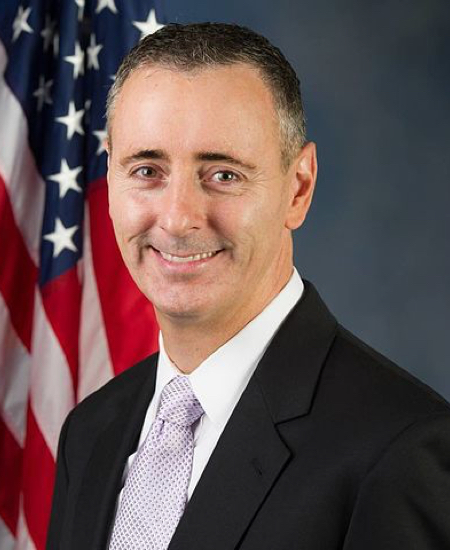
Rep. Brian K. Fitzpatrick
Sponsored bills
Maddy summaryThe SUPPLY Act establishes a federal program to insure second loans (additional financing) for building accessory dwelling units (ADUs) on single-family properties. This insurance, administered by the Department of Housing and Urban Development, covers up to 30% of a standard one-unit home loan amount or 100% of the property value after construction (with potential increases based on 50% of projected rental income). Homeowners seeking to add ADUs - such as backyard cottages, converted basements, or detached units - can use this insurance to secure financing, with a government premium of up to 1% annually. The bill also requires Fannie Mae and Freddie Mac to purchase and securitize these insured loans, potentially expanding access to ADU financing.
Maddy summaryThe Jobs in the Woods Act establishes a federal grant program to fund career training in forestry operations and products industries. It provides competitive grants (ranging from $500,000 to $2 million over up to 4 years) to eligible entities like nonprofits, states, tribes, or community colleges in targeted rural areas. These areas must be nonmetropolitan low-income communities, have broadband access, or have populations under 50,000. Grants require applicants to demonstrate regional need, plan for program sustainability, partner with schools, and address aging workforces or youth migration. The program is funded at $10 million annually from 2026 through 2030.
Maddy summaryThis bill prohibits Medicare from paying for orthotics or prosthetics delivered directly to patients without in-person training from a qualified provider (a "drop shipment"), ensuring beneficiaries receive proper fitting and use instructions. It expands the list of healthcare providers who can prescribe these devices to include physical therapists, occupational therapists, orthotists, and prosthetists. The bill also specifically requires Medicare to cover replacements for custom-fitted orthotics and custom-fabricated orthotic devices, aligning with existing rules for prosthetic replacements. These changes aim to improve patient safety and access to properly fitted devices under Medicare.
Maddy summaryHR 4486, the Microplastics Safety Act, requires the FDA (within the Department of Health and Human Services) to study the health impacts of microplastics in food and water. The study must identify major exposure pathways and examine effects on children's health, the endocrine system, cancer, chronic illness, and reproductive health. The FDA must submit a report to Congress within one year of the bill's enactment, detailing the study's findings and recommending potential legislative or administrative actions. This bill does not impose new regulations or bans but mandates a federal study to inform future policy decisions.
Maddy summaryThis bill authorizes $30 million annually (2026-2030) to fund grants for partnerships between sexual assault programs and health/wellness providers, behavioral health programs, and disability services. It directly supports survivors of sexual assault - especially adult survivors of childhood abuse - by requiring grantees to develop trauma-informed, culturally relevant services like therapy, housing assistance, and care coordination. Eligible recipients include state/tribal coalitions, nonprofit rape crisis centers, and tribal organizations, which must use funds for specific activities including prevention, screening, and staff training while protecting survivor privacy. Grantees must report on program effectiveness, and the bill also updates existing law to explicitly include sexual assault in related provisions.
Maddy summaryThis bill would require federal political campaigns to obtain explicit, active consent from donors before charging them repeatedly for contributions. It prohibits campaigns from using pre-checked boxes or passive actions (like failing to uncheck a box) as valid consent for recurring donations. Campaigns would need to send clear receipts showing the next charge date and provide simple cancellation methods upon request. The law directly affects donors to federal election campaigns and the campaigns themselves, mandating transparent handling of recurring payments.
Maddy summaryHR 4506, the Securing Global Telecommunications Act, requires the U.S. Secretary of State to develop a comprehensive strategy within 90 days to promote secure telecommunications infrastructure globally. The strategy must address mobile networks, data centers, 6G technology, and satellite systems, focusing on countering untrusted vendors (like Huawei) and supporting U.S. and allied "trusted" technology providers. It mandates reports on Chinese and Russian influence at the International Telecommunication Union (ITU) and opportunities for multilateral cooperation with allies to finance secure infrastructure projects. The bill directly affects U.S. agencies (State Department, FCC, USAID), foreign countries using telecommunications infrastructure, and global technology standards at the ITU.
Maddy summaryThe STEM RESTART Act establishes a federal grant program to help mid-career skilled workers (unemployed or underemployed, particularly from rural areas) return to or transition into STEM jobs. It provides funding to small and medium-sized businesses in STEM fields to create "returnship" programs offering at least 10 weeks of training in above-entry-level positions with competitive pay, benefits, and career advancement opportunities. Grants range from $100,000 to $5 million annually per business, requiring programs to not displace existing employees and mandating annual reporting on participant demographics and job placement outcomes. The program is authorized to receive $50 million yearly from 2026 through 2030.
Maddy summaryThe CIRCLE Act establishes a 30% tax credit for businesses investing in new or upgraded recycling infrastructure, such as facilities processing materials like electronics (computers, monitors, peripherals) and other recyclables. It directly affects businesses building or modernizing recycling operations by reducing their tax burden for qualifying equipment placed in service after 2025. A 10% domestic content bonus credit is available for investments meeting specific U.S. manufacturing requirements, and the full credit phases out gradually between 2032 and 2037, ending entirely by 2037. The bill aims to boost the U.S. recycling rate from ~30% toward the EPA’s 2030 goal of 50% by incentivizing domestic recycling capacity.