

Maddy summaryHR 4471, the "No More Narcos Act," requires the federal government to create an educational campaign and national strategy targeting minors near the U.S.-Mexico border who are at risk of being recruited by cartels. The bill specifically affects middle and high school students living within 100 miles of the border, focusing on educating them about the dangers of working with transnational criminal organizations involved in drug trafficking and smuggling. Key provisions mandate the Attorney General and Homeland Security to implement an informational campaign and a national strategy to combat cartel recruitment of minors, with funding sourced from the DOJ Assets Forfeiture Fund. The law defines "covered students" as minors in border communities and specifies that the strategy must address activities like drug trafficking, human smuggling, and exploitation.
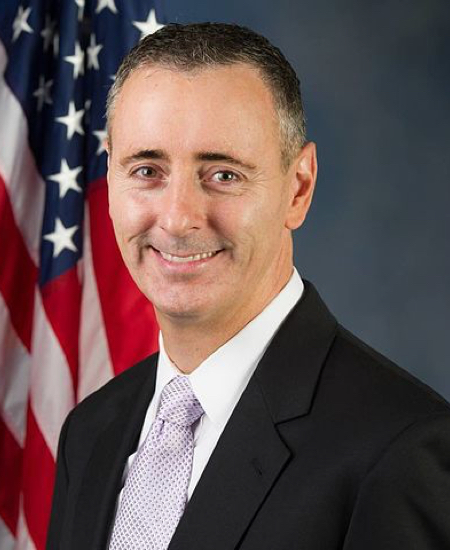
Rep. Brian K. Fitzpatrick
Sponsored bills
Maddy summaryThis bill extends the Public Health and Bio-Preparedness Workforce Loan Repayment Program through fiscal years 2026 to 2030, replacing the previous 2023-2025 funding period. It directly affects public health workers (such as epidemiologists, laboratory staff, and emergency response personnel) who have federal student loans. The key provision reauthorizes existing funding to help these workers repay student debt by providing federal reimbursements. This maintains a critical workforce retention tool for agencies like the CDC and state health departments without creating new benefits or altering eligibility. The change is procedural, solely adjusting the program's funding timeline.
Maddy summaryThis bill establishes federal worker heat protection standards to prevent heat-related illness and injury. It requires employers to provide a workplace free from heat stress hazards, including access to cool water, scheduled rest breaks, shaded cooling areas, and training on heat illness symptoms. The Secretary of Labor must create these standards within one year, incorporating evidence-based practices like engineering controls (e.g., ventilation), administrative measures (e.g., adjusted schedules), and employer-paid personal protective equipment. The law directly affects all employers in high-heat work environments - such as construction, agriculture, and manufacturing - and strengthens whistleblower protections for workers reporting safety violations.
Maddy summaryHR 4453 would amend federal law to add Parkinson's disease to the list of illnesses automatically considered work-related for firefighters. Specifically, it inserts "Parkinson's disease" into Section 8143b(b) of Title 5, U.S. Code, which determines which conditions qualify for disability benefits under the Federal Employees' Compensation Act. This change directly affects firefighters who develop Parkinson's disease during their fire protection duties, making it easier for them to qualify for federal disability compensation without needing to prove direct causation. The bill modifies existing code language to include this condition among other work-related illnesses already covered for firefighter benefits.
Maddy summary# Summary of "Dignity for Immigrants while Guarding our Nation to Ignite and Deliver the American Dream Act" This comprehensive immigration bill proposes multiple pathways to legal status and permanent residency for undocumented immigrants while creating new employment and workforce development programs. ## Key Provisions: 1. **Dignity Program (Subtitle III)**: - Creates a 7-year program for eligible undocumented immigrants requiring $7,000 in restitution payments to an H-1B fund - Provides deferred action on removal, work authorization, and travel privileges - Requires participants to maintain employment/education, pay taxes, and comply with all laws - Upon completion, participants receive "Dignity Status" valid for 7 years with renewal options 2. **Workforce Development (Division C)**: - Directs restitution payments to fund apprenticeships and work-based learning programs - Establishes industry partnerships to support small- and medium-sized businesses - Focuses on "in-demand industry sectors" with targeted training programs - Requires 12 months of post-employment support services for participants 3. **Family Reunification (Section 3111-3115)**: - Expands discretionary authority for family-based relief - Creates new "family purpose" nonimmigrant visa category (90-day limit) - Modernizes military naturalization for service members - Includes protections for children affected by visa backlogs 4. **Backlog Reduction (Section 3201-3203)**: - Creates premium processing for long-pending cases ($20,000 fee) - Increases per-country caps from 7% to 15% - Protects children from "aging out" of family-based visas 5. **Student and Worker Visas (Section 3301-3305)**: - Modernizes student visa categories with "dual intent" provisions - Recognizes doctoral STEM graduates as "extraordinary ability" - Streamlines visa processing through a new Immigration Agency Coordinator The bill aims to balance immigration reform with workforce development, creating a pathway to legal status while directing funds toward American workers through apprenticeships and training programs in high-demand fields.
Maddy summaryThe Cool Corridors Act of 2025 expands the existing Healthy Streets program to fund tree planting, shade structures, and green infrastructure along transportation corridors - like bus stops, transit hubs, and school zones - to reduce heat exposure. It directly affects communities facing extreme heat and limited tree canopy (especially low-income or historically underserved areas), as well as state/local transit agencies, schools, and environmental groups. Key provisions include requiring projects to prioritize heat-vulnerable regions, mandate annual reporting on temperature reduction and equity outcomes, and ensure tree planting doesn’t obstruct traffic safety. The bill also extends program funding through 2030 and mandates coordination with agencies like the EPA and Forest Service.
Maddy summaryHR 4391 authorizes the U.S. State Department to lead a Minerals Security Partnership with international allies, aiming to build secure supply chains for critical minerals used in clean energy, defense, and technology. It establishes mechanisms for joint projects, cost-sharing on infrastructure, and market-based incentives to reduce reliance on countries like China and Russia for minerals such as lithium and cobalt. The bill requires environmental and social standards for project selection and directs the creation of a public database to share project information and attract private investment. This legislation directly affects U.S. foreign policy coordination, international partners, and companies involved in critical mineral supply chains.
Maddy summaryThis bill extends funding deadlines for sport fish restoration and recreational boating programs through 2031, updating prior expiration dates. It clarifies funding for interstate fisheries commissions and adds new definitions for alternative marine fuel infrastructure, including facilities dispensing fuels derived from recycled oils or plant materials. The bill also establishes a 3% tax rate (down from 10%) for portable, electronically-aerated bait containers sold by manufacturers. These changes primarily affect recreational boaters, sport fishing programs, and facilities seeking to install alternative fuel infrastructure.
Maddy summaryHR 1709, the "Understanding Cybersecurity of Mobile Networks Act," requires the Assistant Secretary of Commerce to produce a report within one year of enactment examining cybersecurity vulnerabilities in mobile service networks and devices. The report must assess how mobile providers address security risks, customer awareness of cybersecurity when purchasing services, encryption practices, barriers to adopting stronger security measures, and the prevalence of surveillance technologies like cell site simulators. It specifically excludes 5G networks and focuses on real-world vulnerabilities affecting U.S. mobile networks and devices used by consumers, businesses, and government agencies. The study aims to inform future policy by gathering data from providers, industry experts, and government agencies, without mandating immediate changes to security standards.
Maddy summaryHR 4382 authorizes the U.S. Mint to produce commemorative coins for the 2028 Los Angeles Olympics/Paralympics and 2034 Salt Lake City Winter Olympics/Paralympics. It specifies gold, silver, and half-dollar coin designs with defined mintage limits (e.g., up to 100,000 $5 gold coins for each event), all bearing inscriptions like "2028" or "2034" and standard coin features. A surcharge ($5-$50 per coin) is added to sales, with all funds directed to the respective Olympic committees to support event hosting and legacy programs like youth sports. The bill ensures no net cost to the government by requiring surcharge revenues to cover all design, production, and marketing expenses before funds are disbursed.