

Maddy summaryHRES 575 is a symbolic resolution designating July 10th as "Journeyman Lineworkers Recognition Day." It honors lineworkers who face significant risks daily - working at heights near live wires and responding to disasters like hurricanes and wildfires. The resolution specifically references Henry Miller, an early leader of the International Brotherhood of Electrical Workers, who died on July 10, 1896, while troubleshooting an outage. It encourages the public to recognize these workers' contributions but does not create new laws or allocate funding.
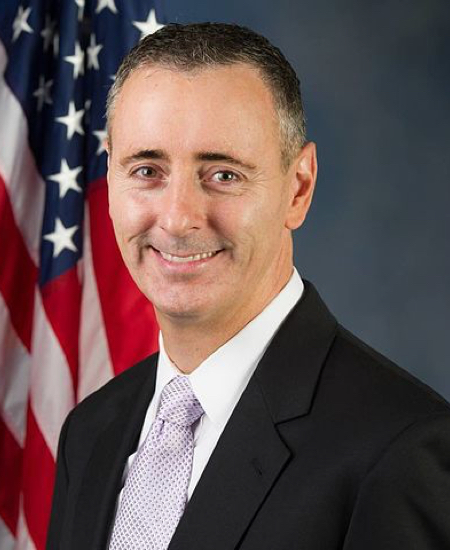
Rep. Brian K. Fitzpatrick
Sponsored bills
Maddy summaryThe Head Start for Our Future Act amends Section 441(c)(1) of the Higher Education Act of 1965 to replace "literacy training" with "child development and early learning (including Head Start programs and Early Head Start programs carried out under the Head Start Act), literacy training." This technical change formally integrates Head Start and Early Head Start programs into the federal definition of early learning initiatives under the Higher Education Act, while maintaining a separate reference to literacy training. The bill directly affects how federal grants for early childhood education are categorized and administered under the Higher Education Act. It does not alter funding levels, program requirements, or operations but updates administrative terminology to explicitly include Head Start services.
Maddy summaryThis bill amends U.S. law to allow the President to extend diplomatic privileges and immunities to CERN (the European Organization for Nuclear Research) under the same terms applied to other international scientific organizations the U.S. collaborates with. It directly affects CERN’s legal status in the U.S., enabling smoother operations for its U.S. scientists and international research projects. The change is procedural, updating existing immunity provisions without altering scientific funding, research policies, or creating new programs.
Maddy summaryHR 4343, the United States-Greece Security Cooperation Reporting Act, requires the U.S. Secretary of Defense to submit a report to Congress within 120 days of enactment detailing U.S.-Greece security cooperation. The report must cover U.S. military activities and investments under the 2021 Mutual Defense Cooperation Agreement, future infrastructure needs at bases like Alexandroupolis, potential for additional bases (including Greek islands), and assessment of existing security cooperation mandates. This procedural bill does not create new policy but mandates a formal review for congressional oversight. It directly affects U.S. defense planning and congressional decision-making regarding military engagement with Greece.
Maddy summaryHR 4333, the Qualified to Serve Act, changes medical standards for joining the U.S. military. It prohibits disqualifying applicants solely based on a medical condition diagnosed before age 13 that required no treatment in the past five years, provided a current medical evaluation confirms fitness for service and the military determines it won't impact readiness. The bill establishes a uniform review process for medical disqualifications and allows waivers for national security reasons. It also requires the Secretary of Defense to annually report to Congress on disqualifications, approved waivers, and updates to medical standards. This directly affects potential recruits with qualifying childhood medical histories who previously faced disqualification.
Maddy summaryHR 4351 amends the Family and Medical Leave Act (FMLA) to shorten the employment duration required for spouses of active-duty military members to qualify for leave. It reduces the qualifying time from 12 months to 90 calendar days with the employer. This change directly affects spouses of service members on covered active duty, making it easier for them to access FMLA leave for their partner’s military service. The bill achieves this by revising the FMLA’s definition of "eligible employee" to include this new 90-day requirement for military spouses.
Maddy summaryThe PBM Reform Act of 2025 aims to increase transparency and fairness in pharmacy benefit manager (PBM) operations within Medicare Part D and Medicaid programs. The bill requires Medicare Part D plans to allow any pharmacy meeting standard terms to join their networks, establishes "essential retail pharmacies" in underserved areas (with limited pharmacy access), and mandates detailed reporting on drug pricing, rebates, and reimbursement rates. It creates a process for pharmacies to report PBM violations of reasonable contract terms and prohibits "spread pricing" in Medicaid, where PBMs retain the difference between what they pay pharmacies and what they charge plans. These provisions aim to improve pharmacy access for Medicare beneficiaries and ensure fairer reimbursement practices for pharmacies.
Maddy summaryHR 4329, the Building Civic Bridges Act, creates an Office of Civic Bridgebuilding within the Corporation for National and Community Service to support projects reducing community divisions. It establishes a 3-year pilot grant program funding nonprofits, community groups, and schools to run projects that foster respect across diverse communities, address unmet needs like health or safety concerns, and improve social cohesion. Grants require projects to use research-based approaches, engage polarized communities, ensure participant safety, and track outcomes using standardized criteria. The program is funded exclusively through existing donations (not new federal funds) and mandates consultation with diverse community leaders and researchers. The Office will also compile research on civic bridgebuilding best practices for public access.
Maddy summaryThe Wild Horse and Burro Protection Act of 2025 requires the Bureau of Land Management (BLM) to eliminate helicopter and fixed-wing aircraft use in rounding up wild horses and burros over a two-year phase-out period. It mandates that any remaining aircraft used for these operations must have cameras recording the process, with footage made public in BLM reports. The bill addresses findings that helicopter roundups cost taxpayers over $69.5 million since 2012 and that the BLM spends less than 1% of its budget on fertility controls - a more humane, cost-effective alternative. The legislation also directs the Government Accountability Office to report on humane alternatives, job opportunities, and aircraft impacts on horse populations within one year of enactment.
Maddy summaryHR 4308 reauthorizes the Energy Efficiency and Conservation Block Grant Program through 2030, providing $3.5 billion annually for state and local governments to fund energy efficiency projects. The bill expands eligible uses to include infrastructure for alternative fuels and energy distribution technologies like district heating systems and distributed energy resources. It directs grants toward diversifying energy supplies and increasing efficiency, with administrative costs capped at 1% of annual funding. This program directly supports communities implementing clean energy initiatives under the 2007 Energy Independence Act.