

Maddy summaryHRES 915 formally recognizes the 1932-1933 Ukrainian famine, known as the Holodomor, as a genocide perpetrated by the Soviet Union. The resolution directly affects Ukrainian victims, survivors, and communities by affirming historical truth and condemning Soviet policies that intentionally starved millions. Key provisions include declaring the Holodomor a genocide, commemorating its victims, and condemning ongoing Russian aggression against Ukraine, including Vladimir Putin’s denial of Ukrainian sovereignty. This symbolic resolution aims to educate the public and align U.S. policy with historical facts about Soviet repression.
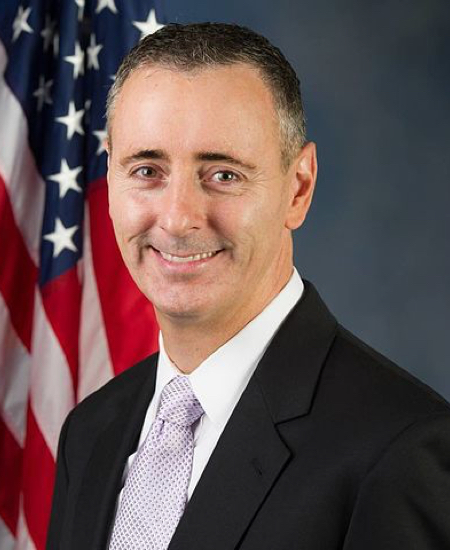
Rep. Brian K. Fitzpatrick
Sponsored bills
Maddy summaryHR 6328, the Main Street Home Builders Act of 2025, creates a pilot program (the "505 Pilot Program") allowing the Small Business Administration to provide loans to small housing businesses for building or managing rental properties. The bill removes standard SBA loan requirements like job creation targets and restrictions on leasing, specifically for projects constructing or renovating build-to-rent multifamily housing (housing built solely for renting). It sets annual funding limits of $1 billion for 2026, $2 billion for 2027, and $3 billion each year from 2028-2030, with the program ending after five years. This directly affects small housing developers/managers who build or renovate rental units, requiring them to create at least one new rental unit per project.
Maddy summaryThis bill allows workers aged 50 or older to directly roll over employer retirement contributions (from 401(k) plans) into an individual retirement annuity without triggering immediate taxes or penalties. It requires retirement plan administrators to provide clear, plain-language written explanations about rollover rules, including a 30-day review period, tax implications (like the 10% early withdrawal penalty), and what types of distributions cannot be rolled over (such as required minimum distributions). The rules apply to taxable years starting after December 31, 2025, and aim to simplify the process for older workers changing jobs or managing retirement funds. It directly affects workers aged 50+ and retirement plan administrators who must comply with the new disclosure standards.
Maddy summaryThis bill provides $50 million annually from 2026 through 2030 to fund security measures for public transit systems in urbanized areas, removing previous population requirements that limited access. It allows transit agencies to use these funds for hiring additional officers, contracting with local police, and making physical safety upgrades like monitoring devices and operator shields. Additionally, it mandates a study by the National Academies (with input from transit workers) to evaluate crime prevention tactics, including successful and unsuccessful approaches used by transit agencies. The bill directly affects transit agencies and passengers by prioritizing safety infrastructure and data-driven crime reduction strategies.
Maddy summaryThis bill requires military child and youth programs - including military child development centers, Department of Defense youth programs, and family home day care providers receiving DoD funding - to notify parents or guardians within 24 hours of suspecting child abuse or neglect. It also mandates that these programs report such incidents to the Senate and House Committees on Armed Services, state senators representing the location, and the local House representative within 72 hours. The law directly affects military-connected families and child care providers operating under DoD programs, ensuring faster transparency for both families and oversight bodies. The policy creates a clear timeline for reporting suspected abuse, aiming to improve responsiveness without altering existing child welfare protocols.
Maddy summaryHR 6249, the "Addressing Addiction After Disasters Act," updates federal disaster relief guidelines to explicitly include substance use and alcohol use disorders in crisis counseling services. It amends the Robert T. Stafford Disaster Relief Act to allow FEMA-funded programs to address these issues alongside mental health needs for disaster survivors. The bill requires FEMA to revise application forms and guidance within 180 days to reflect these changes and mandates a GAO report on program duration and compliance with using funds only for disaster-related substance/alcohol issues. This directly affects disaster survivors facing substance use or alcohol challenges by expanding access to covered support services.
Maddy summaryThis bill amends the Water Infrastructure Finance and Innovation Act to make water infrastructure financing more accessible to small communities and rural water projects. It lowers the maximum eligible project cost from $5 million to $1 million, provides technical assistance for small communities (population ≤ 25,000) to develop project proposals, and clarifies definitions to include projects for federally recognized Indian Tribes. The bill introduces collaborative project delivery methods like design-build and construction management at-risk, and authorizes $68 million annually for the EPA and $15 million annually for the Army Corps of Engineers through fiscal year 2029. These changes directly affect small communities and rural water projects seeking federal assistance for water infrastructure improvements.
Maddy summaryHRES 905 is a non-binding House resolution supporting the designation of November 2025 as "National Homeless Children and Youth Awareness Month." It does not create new programs or funding but formally encourages businesses, governments, schools, and organizations to raise awareness about homelessness affecting children and youth during that month. The resolution cites statistics on homelessness rates among students and youth (e.g., 1.4 million enrolled homeless children in 2022-2023) to underscore the need for greater public attention. It urges these groups to highlight causes, solutions, and prevention efforts during the designated month.
Maddy summaryHRES 906 would change House rules to require a 60% vote of members present and voting to censure, disapprove, or remove any House member, delegate, or resident commissioner from committee assignments. Currently, a simple majority (50%+1) could trigger these actions, but this bill raises the threshold to a supermajority. The change applies directly to all voting members of the House and affects disciplinary procedures for members. This is a procedural rule change that makes it harder to take formal disciplinary actions against House members.
Maddy summaryThe FOSTER Act (HR 6283) creates a new federal grant program to fund opioid abuse prevention and treatment services specifically for children and caregivers in kinship care settings. It directs states and local agencies to use these funds for workforce training, health care services, and recruiting foster/adoptive parents to support kinship caregivers - defined as relatives (by blood, marriage, or adoption) raising children when biological parents cannot. The bill authorizes $255 million annually from 2028 through 2033, with 1% of funds dedicated to these services. This policy directly affects state/local agencies and kinship caregivers across the U.S., focusing on improving support systems for children in these arrangements.