

Maddy summaryThe Freedom to Heal Act of 2025 creates a new federal registration process for physicians to directly administer Schedule I investigational drugs under the "Right to Try" framework. It requires physicians to apply to the Attorney General with evidence of state compliance, manufacturer agreements, and training, and limits the amount of drugs they may possess based on approved applications. The bill mandates the Attorney General to issue interim rules within 240 days and final rules within two years covering drug delivery, storage, recordkeeping, and registration management. This affects physicians treating eligible patients with Schedule I drugs under federal Right to Try provisions, not the patients themselves.
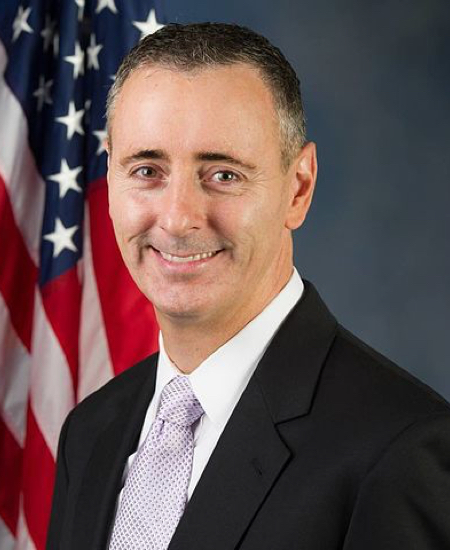
Rep. Brian K. Fitzpatrick
Sponsored bills
Maddy summaryThis bill establishes a National Center for Advanced Development in Education within the Institute to advance teaching and learning through research on effective practices, technology, and community-informed approaches. The Center will focus on developing innovative teaching methods, addressing achievement gaps, and promoting research on learning and development across all education levels from early childhood through adult education. It authorizes $500 million annually for 2026-2030 to support research, development, and improved statewide longitudinal data systems that connect educational data from early childhood through workforce outcomes while protecting student privacy. The bill also requires states to enhance their data systems to better track student progress and outcomes, with the goal of improving educational opportunities and closing achievement gaps.
Maddy summaryThis bill (HR 6469) requires the U.S. State Department, in coordination with the FCC and Treasury, to submit a report within 120 days of enactment assessing internet access options in Iran. The report must evaluate the feasibility of using direct-to-cell wireless technology to expand internet access there, including technical, security, and regulatory considerations. It also analyzes how drone-based systems and signal jamming could affect such technology, surveys Iranian telecom providers (including state ownership and foreign investment), and examines broader implications for communications freedom. The bill does not enact new policy but mandates a government review of potential technological solutions.
Maddy summaryHR 6423, the HELP Copays Act, requires health insurance plans and coverage to count financial assistance from non-profits or drug manufacturers toward patient cost-sharing limits like deductibles and copayments. This directly affects patients enrolled in health insurance who receive such assistance for prescription drugs, ensuring the help they get reduces their out-of-pocket costs faster. The bill amends key health laws to mandate that these payments are included when calculating whether a patient has met their deductible or copayment threshold. The change applies to all prescription drugs, including specialty drugs and those subject to prior authorization, but does not alter how insurers manage drug access through tools like step therapy. It takes effect for plan years starting in 2026.
Maddy summaryHR 6383, the Brandon Act Training and Protocol Act, requires the Department of Defense to create a strategic plan addressing mental health and suicide prevention among military members. The plan mandates uniform protocols for members seeking mental health help on their own and standardized training for commanders, medical staff, and enlisted leaders on recognizing distress, supporting referrals, and responding appropriately. It also establishes a certification process to confirm personnel complete required training. This bill directly affects all members of the Armed Forces through improved mental health access and support, while requiring commanders and medical personnel to implement new protocols. The focus is on concrete policy changes to standardize mental health services within the military.
Maddy summaryThe Digital Skills for Today's Workforce Act establishes a new grant program to expand digital workplace skills training for workers, particularly those with barriers to employment such as low educational attainment, low earnings, or limited English proficiency. The program provides funding to states to award subgrants to eligible entities like community colleges and workforce organizations for training through classroom instruction, apprenticeships, and work-based learning. States must prioritize serving individuals with employment barriers and report on outcomes related to digital skills development. The bill aims to create "digitally resilient" systems and individuals who can adapt to changing technology demands in the workforce. This program is funded through appropriations for fiscal years 2026 through 2030.
Maddy summaryThe Global Child Thrive Reauthorization Act of 2025 extends the authorization period for the Global Child Thrive program - which provides U.S. foreign assistance to support orphans and vulnerable children globally - from 2025 to 2030. It requires the Secretary of State to appoint a Special Advisor for Assistance to Orphans and Vulnerable Children within 90 days of enactment. The bill also extends the time period for issuing implementing directives under the Foreign Assistance Act. This legislation ensures continued U.S. funding and coordination for international child welfare programs.
Maddy summaryThis bill establishes a new interagency Task Force to dismantle foreign scam operations targeting Americans, particularly through "pig butchering" scams in Southeast Asia. The Task Force, chaired by the Secretary of State, will coordinate efforts across multiple agencies to shut down scam centers, impose sanctions on perpetrators, and support victims of trafficking. It requires a detailed strategy within 180 days and annual reports to Congress on progress, including sanctions imposed and funds recovered. The bill authorizes $30 million for these efforts in fiscal years 2026-2027, focusing on countries like Cambodia, Laos, and Burma where scam centers operate with forced labor.
Maddy summaryHR 5021, the American Decade of Sports Act, requires the U.S. Department of State to create a formal 5-year strategy (updated every 5 years) for using major international sporting events hosted in the U.S. between 2024 and 2034 - including the 2026 World Cup and 2028 Olympics - to strengthen diplomatic ties and promote U.S. soft power. It mandates renaming the State Department’s sports diplomacy division as the Office of Sports Diplomacy, adding at least 3 dedicated staff members, and coordinating with host cities, sports leagues, and visa agencies to streamline international visitor access. The strategy must detail diplomatic goals, partnerships with local communities and the sports industry, and plans for cultural exchange, while requiring annual progress reports to Congress until 2034. This bill directly affects the State Department, host cities, international athletes, and diplomatic engagement efforts.
Maddy summaryThis bill would remove restrictions on U.S. military exports to the Republic of Cyprus, allowing the Cypriot government to purchase U.S. defense equipment and services. It directly affects Cyprus by enabling access to U.S. defense articles and services, which were previously subject to a policy of denial. The key mechanism eliminates the denial policy for such exports, with exceptions if credible human rights concerns exist, and requires annual congressional certifications to maintain the policy beyond a 5-year period (based on Cyprus's cooperation with U.S. anti-money laundering efforts and denying Russian military vessels port access). The bill does not create new programs but changes existing export restrictions.