

Maddy summaryThe Family Violence Prevention and Services Improvement Act of 2026 amends federal law to enhance support for victims of family violence, domestic violence, and dating violence. The bill authorizes $270 million annually for fiscal years 2027-2031 to fund state, tribal, and community programs, with specific funding reserved for tribal programs (12.5%), national hotlines ($20.5 million for general hotline, $4 million for Indian hotline), and services for underserved populations. It requires grantees to provide trauma-informed, culturally appropriate services while prohibiting discrimination and protecting victim confidentiality, and mandates accessibility for people with disabilities and limited English proficiency. The bill also establishes new technical assistance centers, Tribal resource centers, and community-based prevention programs to address the needs of underserved populations including Native Hawaiians, Alaska Natives, and racial and ethnic minorities.
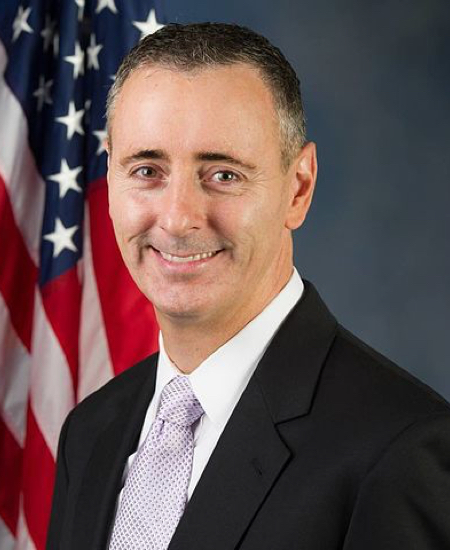
Rep. Brian K. Fitzpatrick
Sponsored bills
Maddy summaryThis bill extends dependency and indemnity compensation to surviving spouses of veterans who die from amyotrophic lateral sclerosis (ALS), treating ALS-related deaths as qualifying for benefits regardless of how long the veteran had the disease before death. It requires surviving spouses to have been married to the veteran for at least eight continuous years prior to death to qualify for compensation. The changes apply to veterans dying from ALS on or after October 1, 2025. Additionally, the bill requires the Veterans Affairs Secretary to submit a report within 180 days of enactment identifying other service-connected disabilities with high mortality rates that might warrant similar treatment.
Maddy summaryHRES 1029 is a procedural resolution that sets the rules for debating and voting on H.R. 6636, a bill titled "to advance sensible priorities." It waives objections to H.R. 6636's consideration, allows only one hour of debate (equally split between the sponsor and an opponent), and specifies that the amendment in the nature of a substitute submitted by Rep. Fitzpatrick will be treated as adopted. This resolution directly affects House members by controlling the process for considering H.R. 6636, without changing the bill's policy content. It does not describe H.R. 6636's substance, only the procedural framework for its review.
Maddy summaryThis bill extends federal funding for research on PFAS chemicals (often called "forever chemicals") until 2030, instead of ending in 2024. It directly affects the research programs authorized under the 2020 National Defense Authorization Act. The key change modifies the funding period in existing law to ensure continued support for studying PFAS contamination and health impacts through 2030.
Maddy summaryHR 6668, the Clean Water Standards for PFAS Act of 2025, establishes federal limits on PFAS chemicals in water. It requires the EPA to set water quality standards for PFAS by 2026 and create discharge limits for specific industries (like chemical manufacturing, electroplating, and landfills) by 2026-2028. The bill mandates immediate monitoring of PFAS discharges from these industries and public treatment plants, and funds $200 million annually (2026-2030) to help treatment works address PFAS contamination. It also requires the EPA to adopt a new testing method for PFAS by January 2026.
Maddy summaryHR 6605, the Secure Our Skies Drone Safety Act of 2025, requires the Comptroller General to study and report to Congress within one year of enactment on how federal, state, local, and tribal agencies use drones (UAS) and counter-drone systems. The report must include specific data like the number of drones deployed, purchases from adversarial nations, domestic production, training requirements, privacy protections, and countermeasure strategies. It also mandates recommendations for updating legal authorities and policies to improve counter-UAS capabilities and streamline procurement of UAS made in the U.S. or allied nations. This bill directly affects law enforcement agencies by requiring them to provide detailed information for the study, focusing on transparency and policy improvements related to drone operations.
Maddy summaryThe CARE for First Responders Act (HR 6601) provides mental health support specifically for first responders, including emergency personnel and 911 operators (defined as "qualified emergency response providers"). It requires the creation of a 24/7 confidential hotline via the 988 Suicide Lifeline, peer support programs staffed by trained responders, and mobile crisis units that offer on-site mental health services during major disasters. The bill mandates trauma-informed, culturally appropriate care and education to reduce stigma around mental health, with a focus on helping responders and their families adjust after disaster work. It authorizes $5 million annually (2026-2030) for these services through grants to state/local health entities.
Maddy summaryThe Bridges not Bumpers Act of 2025 creates a working group to improve data sharing about bridge clearances for commercial vehicles, requiring better GPS navigation tools, clearer height labeling on rental vehicles (over 5,700 lbs), and warnings to renters. It mandates that rental companies provide height information and warnings about bridge clearance, while also addressing liability for inaccurate GPS data. The bill establishes a national clearinghouse for bridge strike data and funds research grants to identify high-risk locations and improve infrastructure. It directly affects commercial truck drivers, GPS navigation providers, and rental car companies with fleets of 5+ vehicles, aiming to reduce bridge strikes through better information and infrastructure planning.
Maddy summaryThis bill amends federal water pollution control funding rules to make wastewater services more affordable for low-income communities. It requires states to dedicate at least 20% of their annual federal capitalization grants toward additional subsidies for wastewater infrastructure, with an additional 10% specifically reserved for rural, small, and tribal publicly owned treatment works. States must use these funds to help ratepayers afford wastewater (including stormwater) services, excluding loans with 0% interest rates from counting toward subsidy calculations. The policy directly affects communities served by publicly owned treatment works, particularly in underserved rural and tribal areas, by mandating minimum subsidy levels from state water funds.
Maddy summaryThe Brownfields Reauthorization Act of 2025 increases federal funding for cleaning up contaminated properties (brownfields) in communities. It raises the per-site remediation grant from $500,000 to $1,000,000 and boosts annual funding from $200 million to $250 million, covering fiscal years 2026 through 2030 instead of 2019-2023. The bill also updates state programs to allow them to implement new revitalization strategies beyond just enhancing existing efforts. This directly affects communities with abandoned industrial sites and state environmental agencies managing cleanup projects. The changes aim to accelerate redevelopment of underutilized properties by providing more stable, long-term funding.