

Maddy summaryThe YALI Act of 2025 establishes the Young African Leaders Initiative (YALI) to support emerging leaders in sub-Saharan Africa aged 18-35, focusing on business, civic engagement, and public administration. It creates at least four regional leadership centers in Africa for training, expands the Mandela Washington Fellowship (for 25-35-year-olds with demonstrated leadership), and requires annual reports on program outcomes. The bill mandates partnerships with private sector entities to fund networking, entrepreneurship, and leadership development, while requiring the State Department to submit implementation plans within 180 days of enactment. The program expires five years after enactment, with reports assessing its impact on U.S.-Africa relations, including trade, governance, and youth empowerment.
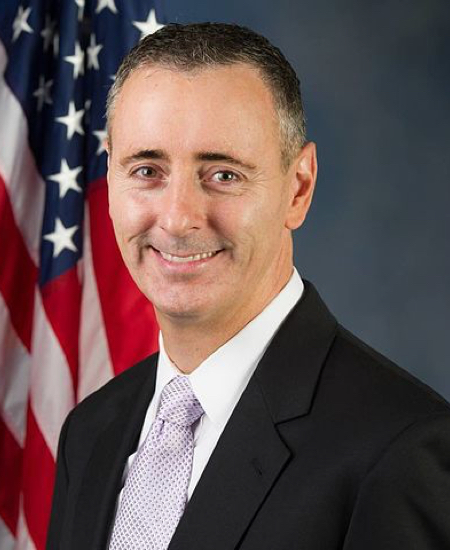
Rep. Brian K. Fitzpatrick
Sponsored bills
Maddy summaryThis bill would amend federal law to strengthen penalties for organized retail crime by expanding definitions of theft to include digital goods, gift cards, and setting a $5,000 aggregate value threshold for charges over a 12-month period. It would establish a new "Organized Retail and Supply Chain Crime Coordination Center" under Homeland Security to coordinate Federal, State, local, and Tribal law enforcement efforts against cross-jurisdictional theft groups. The Center would share information with retailers, transportation companies, and law enforcement agencies, track crime trends, and produce annual reports on organized retail crime. This legislation directly affects retailers, supply chain businesses, and law enforcement agencies, while targeting organized crime groups responsible for a 93% increase in larceny incidents and rising safety concerns for retail employees. The bill aims to address significant financial losses and supply chain disruptions noted in the National Retail Federation's 2023 data.
Maddy summaryThe COPS Reauthorization Act of 2026 extends funding for the COPS ON THE BEAT grant program through fiscal year 2031, allowing the Department of Justice to continue providing grants to local law enforcement agencies for hiring and retaining officers. The bill also formally establishes the Office of Community Oriented Policing Services as a separate office within the Department of Justice, headed by a Director appointed by the President. These changes aim to maintain and clarify the administrative structure and financial support for community policing initiatives across the United States.
Maddy summaryThe Respect Tribal IDs Act requires the Department of Homeland Security to create and enforce annual training for immigration officers on how to properly identify and accept Native American tribal documents as proof of U.S. citizenship. This legislation directly affects federal immigration officials by mandating that they complete specific curricula developed in collaboration with the Bureau of Indian Affairs and Indian tribes. Key provisions include establishing a database of tribal document examples, incorporating scenario-based exercises, and ensuring officers understand the historical trust responsibility between the U.S. government and American Indians. Additionally, the bill defines which tribal documents, such as enrollment cards and certificates of degree of Indian blood, are considered valid proof of citizenship.
Maddy summaryThis resolution expresses support for designating July 15, 2026, as Glioblastoma Awareness Day to raise public awareness about this aggressive and deadly form of brain cancer. The bill honors patients and caregivers while encouraging greater understanding of the urgent medical needs associated with the disease, which currently has a low survival rate and limited treatment options. It also calls for increased collaboration among government, private, and nonprofit organizations to advance research and develop better therapies for those affected.
Maddy summaryThis resolution expresses support for designating the week of May 3 through May 9, 2026, as "National Small Business Week." It aims to honor the contributions of small businesses and entrepreneurs across the United States, acknowledging their role in supporting millions of jobs. The bill does not create new laws or regulations but serves as a formal statement of appreciation from the House of Representatives.
Maddy summaryThis bill, titled the Nursing is a Professional Degree Act, updates federal definitions to classify nursing degrees as professional degrees. It directly affects students pursuing nursing education and the federal financial aid programs that support them. The legislation amends the Higher Education Act to explicitly list nursing degrees, such as the Master of Science in Nursing and Doctor of Nursing Practice, alongside other advanced fields like medicine and law. By making this change, the bill ensures that nursing programs are recognized at the same level as other established professional disciplines within the federal student aid system.
Maddy summaryThis bill is a non-binding resolution that expresses the House of Representatives' sentiment to honor public servants for their dedication to the United States. It specifically acknowledges the work of federal, state, and local government employees, as well as uniformed service members, who deliver essential services and support the economy. The resolution calls on the American public to observe Public Service Recognition Week with ceremonies and activities that recognize these contributions. Because it is a symbolic expression of the House's feelings rather than a law with enforceable rules, it does not create new policies or mandate specific actions.
Maddy summaryThis legislation directs the Food and Drug Administration to update regulations requiring the inclusion of pregnant women in clinical trials for new medications. It also mandates the National Institutes of Health to prioritize research projects focused on the safety and efficacy of drugs prescribed to pregnant and lactating women. To support these changes, the bill authorizes funding for an education campaign that informs patients and healthcare providers about available research opportunities and registries. Finally, the act requires the relevant agencies to submit work plans and progress reports to Congress regarding these regulatory and research initiatives.
Maddy summaryThis bill requires the VA to offer veterans receiving disability compensation for service-connected mental health conditions at least one annual mental health consultation to assess needs and discuss care options. It also mandates VA outreach about available mental health services, including the consultations themselves. The law adds a requirement for the VA to conduct this annual outreach, directly affecting veterans already receiving such disability benefits. A separate provision directs the GAO to report within two years on how many veterans received these consultations and any barriers they faced.