

Maddy summaryThis bill amends the Grand Ronde Reservation Act to clarify and preserve the hunting, fishing, trapping, and animal gathering rights of the Confederated Tribes of the Grand Ronde Community in Oregon. It ensures the existing 1986 "Grand Ronde Hunting and Fishing Agreement" remains in effect until replaced by new government-to-government agreements between the tribe and Oregon, requiring mutual consent for any changes. Future agreements cannot alter tribal rights (including treaty or aboriginal rights), limit Oregon’s ability to negotiate separately with other tribes, or be used in court to modify tribal treaty rights. All rights under new agreements would derive solely from Oregon’s authority, not tribal sovereignty.
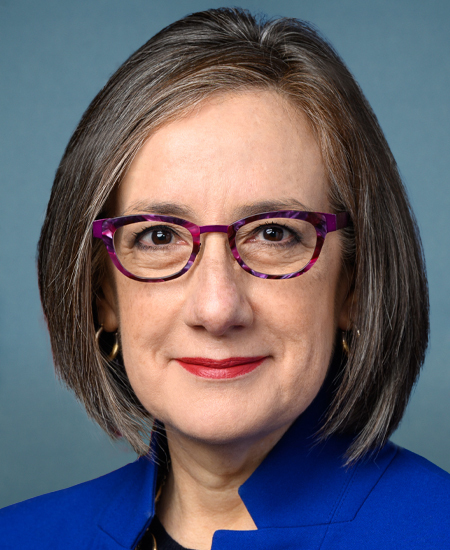
Rep. Andrea Salinas
Sponsored bills
Advancing Cutting Edge Agriculture Act or the ACE Agriculture Act This bill reauthorizes the Agriculture Advanced Research and Development Authority (AGARDA) and expands the program's environmental sustainability goals. (The program supports innovative research and development of technology, research tools, and products to address long-term and high-risk challenges related to food and agriculture.) The bill expands the program's goals to include water conservation and responding to greenhouse gas emissions, as well as resilience to (1) drought, (2) infectious diseases, and (3) plant and animal pathogens and pests. The bill also removes the current pilot program designation and requires the Department of Agriculture to establish and maintain an AGARDA staff.
Maddy summaryHR 2386, the Community Wood Facilities Assistance Act of 2023, amends two existing federal grant programs to support forest products manufacturing. It increases annual funding from $25 million to $50 million for fiscal years 2024-2028 and shifts focus from energy projects to construction, use, or retrofitting of facilities that process forest products. The bill raises the maximum grant amount from $3.5 million to $5 million per project and adjusts technical requirements, such as increasing thermal energy thresholds and adding market competitiveness as a consideration. This directly affects forest products manufacturers, sawmills, and rural communities seeking to expand or modernize wood-processing facilities.
Maddy summaryHR 1788, the "Goldie’s Act," strengthens USDA enforcement of the Animal Welfare Act. It requires annual inspections of all regulated animal businesses (like dealers, research facilities, and exhibitors) and mandates immediate, humane confiscation of animals suffering due to violations, while prohibiting owners from destroying animals during this process. The bill increases civil penalties to $10,000 per violation, requires hearing panels including veterinarians, and mandates that penalties consider business size and violation severity. It also requires USDA to share violation records with local animal control within 24 hours.
Maddy summaryThe Water Affordability, Transparency, Equity, and Reliability Act of 2023 establishes a new trust fund funded by increasing the corporate tax rate from 21% to 24.5% to support water infrastructure and affordability programs. It allocates funds to clean water programs (42%), safe drinking water funding (42.5%), household water wells (1%), colonias assistance (0.5%), Indian health services (3%), and water operator job training (0.5%). The bill requires the EPA to conduct a study and submit a report on water affordability, discrimination in water services, public participation in regionalization, and data collection related to service disconnections. It includes specific provisions for colonias, household water wells, and job training programs for water system operators to improve water access and equity.
Maddy summaryThe Healthy H2O Act establishes a federal grant program to help rural households and facilities improve drinking water quality by covering costs for point-of-use or point-of-entry water treatment systems, filter replacements, and related services. It directly assists eligible end users in rural areas - including homeowners, renters, child-care facilities, and small residential property owners - who have tested water containing health contaminants like lead, arsenic, or PFAS, while prioritizing private well users and limiting assistance to households with income below 150% of the median nonmetropolitan household income. Grants can fund certified treatment systems, installation by qualified professionals, maintenance, and water quality testing, administered by the Department of Agriculture with $10 million annually from 2024-2028. The program requires annual reports to Congress on progress, barriers to safe water access, and trends in treatment technology use to inform future improvements.
This bill expresses the sense of Congress that (1) medication abortion is appropriately approved and regulated under federal law, and (2) federal law preempts any in-person dispensing requirements or telehealth restrictions with respect to medication abortion under state law.
This resolution urges (1) the President to issue a proclamation recognizing Earth Day; and (2) governments and people to continue building upon the Paris Agreement and other efforts to ensure that future generations inherit a livable, sustainable, and ecologically rich planet.
Maddy summaryThe Dignity for Detained Immigrants Act establishes new standards for Department of Homeland Security detention facilities, requiring them to meet or exceed the American Bar Association's Civil Immigration Detention Standards. The bill mandates annual, unannounced inspections by the DHS Inspector General, public reporting on facility compliance, and a phased-out timeline for private detention facilities (phasing out by 3 years after enactment). It prohibits solitary confinement for all detainees, requires community-based alternatives to detention for vulnerable individuals, and mandates detailed public reporting on facility conditions, staffing, and detainee demographics. The legislation directly affects all immigrants held in DHS custody, including children, vulnerable persons, and primary caregivers, with specific protections for these groups in detention procedures.
Maddy summaryThe SAD Act prohibits crisis pregnancy centers (CPCs) from making deceptive claims about offering abortion services, contraception, or employing licensed medical personnel. It directly affects CPCs nationwide - over 2,500 of which operate under false pretenses, often outnumbering abortion clinics by 3:1 in many states. The Federal Trade Commission (FTC) would enforce this by imposing civil penalties up to $100,000 or 50% of a CPC’s annual revenue for violations. The law requires CPCs to provide accurate information about reproductive health services, aiming to prevent misleading patients from accessing abortion care.