

Maddy summaryThis bill increases per diem payments for homeless veterans receiving VA services. It raises the daily payment rate from $115 to $200 for certain housing-related services, including emergency responses. The change directly affects homeless veterans who qualify for these VA-funded housing supports. The key provision adjusts the payment rate in Section 2012(a)(2)(B) of the U.S. Code to provide higher funding for services assisting homeless veterans.
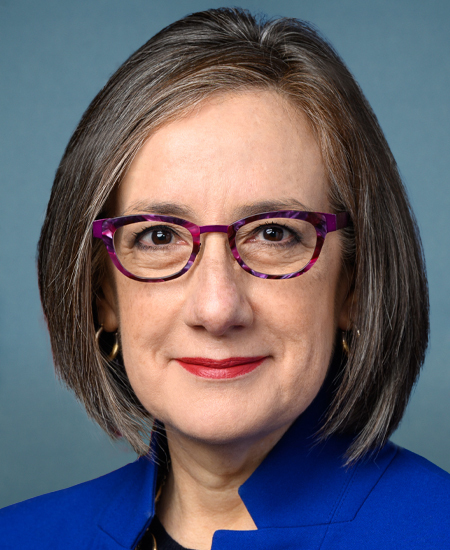
Rep. Andrea Salinas
Sponsored bills
Methane Emissions Research Act This bill requires the Environmental Protection Agency to conduct a methane research pilot study to quantify methane emissions from infrastructure used for the production, gathering and boosting, processing, transmission, and storage of oil and natural gas in the United States.
Maddy summaryThe CARE Act of 2023 strengthens protections for child farmworkers by amending the Fair Labor Standards Act. It raises minimum age requirements (restricting 14-15 year olds to family farms outside school hours, and limiting 16-17 year olds to family farm work outside school hours), repeals a waiver allowing children in hand-harvest labor, and increases penalties for violations (up to $60,115 for serious injury or death). The bill requires employers to report work-related injuries or deaths of child farmworkers under 18 and mandates annual reports to Congress on child farmworker safety data. It also prohibits children under 18 from working as pesticide handlers, directly affecting an estimated 100,000+ child farmworkers in the U.S.
Maddy summaryThis bill requires federal agencies collecting demographic survey data to begin including questions on sexual orientation, gender identity, and variations in sex characteristics (intersex traits) within 360 days of enactment. Agencies must review existing surveys to identify gaps, develop privacy-protective methods for collecting this data (including anonymization and data destruction protocols), and incorporate it into relevant reports within three years. The law applies to all federal surveys that collect standard demographic data (like race, ethnicity, and age), such as the census or health surveys, but does not compel individuals to disclose their status. It emphasizes maintaining confidentiality, allows limited agency waivers if standards can't be met, and mandates a congressional report on implementation within two years.
Maddy summaryHR 3850, the Pride In Mental Health Act of 2023, establishes a federal grant program to improve mental health and substance abuse services for LGBTQ+ youth (including nonbinary, intersex, and Two Spirit individuals). The bill directs the Health and Human Services Secretary to fund eligible organizations to provide trauma-informed care, cultural competency training for caregivers, school bullying prevention guidelines, and family support resources. It explicitly prohibits grant funds from being used for conversion therapy or advertising related to such therapy. The bill also requires data collection on LGBTQ+ youth mental health and a federal survey to measure psychological distress.
Maddy summaryThe American Family Act establishes a monthly child tax credit of $250 per month for each child under age 6 and $300 per month for each child aged 6-18, with income limits of $150,000 for joint filers and $112,500 for other filers. The credit is refundable, meaning it can be paid even if the taxpayer owes no income tax, and will be adjusted annually for inflation. The bill includes detailed rules for determining eligibility, including requirements that the child resides with the taxpayer for more than half the month and provisions to prevent fraud through recapture of improperly received payments. The credit will be paid monthly in advance rather than as a single annual payment, with specific mechanisms for calculating and distributing the payments.
Maddy summaryHR 3873 establishes "Ocean Innovation Clusters" in coastal and Great Lakes regions to foster collaboration among businesses, academic institutions, and government entities for sustainable ocean-related industries (the "Blue Economy"). The bill designates at least seven clusters, prioritizing those serving diverse, underserved communities and promoting economic resilience in areas like fishing, tourism, and renewable energy. It authorizes $50 million annually (2024-2029) for grants to support cluster operations and build physical collaboration centers focused on workforce development, sustainable seafood supply chains, and ocean energy innovation. These clusters aim to create jobs and support small businesses through shared resources, partnerships, and targeted economic growth initiatives.
Maddy summaryHR 698, the Assault Weapons Ban of 2023, prohibits the sale, manufacture, transfer, and possession of specific firearms and ammunition devices commonly referred to as "assault weapons" and "large capacity magazines" in interstate commerce. The bill defines "semiautomatic assault weapons" to include rifles like AR-15s and AK-47s, as well as firearms with specific features such as folding stocks, pistol grips, threaded barrels, and detachable magazines holding more than 15 rounds. It exempts law enforcement, military, antique firearms, and weapons already lawfully owned before the law's enactment (known as "grandfathered" weapons). The bill also requires new identification markings on these weapons and large capacity magazines, and adds background check requirements for transfers of grandfathered weapons.
Maddy summaryThe Universal School Meals Program Act of 2023 would establish a universal school meals program providing free breakfast and lunch to all children enrolled in participating schools, regardless of family income. Key provisions include eliminating income-based eligibility requirements for school breakfast and lunch programs, setting specific reimbursement rates ($2.80 for breakfast and $4.63 for lunch with annual inflation adjustments), and prohibiting schools from collecting debt for unpaid meals or "shaming" students. The bill also replaces references to "free or reduced price" with "economically disadvantaged students" in related laws and establishes new methods for identifying children from low-income backgrounds. This legislation would directly affect all public schools participating in the National School Lunch Program and School Breakfast Program.
Maddy summaryHR 3174 creates two new grant programs to address forests damaged by invasive plant pests and weeds. It authorizes competitive research grants (up to $400,000 annually per entity) for organizations like universities and nonprofits to study forest restoration methods, including biological control and genetic solutions, with a 20% non-Federal matching requirement. It also establishes implementation grants ($25 million annually) for eligible groups to carry out restoration projects, requiring a 10% non-Federal match and prioritizing areas most at risk from invasive species. Funding for these programs totals $3 million in 2023, increasing to $10 million annually for research and $25 million yearly for implementation through 2026.