

Maddy summaryThis bill, HR 1282 (Major Richard Star Act), expands benefits for certain military retirees by allowing them to receive both veterans' disability compensation and military retirement pay simultaneously. It specifically affects combat-related disabled retirees under Chapter 61 of the military retirement system who have fewer than 20 years of service. The key change removes the automatic reduction of military retirement pay when these retirees also receive disability compensation, as amended in Section 1413a(b)(3) of Title 10. Technical updates to the law’s structure and effective date (starting after enactment) complete the provisions.
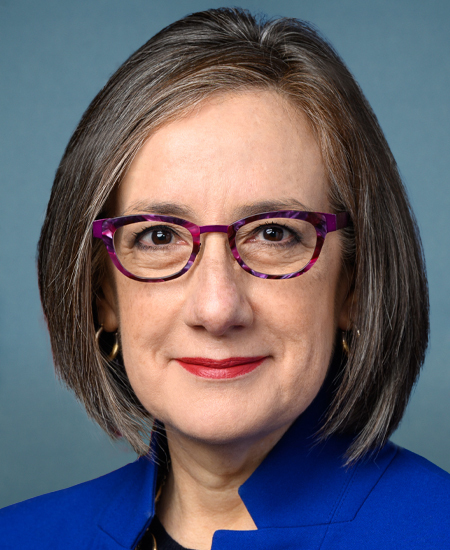
Rep. Andrea Salinas
Sponsored bills
Maddy summaryHCONRES 56 is a non-binding congressional resolution recognizing that climate change disproportionately harms children's health, economic opportunities, and rights. It expresses Congress's view that U.S. leadership is urgently needed to address the climate crisis and calls for a national climate recovery plan. The resolution specifically demands a science-based plan to phase out fossil fuels, protect natural carbon sinks, and reduce atmospheric CO2 to below 350 parts per million by 2100. This resolution does not create new laws or allocate funds but formally states congressional support for a comprehensive climate strategy prioritizing children's well-being.
Maddy summaryHJRES 82 is a non-binding resolution stating that the Equal Rights Amendment (ERA) has been validly ratified by the required 38 states (including Virginia's 2020 ratification) and should be certified as the 28th Amendment to the U.S. Constitution. It directs the Archivist of the United States to fulfill their statutory duty under Title 1, U.S. Code, to certify and publish the ERA without delay. The resolution argues Article V of the Constitution has no ratification deadline, citing precedents like the 27th Amendment. It does not change the Constitution itself but urges the Archivist to complete the certification process. The bill affects the Archivist’s office, requiring them to act on the ERA’s ratification status.
Maddy summaryHRES 580 is a symbolic resolution expressing the House's support for designating "Journeyman Lineworkers Recognition Day." It honors lineworkers who work in hazardous conditions (such as at heights near live wires) and respond to disasters like hurricanes and wildfires, while recognizing their contributions and the legacy of Henry Miller, an early electrical worker who died on the job. The resolution has no legal effect - it solely encourages public recognition and reflection on these workers' service.
Maddy summaryThe National Wildland Fire Risk Reduction Program Act (HR 4584) establishes a coordinated federal program to reduce losses of life and property from wildland fires through improved research, data sharing, and community resilience efforts. It creates an Interagency Committee with representatives from 16+ federal agencies to oversee research on fire behavior, climate impacts, and fire-resistant building techniques, while developing tools for better prediction and mitigation. The program authorizes specific funding levels over five years for participating agencies to support interdisciplinary research, data systems, and community education initiatives, directly affecting communities at risk of wildland fires (particularly at the wildland-urban interface) and federal agencies involved in fire response. The bill requires an annual strategic plan, progress reports, and coordination with stakeholders to translate research into practical fire risk reduction strategies.
Child Care Investment Act of 2023 This bill increases the employer-provided child care tax credit, the amount excludable from gross income for dependent care flexible spending accounts, and makes the household and dependent care tax credit refundable. Among other provisions, the bill increases the rate of the employer-provided child care tax credit from 25% to 50% and increases the maximum credit amount from $150,000 to $500,000. It also increases (1) the pre-tax deduction for dependent care flexible spending accounts from $5,000 to $10,000, plus an additional $2,000 for each eligible dependent; and (2) the rate of the household and dependent care tax credit and makes such credit refundable.
Maddy summaryHR 4579, the Fairness for Farm Workers Act, amends the Fair Labor Standards Act to establish phased overtime requirements for agricultural workers. Starting in 2024, most farm employers must pay overtime for hours worked beyond 55 per week (reducing to 50 in 2025, 45 in 2026, and 40 in 2027), with small farms (25 or fewer employees) getting a 3-year delay on the full 40-hour standard. The bill also removes existing exemptions that allowed some agricultural employers to avoid overtime pay for certain workers. This directly affects farm workers in agriculture and their employers, requiring compliance with standard overtime rules previously not applied to this sector.
Maddy summaryHR 4550 creates a federal grant program to help public elementary, secondary, and preschool schools recruit and retain paraprofessionals (school support staff like teaching assistants). The bill directs the Secretary of Education to fund state education agencies, which then distribute subgrants to schools - prioritizing those serving high numbers of low-income students - to support activities like mentoring programs, professional development, and wage increases or certification assistance (e.g., for special education or English learner support). States must report annually on wage baselines, paraprofessional numbers, and program outcomes. This bill directly affects schools and paraprofessionals, with funding authorized for fiscal years 2024-2028.
Maddy summaryThe DISCLOSE Act of 2023 would increase transparency in political spending by requiring organizations making campaign-related disbursements over $10,000 to disclose the names and addresses of their major donors, including the top five funders for political communications. It would close loopholes allowing foreign nationals to secretly fund election activities through corporations or other entities by expanding the definition of prohibited foreign contributions. The bill would mandate "stand by every ad" disclosure requirements for political communications across all media, including audio, video, and internet ads, requiring clear identification of funders. It would also require reporting of disbursements related to Federal judicial nominations, which currently aren't subject to disclosure requirements. These provisions would apply to corporations, labor organizations, and certain nonprofits that engage in political activity.
Maddy summaryThe IDEA Full Funding Act (HR 4519) mandates specific annual increases in federal funding for special education programs under the Individuals with Disabilities Education Act (IDEA). It requires Congress to appropriate increasing amounts each fiscal year - from $5.87 billion for 2024 up to $55.53 billion for 2033 - to reach 40% of the national average per-pupil expenditure for public schools by 2033. This directly affects all public school districts serving students with disabilities, as federal IDEA funding supports their special education services. The bill sets fixed dollar amounts or percentage targets (whichever is greater) for each fiscal year, aiming to gradually close the long-standing gap between promised and actual federal funding. It does not alter eligibility for services but mandates higher, phased funding levels to meet the 40% target.