

Maddy summaryHR 1200, the National Right-to-Work Act, prohibits requiring workers to join a union or pay dues as a condition of employment in both private-sector workplaces (covered by the National Labor Relations Act) and railroad industries (covered by the Railway Labor Act). The bill amends key sections of these laws to eliminate provisions that allowed union security agreements, meaning workers in unionized settings would no longer be forced to pay dues to retain their jobs. This directly affects employees in unionized workplaces across the U.S., particularly those in industries with existing union contracts that included mandatory dues. The law changes the legal framework to ensure union membership and dues payment remain voluntary for all workers.
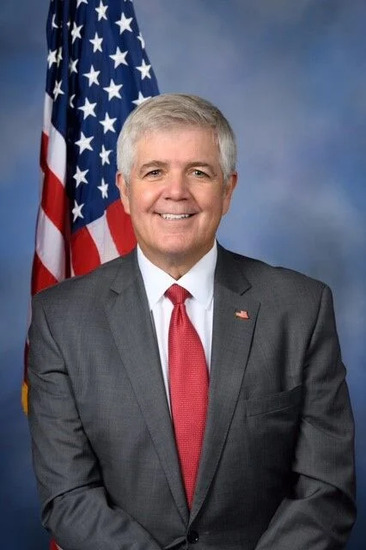
Rep. Cliff Bentz
Sponsored bills
Maddy summaryHR 726, the Veterans for Mustangs Act, amends the Wild Free-Roaming Horses and Burros Act to require the Secretary of the Interior to prioritize recruiting military veterans for training in on-range fertility control methods for wild horse and burro populations. The bill mandates that veterans complete a certification program (like the PZP applicator course) and receive appropriate compensation, with the Bureau of Land Management allowed to contract these veterans for management activities without classifying them as federal employees. This directly affects military veterans seeking employment opportunities and the Bureau of Land Management’s approach to managing wild horse populations. The key change is embedding veteran recruitment into the standard process for implementing fertility controls, replacing previous management language with specific veteran-focused provisions.
Endangered Species Transparency and Reasonableness Act of 2023 This bill revises requirements concerning determinations on whether a species is a threatened or endangered species under the Endangered Species Act of 1973 (ESA) and caps attorney's fees to prevailing parties in ESA citizen suits. The U.S. Fish and Wildlife Service (USFWS) and the National Marine Fisheries Service (NMFS) must publish online, subject to privacy or administrative limitations, the best scientific and commercial data available that are the basis for each determination. The bill states that the term best scientific and commercial data available includes all data submitted by a state, tribal, or county government. Thus, the USFWS and NMFS would no longer consider whether data from those sources are the best scientific and commercial data available. Instead, the data would be automatically deemed the best scientific and commercial data available regardless of the quality of the data. Before making a determination on whether a species is an endangered or threatened species, the USFWS and NMFS must provide affected states with all of the data that is the basis of the determination. The Department of the Interior must also publish and maintain an online searchable database that discloses federal expenditures related to litigation under the ESA.
Maddy summaryHR 189, the "Action Versus No Action Act," requires federal agencies (like the Department of Agriculture or Interior) to limit environmental reviews for certain forest management projects to only two options: proceeding with the project or taking no action. It applies specifically to projects on lands suitable for timber production that meet one of four criteria, such as being developed through a collaborative process or covered by a community wildfire protection plan. The bill mandates that agencies analyze only these two alternatives, including detailed assessments of how "no action" would impact forest health, wildfire risk, habitat, and economic factors. This change streamlines environmental reviews but restricts consideration of other potential management approaches.
Water Supply Permitting Coordination Act This bill makes the Bureau of Reclamation the lead agency for the purpose of coordinating all permitting and related activities required to construct certain new surface-water storage projects. Specifically, Reclamation must identify, notify, and coordinate all Federal agencies that may have jurisdiction over a review, analysis, opinion, statement, permit, license, approval, or decision for a qualifying project. A state where a project is being considered may also choose to participate as a cooperating agency. Reclamation's coordination responsibilities include (1) preparing a unified environmental review document, and (2) maintaining a consolidated administrative record and project data records. Additionally, Reclamation is authorized to accept and expend funds contributed by a nonfederal public entity to expedite the evaluation of a permit for such a project.
Maddy summaryThe HELP Copays Act (HR 830) changes how health insurance plans calculate patient cost-sharing. It requires that payments made by third parties (like pharmacies, charities, or discount programs) toward medical costs count toward a patient's deductible, copay, or out-of-pocket limit. This directly affects insured individuals who receive financial assistance, discounts, or product vouchers for healthcare expenses. The law ensures these external payments reduce the patient's actual out-of-pocket costs more quickly, aligning with existing Affordable Care Act and Public Health Service Act requirements.
Maddy summaryThis bill authorizes a single Congressional Gold Medal to honor all U.S. Army Dustoff crews who served during the Vietnam War (1962-1973). It recognizes their critical role in evacuating nearly 900,000 wounded personnel, including U.S., South Vietnamese, and allied forces, under extreme combat conditions. The medal, designed with input from the Secretary of Defense, will be presented to the U.S. Army Medical Department Museum for permanent display. Duplicate bronze medals may be sold to cover costs, but the primary action is the commemorative recognition of these crews' service.
Maddy summaryThe EAGLES Act of 2023 reauthorizes and expands the U.S. Secret Service’s National Threat Assessment Center (NTAC) to prevent targeted violence, particularly in schools. It directs the NTAC to provide training, research, and consultation on threat assessment to schools, law enforcement, and mental health professionals, with a focus on early intervention for concerning behaviors. The bill allocates $10 million annually (2024-2028) for these efforts, requiring the Center to develop state-specific training plans and report on outcomes like the number of schools trained. It directly affects school districts, educators, and community safety agencies by standardizing evidence-based prevention programs, avoiding criminal justice involvement for at-risk youth.
Maddy summaryHR 987 authorizes the U.S. Mint to produce commemorative coins honoring Golda Meir, Israel's first female Prime Minister, and the 75th anniversary of U.S.-Israel relations. It specifies three coin types: $5 gold coins (max 50,000), $1 silver coins (max 400,000), and half-dollar clad coins (max 750,000), with detailed weight and composition requirements. All coins will include Golda Meir's image, her name, and commemorative inscriptions, and will be sold during 2026. A surcharge ($35 for $5 coins, $10 for $1 coins, $5 for half-dollars) will be paid to the American Friends of Kiryat Sanz Laniado Hospital Inc. to support its hospital operations.
Protecting Kids from Candy-Flavored Drugs Act This bill establishes enhanced criminal penalties for certain federal drug offenses involving the manufacture or distribution of candy-flavored controlled substances or similar products for minors. Specifically, the bill imposes enhanced criminal penalties for a federal drug offense that involves manufacturing, creating, distributing, dispensing, or possessing with intent to distribute a controlled substance listed in schedule I or II that is combined with a candy or drink, marketed to appear similar to a candy or drink, or modified by flavoring or coloring to appear similar to a candy or drink. To be subject to an enhanced penalty, the individual must have knowledge or reasonable cause to believe that the controlled substance will be distributed, dispensed, or sold to an individual who is under 18 years of age.