

Maddy summaryHR 7938, the Klamath Basin Water Agreement Support Act of 2024, amends the 2000 Klamath Basin Water Supply Enhancement Act to give the Secretary of the Interior new authority to manage water projects in the Klamath Basin watershed. The bill allows the Secretary to plan and fund projects that reduce harm to fish (like preventing fish from being sucked into water systems), restore habitats, and address irrigation impacts, including reimbursing the Tulelake Irrigation District for 69% of Pumping Plant D operational costs. It requires collaboration with tribes, states, and local agencies through agreements and mandates compliance with environmental laws like the Endangered Species Act. The bill directly affects tribal fishery resources (particularly Klamath River tribes), irrigation districts, and federal water management in Oregon and California. It does not create new water rights or alter existing tribal trust obligations.
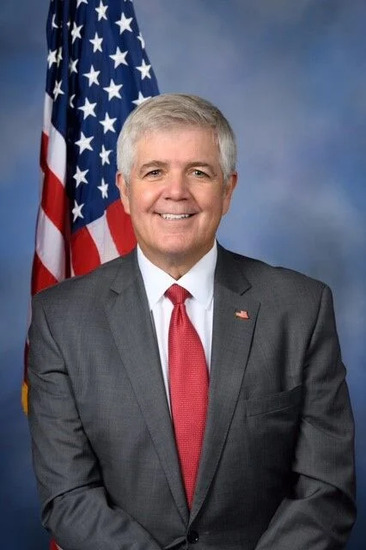
Rep. Cliff Bentz
Sponsored bills
Maddy summaryThe America's Wildlife Habitat Conservation Act creates new funding mechanisms to support wildlife habitat conservation across the United States. It establishes a $300 million annual subaccount for states, territories, and the District of Columbia to restore habitat for species listed as threatened or endangered under federal or state law, and to prevent species from needing such listings, with at least 15% of funds dedicated to endangered species recovery. The bill also creates a $20 million annual account specifically for tribal wildlife conservation programs. Funds must be used for habitat restoration, species conservation, invasive species management, and must be tracked through annual reporting requirements to demonstrate effectiveness.
Maddy summaryThis bill allows electrical utilities operating on National Forest System land to clear trees and vegetation near power lines without needing a separate timber sale, as long as the work follows existing land management plans and environmental laws. It directly affects utilities managing power infrastructure on federal forest land by streamlining vegetation management to reduce wildfire risks. Utilities must share any money earned from selling cleared vegetation (minus transportation costs) with the Forest Service, though they aren’t required to sell the material. The law focuses on improving safety through routine maintenance while ensuring revenue from vegetation removal benefits federal land management.
Maddy summaryThe Save Our Sequoias Act establishes a coordinated approach to protect giant sequoia groves in California from wildfires, insects, and drought. It creates a Giant Sequoia Lands Coalition including federal agencies, state governments, and the Tule River Indian Tribe to assess grove health, develop protection projects, and recommend forest management activities. The bill streamlines implementation of certain projects through categorical exclusion from environmental reviews, authorizes $10-40 million annually for conservation efforts, and establishes a fund for philanthropic support of sequoia protection.
Maddy summaryThe FOCA Act of 2023 requires federal agencies to stop mandating or banning contractor agreements with labor organizations (like union contracts) in construction project bids and contracts. It directly affects federal contractors, subcontractors, and agencies managing construction projects funded by the government. The bill prohibits favoring or penalizing contractors based on their labor affiliation status, aiming to promote fair competition and reduce costs. It also mandates updates to federal contracting rules within 60 days of enactment to implement these changes.
Maddy summaryThe PROVE IT Act of 2024 directs the U.S. Energy Secretary to study and publicly report on the greenhouse gas emissions intensity of key U.S. manufactured products (like steel, aluminum, lithium batteries, and critical minerals) compared to those produced in "covered countries" (including the EU, China, and major trading partners). It requires a transparent methodology for calculating emissions data, identifies gaps in existing data, and establishes a public online database showing U.S. emissions advantages for these products. The bill also mandates an annual report on foreign countries using forced labor or human rights abuses in the production of critical minerals or rare earths. Importantly, it clarifies the study does not create new taxes, fees, or mandatory reporting requirements.
Maddy summaryThis bill cancels Executive Order 14072, which aimed to protect old-growth forests, and prohibits the Agriculture and Interior Secretaries from implementing, enforcing, or developing rules related to that order or similar policies. It specifically blocks the finalization of a planned environmental review for managing old-growth forests across national forests, as outlined in a June 2024 Forest Service notice. The bill directly affects federal forest management decisions by halting actions tied to the canceled executive order. It focuses on reversing specific administrative steps rather than creating new environmental standards.
Maddy summaryThe SOAR Act of 2024 removes supplemental oxygen and related equipment, supplies, and services from Medicare's competitive bidding program, ensuring direct Medicare payment for these items starting in 2025. It establishes new payment rates for oxygen services, including specific rates for rural areas and liquid oxygen with annual inflation adjustments, and requires oxygen suppliers to provide specific services like initial evaluations, safety education, and 24-hour coverage. The bill also adds respiratory therapist services to Medicare coverage with a new payment add-on, requires electronic templates for documenting medical necessity for oxygen services, and establishes new beneficiary rights including the right to choose suppliers and receive timely equipment repairs. This legislation directly affects Medicare beneficiaries requiring oxygen therapy, oxygen suppliers, and respiratory therapists by changing how these services are paid for and delivered.
Maddy summaryThis bill, HR 6860, protects patients with end-stage kidney disease (ESRD) who require dialysis by preventing health insurance plans from discriminating against them. It amends Medicare rules to prohibit plans from treating dialysis coverage differently than other medical services based on a patient’s ESRD diagnosis, need for dialysis, or any other factor. The bill clarifies that plans can still choose which dialysis providers to include in their networks but cannot deny or limit coverage for dialysis services solely because of the patient’s condition. It ensures Medicare remains the secondary payer for these services as intended, without forcing plans to cover specific providers.
Maddy summaryThis bill updates Medicare's physician fee schedule to better align with current healthcare costs and support providers. It extends a key deadline for geographic payment adjustments from 2024 to 2025, increases the rate for payment adjustments from 1.25% to 3%, and extends incentive payments for doctors in alternative payment models (APMs) through 2026. For 2026, it imposes payment reductions (34% for 4-6 years in APMs, 67% for 7+ years) but allows exceptions if providers increased their financial risk compared to 2025. The bill also raises Medicare's budget neutrality threshold to $53 million in 2025 and requires regular updates to cost data (like staff wages and equipment prices) every five years. These changes directly affect Medicare-participating physicians, especially those in APMs, by altering payment calculations and incentives.