

Alternatives to Prevent Addiction In the Nation Act or the Alternatives to PAIN Act This bill reduces cost-sharing and prohibits the imposition of certain utilization requirements under the Medicare prescription drug benefit for certain non-opioid pain management drugs. Specifically, the bill requires such drugs to be covered without a deductible and to be placed on the lowest cost-sharing tier (if any). The bill also prohibits the imposition of prior authorization requirements (i.e., requiring prior approval from a plan) or step therapy requirements (i.e., requiring the use of alternative drugs before a drug is covered under a plan) with respect to such drugs.
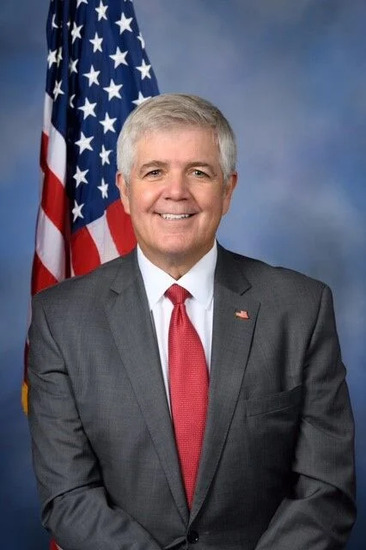
Rep. Cliff Bentz
Sponsored bills
Maddy summaryHR 1232, the National Right-to-Work Act, would make union membership voluntary for workers in most private-sector jobs by removing legal requirements for employees to join a union or pay dues as a condition of employment. It directly affects workers in unionized workplaces covered by the National Labor Relations Act (including most private employers) and railroad workers covered by the Railway Labor Act. The key change eliminates provisions that allowed "union security agreements" (requiring dues or membership), meaning workers could no longer be forced to pay union fees to keep their jobs. This bill does not change other labor rights or create new programs - it only modifies existing laws to allow workers to opt out of union membership and financial obligations.
Rural Obstetrics Readiness Act This bill creates and expands federal grant programs within the Health Resources and Services Administration (HRSA) to increase capacity to provide emergency obstetric health services in rural areas or areas without practitioners or facilities specializing in obstetric services. Specifically, HRSA must establish a program for providing grants to certain hospitals or consortiums that include hospitals in rural areas or areas with maternal health care professional shortages for training, developing a workforce, and purchasing equipment relating to obstetric emergencies. In addition, the bill requires HRSA’s Alliance for Innovation on Maternal Health Capacity program to provide grants for training on emergency obstetric services for practitioners in rural health care facilities without dedicated obstetric units. HRSA must also establish a pilot program to provide grants to government entities for developing or improving telehealth access programs to support urgent maternal health care in rural facilities without a dedicated obstetric unit.
Maddy summaryHR 1206, the WEST Act of 2025, cancels a specific Bureau of Land Management (BLM) rule titled "Conservation and Landscape Health" (published in the Federal Register on April 3, 2023). The bill directly affects the BLM and anyone subject to the rule, which governed land management practices on public lands. Its key mechanism is a straightforward provision declaring the rule "shall have no force or effect," effectively removing it from federal regulations without creating new policies. This is a procedural action targeting a specific existing regulation, not a broader policy change.
Maddy summaryHR 21, the Born-Alive Abortion Survivors Protection Act, requires medical staff at abortion facilities to provide the same immediate care and hospital admission to any infant born alive during an abortion as they would for any newborn. It mandates reporting failures to provide this care to law enforcement and imposes penalties of up to 5 years in prison for violations, with harsher penalties for intentional killing. The bill also allows women who undergo abortions to sue for civil damages, including triple the abortion cost, and provides for attorney fees. It defines "abortion" to exclude procedures performed after viability to preserve a live birth. This law directly affects healthcare providers at abortion facilities and creates new federal legal obligations for them.
Maddy summaryHR 626, the Northwest Energy Security Act, requires federal agencies managing the Federal Columbia River Power System (FCRPS) to operate dams according to the 2020 environmental review (Supplemental Opinion). It allows limited amendments to this operating plan only if agencies determine changes are needed for public safety, grid reliability, or if outdated requirements are no longer valid. The bill explicitly prohibits any new restrictions on hydroelectric generation or navigation on the Snake River without specific new federal law. This directly affects the Secretaries of the Interior, Energy, and Army (through their agencies) in managing FCRPS operations.
Maddy summaryHR 632 prohibits federal funding (directly or indirectly) for colleges and universities that host or are affiliated with campus health clinics providing abortion drugs or abortions to students or employees. Institutions must annually certify to federal education and health agencies that no such services are offered at their campus sites. The bill defines "abortion drugs" broadly as any medication intended to terminate pregnancy (excluding cases for live birth, miscarriage management, or ectopic pregnancy treatment). This policy directly affects institutions receiving federal funds, requiring them to ensure campus health services comply with the prohibition to maintain eligibility.
Maddy summaryHR 7 prohibits federal funds from being used for abortions or health insurance plans covering abortion, with exceptions for pregnancies resulting from rape, incest, or when a woman's life is endangered. It blocks federal premium tax credits under the Affordable Care Act for health plans covering abortion (except in specified cases) and requires clear disclosure of abortion coverage and related surcharges in plan materials. The bill allows individuals or employers to purchase separate abortion coverage using non-federal funds, such as out-of-pocket payments, without affecting federal subsidies. It directly affects federal health programs, ACA marketplace plans, and health insurance issuers offering coverage that includes abortion services.
Healthcare Freedom and Choice Act This bill nullifies a rule regarding short-term, limited-duration health insurance plans. The rule was promulgated by the Internal Revenue Service, Employee Benefits Security Administration, and Department of Health and Human Services; is titled Short-Term, Limited-Duration Insurance and Independent, Noncoordinated Excepted Benefits Coverage ; and was published April 3, 2024. Short-term, limited-duration health insurance plans are plans that may only offer coverage for a limited amount of time and are exempt from the market requirements of the Patient Protection and Affordable Care Act (e.g., coverage of individuals with preexisting conditions). The rule limits the length of the initial contract period for such a plan to no more than three months and, taking into account any renewals or extensions, the maximum coverage period to no more than four months. The rule also includes within the maximum renewal period limitation a new plan sold by the same issuer, or any issuer that is a member of the same controlled group, to the same policyholder within a 12-month period. Regulations in effect prior to the rule this bill nullifies permitted short-term, limited-duration health insurance plans with an initial contract period of fewer than 12 months and a maximum coverage period of up to 36 months, including renewals and extensions.
Maddy summaryThis bill designates the United States Postal Service facility at 125 South 1st Avenue in Hillsboro, Oregon, as the "Elizabeth Furse Post Office Building." It updates all federal references - such as in laws, maps, and documents - to use this new name for the location. The bill does not change any postal services, operations, or policies; it only modifies the building's official designation.