

Maddy summaryThis bill prohibits state officials from blocking abortion access for patients traveling from other states, including restricting providers who offer legal abortions in their state to out-of-state patients. It protects people traveling across state lines for legal abortions, those assisting such travel, and the interstate transport of FDA-approved abortion medication. Violations can be challenged by the Justice Department or affected individuals through civil lawsuits seeking injunctions and damages. The law applies broadly across all states, territories, and tribal nations, defining "abortion service" to include both medical procedures and related care.
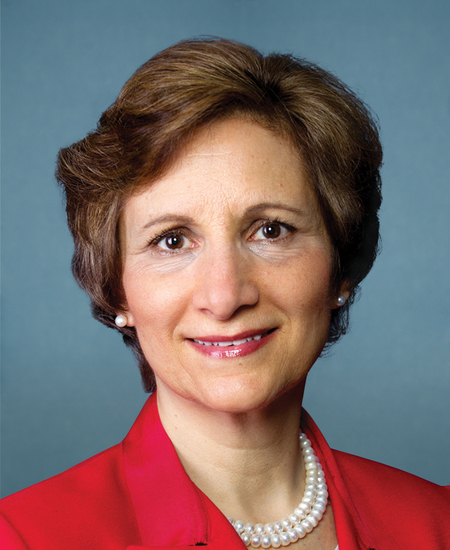
Rep. Suzanne Bonamici
Sponsored bills
Maddy summaryHR 4104 would expand access to Medicaid, CHIP, and Affordable Care Act (ACA) health coverage for immigrants lawfully present in the U.S., including those with deferred action or pending immigration applications. It removes state-level barriers to Medicaid/CHIP eligibility for lawfully present individuals, treats Federally authorized presence as "lawfully present" for ACA subsidies, and allows states to choose to cover undocumented individuals through Medicaid or CHIP. The bill also extends these changes to Medicare Part A and Part B, ensuring lawfully present immigrants qualify for coverage and subsidies under existing programs. These provisions apply to all federally funded health programs and take effect in 2026 for most ACA-related changes.
Maddy summaryThis bill creates federal funding for community-based violence intervention programs in high-violence areas, targeting communities with 35+ homicides annually or 20+ homicides with rates double the national average. It establishes grants for community organizations to implement trauma-informed violence interruption strategies, hospital-based programs for injured patients, and job training for "opportunity youth" (16-25 year olds not in school or work). The legislation authorizes $300 million in 2026, increasing to $700 million annually through 2033, with requirements for evidence-based approaches that reduce violence without contributing to mass incarceration. It creates a National Community Violence Response Center to coordinate data collection, research, and best practices for these programs. The focus is on prevention through economic opportunity, trauma care, and community-driven interventions rather than traditional law enforcement approaches.
Maddy summaryHR 4073 reauthorizes and updates the Tsunami Warning and Education Act to modernize U.S. tsunami warning systems. It requires NOAA to improve data management (including real-time GNSS network data), update inundation maps, evaluate alert terminology with communities, and integrate tsunami warnings into the USGS Earthquake Early Warning System. The bill mandates $32 million annually (2026-2030) for these efforts, with 27% funding state-level tsunami hazard mitigation programs and 8% supporting tsunami research. This directly affects coastal communities at risk, NOAA warning centers, and federal agencies like USGS and NASA through enhanced forecasting, data sharing, and standardized warning protocols.
Maddy summaryHR 4074, the Optimizing Postpartum Outcomes Act of 2025, requires the Health and Human Services Secretary to issue guidance within one year on improving Medicaid and CHIP coverage for pelvic health services during pregnancy and the postpartum period (defined as up to 6 months after birth or during lactation). The bill directs the GAO to study coverage gaps for these services and mandates a new CDC-led education campaign to train healthcare providers and inform postpartum women about pelvic floor exams and physical therapy. Key provisions include standardizing terminology for pelvic health conditions, sharing state best practices for payment models, and authorizing $2 million annually for the education program through 2030. This bill directly affects postpartum women covered by Medicaid or CHIP by aiming to increase access to evidence-based pelvic health care.
Maddy summaryThe Insurrection Act of 2025 would clarify and limit when the President can deploy military forces domestically to address insurrections, rebellions, or widespread violence. It requires state and local authorities to be unable to handle the situation, with specific circumstances including obstruction of voting rights or Federal law, and mandates the state governor's request for assistance. The bill requires the President to consult Congress, issue a proclamation ordering lawbreakers to disperse, and submit a detailed report before deployment, with military action limited to 7 days unless Congress passes a joint resolution approving it for up to 14 days. The bill explicitly prohibits using National Guard members on training duty for these purposes and provides for judicial review of deployments.
Maddy summaryThe MONARCH Act of 2025 establishes the Western Monarch Butterfly Rescue Fund to address the critical decline of western monarch butterflies, which have dropped 99% over 30 years and reached a low of 1,914 in 2020. It authorizes $12.5 million annually for fiscal years 2026-2030 to fund grants for conservation projects led by eligible entities like local governments, tribal agencies, nonprofits, and research institutions within the butterflies' range (California, Arizona, Nevada, Washington, Oregon, Idaho, and Utah). Projects must focus on restoring milkweed, nectar plants, and habitat while coordinating with wildlife authorities and avoiding conflicts with food safety practices. Recipients must report project progress to the Secretary of the Interior and make reports publicly available, with annual updates to Congress on conservation efforts and outcomes.
Maddy summaryHR 4047, the Coastal Communities Ocean Acidification Act of 2025, amends the 2009 Federal Ocean Acidification Research and Monitoring Act to improve collaboration on ocean acidification issues. The bill requires the National Oceanic and Atmospheric Administration (NOAA) to establish ongoing input mechanisms for affected industries, coastal stakeholders, fishery councils, Indigenous groups (including Indian Tribes and Native Hawaiian organizations), and non-Federal scientists. It mandates specific tribal representation on the Advisory Board, directs NOAA to coordinate with tribes on vulnerability assessments and research planning, and prioritizes underserved coastal communities in resource allocation. These changes aim to integrate community and tribal knowledge into federal research and management efforts related to ocean acidification impacts on coastal economies and ecosystems.
Maddy summaryHCONRES 37 is a non-binding congressional resolution urging the President to establish a U.S. Commission on Truth, Racial Healing, and Transformation. The resolution does not create the commission itself but calls for its formation to acknowledge historical racial injustices (like discriminatory housing policies, the Chinese Exclusion Act, and forced Native American boarding schools) and catalyze efforts to eliminate racial inequities. The commission would focus on dismantling the "belief in a hierarchy of human value" and advancing racial healing, complementing ongoing efforts like H.R. 40 (the reparations study bill). It directly affects federal leadership (via the President) and aims to guide national policy, though it has no legal force.
Maddy summaryHR 3968, the School Violence Prevention Act, creates a federal grant program to fund school-based violence prevention programs in communities with severe gun violence. It authorizes $25 million annually (2025-2031) for grants to partnerships between state/local education agencies and community nonprofits in areas experiencing high homicide rates (e.g., 35+ homicides annually) or double the national violent crime arrest rate for youth. Grants must support evidence-based programs for K-12 students - including trauma-informed counseling, conflict resolution skills, mental health access, and community engagement - while requiring annual data collection on outcomes like graduation rates. All programs must be evaluated by grantees and independent researchers, with reports shared publicly and submitted to Congress every three years.