

International Human Rights Defense Act of 2021 This bill establishes in the Department of State a permanent Special Envoy for the Human Rights of LGBTQI (lesbian, gay, bisexual, transgender, queer, or intersex) Peoples who shall serve as the principal State Department advisor regarding human rights for LGBTQI people and represent the United States in diplomatic matters relevant to the human rights of LGBTQI people. The special envoy shall periodically provide Congress with a U.S. global strategy to prevent and respond to criminalization, discrimination, and violence against LGBTQI people. The State Department and the U.S. Agency for International Development may provide assistance to prevent and respond to such activities against LGBTQI people. The bill also requires that annual country reports on human rights practices include information on criminalization, discrimination, and violence based on sexual orientation and gender identity.
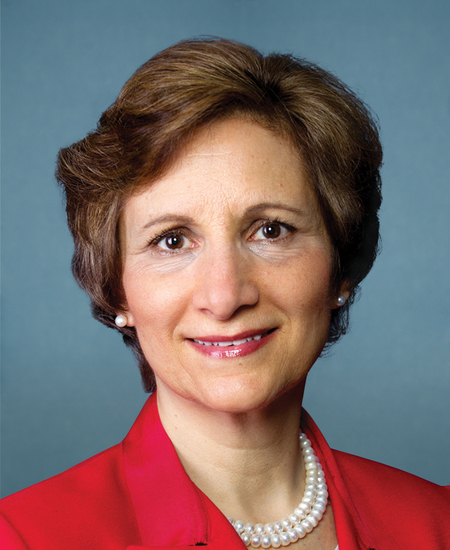
Rep. Suzanne Bonamici
Sponsored bills
Public Servants Protection and Fairness Act of 2021 This bill establishes an alternative formula to calculate Social Security retirement benefits for those who receive pensions for certain non-covered employment. (The existing formula is known as the windfall elimination provision.) The alternative formula adjusts an individual's total lifetime earnings based on the proportion of covered earnings (i.e., earnings subject to Social Security payroll taxes). It applies to individuals who (1) first become eligible for benefits after 2022, (2) have earnings from non-covered service performed after 1977, and (3) have less than 30 years of coverage (i.e., years in which a beneficiary is considered to have contributed a substantial amount into the Social Security trust funds). Beneficiaries receive the higher benefit amount as calculated under the alternative method or the existing formula. In addition, the bill provides rebates for certain beneficiaries currently impacted by the existing formula. The Social Security Administration must include non-covered earnings in Social Security account statements, and the Government Accountability Office must study the availability of certain information related to retirement plans maintained by state and local governments.
Ceasing Undeserved Relief Benefits for Debt Collectors Act for 2021 or the CURB Debt Collectors Act This bill makes debt collectors that have violated certain debt collection laws ineligible to receive loans under the Paycheck Protection Program established to support small business in response to COVID-19.
Automatic Voter Registration Act This bill provides for automatic voter registration of individuals through state motor vehicle authorities. Specifically, the bill requires each state motor vehicle authority, upon receiving specified identifying information regarding an individual who requests services from the authority, to transmit the identifying information to the appropriate state election official. The state election official must then notify the individual that the individual shall be automatically registered to vote in federal elections unless the individual declines to be registered to vote, does not meet voter registration eligibility requirements, or is already registered to vote. The bill provides an individual with a 21-calendar day period to opt out of automatic voter registration. A state may only use identifying information regarding an individual's citizenship status for determining whether the individual is eligible to vote in federal elections.
Historic Tax Credit Growth and Opportunity Act of 2021 This bill increases the rehabilitation tax credit and modifies certain requirements for the credit. The bill increases the rate of the credit for qualified rehabilitation expenditures in taxable years beginning after December 31, 2019, and before January 1, 2027, after which the rate reverts to 20%. The bill increases the rate of the credit to 30% for certain small projects whose qualified rehabilitation expenditures do not exceed $2.5 million. The bill also expands the types of buildings eligible for rehabilitation by decreasing the rehabilitation threshold from 100% to 50% of project expenses. It also eliminates the basis adjustment requirement for the credit and modifies rules relating to tax-exempt use property eligible for the credit.
Military Hunger Prevention Act This bill requires the Department of Defense (DOD) to pay a basic needs allowance to certain low-income members of the Armed Forces. Specifically, those eligible for the basic needs allowance are members who (1) have completed initial entry training, (2) have a gross household income that did not exceed an amount equal to 130% of the federal poverty guidelines of the Department of Health and Human Services (HHS), and (3) do not elect to decline the allowance. In situations where a household contains two or more eligible members, the bill specifies that only one allowance may be paid per year to one member they jointly elect. The amount of the allowance must be the aggregate amount equal to 130% of the HHS federal poverty guidelines minus the gross household income of the covered member during the preceding year divided by 12. The Defense Finance and Accounting Service (DFAS) of DOD must notify, in writing, individuals determined to be eligible for the allowance. The notice must include information regarding financial management and assistance programs administered by DOD for which the individuals are also eligible. Individuals who seek to receive the allowance must submit specified information to DFAS.
PPP Extension Act of 2021 This bill extends the Paycheck Protection Program, established to support small businesses in response to COVID-19 (i.e., coronavirus disease 2019), through June 30, 2021. Currently, the program is set to expire on March 31, 2021. For the final 30 days of the program (i.e., from June 1 until June 30), the Small Business Administration may only process applications submitted prior to June 1, and it may not accept any new loan applications. The bill excludes the budgetary effects of this bill from PAYGO scorecards under the Statutory Pay-As-You-Go Act of 2010 and from Senate PAYGO scorecards.
Freight Rail Assistance and Investment to Launch Coronavirus-era Activity and Recovery Act of 2021 or the Freight RAILCAR Act of 2021 This bill provides a new tax credit for 50% of freight railcar fleet modernization expenses. The bill defines freight railcar fleet modernization expenses to include amounts for railcar replacement and modernization, railcar scrap amounts, and for railcar facility and technology modernization. The Department of the Treasury must report to Congress on the credit to provide information on the number of times the credit was claimed and the number of railcars scrapped or built as a result of the credit.
Fracturing Responsibility and Awareness of Chemicals Act of 2021 This bill revises drinking water requirements concerning hydraulic fracturing (fracking) operations. Hydraulic fracturing, or fracking, is a process to extract underground resources such as oil or gas from a geologic formation by injecting water, a propping agent (e.g., sand), and chemical additives into a well under enough pressure to fracture the geologic formation. The bill gives the Environmental Protection Agency (EPA) the authority to protect groundwater sources (e.g., wells) from certain pollution risks posed by fracking operations. The bill also establishes requirements for disclosing the chemicals intended for use in fracking operations as well as the chemicals actually used in the operations. If the proprietary chemical formulas of chemicals used in fracking operations are necessary for treatment in medical emergencies, then the operations must disclose the formulas or the specific chemical identities of trade secret chemicals to the state, the EPA, or the treating physicians or nurses upon request, regardless of whether written statements of need or confidentiality agreements have been provided.
Resident Physician Shortage Reduction Act of 2021 This bill increases the number of residency positions eligible for graduate medical education payments under Medicare for qualifying hospitals, including hospitals in rural areas and health professional shortage areas. Current law provides for an increase of up to 200 positions per fiscal year beginning in FY2023, with a total increase of 1,000 positions; each hospital may receive up to 25 additional positions. The bill provides for an additional increase of 2,000 positions per fiscal year from FY2023-FY2029; during this period, each hospital may receive up to 75 additional positions in total under the bill and current law. Additionally, one-third of the positions that are made available under the bill must be allocated to hospitals that are already operating above applicable resident limits. The bill also requires the Government Accountability Office to report on strategies to increase the diversity of the health professional workforce, including with respect to representation from rural, low-income, and minority communities.