

Martha Wright Prison Phone Justice Act This bill establishes requirements related to certain charges, practices, classifications, or regulations in connection with confinement facility (i.e., jail or prison) communications services. Specifically, the bill requires the Federal Communications Commission (FCC) to establish maximum rates and charges that a provider of prison communications services may charge for such services. The bill provides interim rate caps until the FCC establishes such rates and charges. The bill requires a provider of prison communications services to assess all charges for communications on a per-minute basis for the actual duration of the communication, and it prohibits a provider from charging a per-communication or per-connection charge. A provider also may not charge an ancillary service charge except in certain circumstances. Further, the bill prohibits a provider from assessing a site commission, which is a payment or donation made to certain entities that operate or oversee a confinement facility.
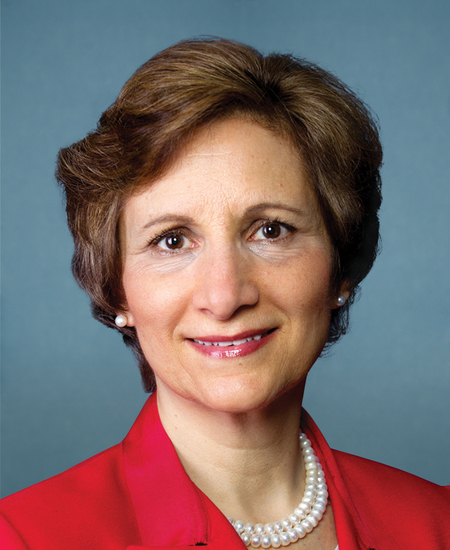
Rep. Suzanne Bonamici
Sponsored bills
Commission to Study and Develop Reparation Proposals for African Americans Act This bill establishes the Commission to Study and Develop Reparation Proposals for African Americans. The commission shall examine slavery and discrimination in the colonies and the United States from 1619 to the present and recommend appropriate remedies. The commission shall identify (1) the role of the federal and state governments in supporting the institution of slavery, (2) forms of discrimination in the public and private sectors against freed slaves and their descendants, and (3) lingering negative effects of slavery on living African Americans and society.
Healthy Families Act This bill provides for paid and unpaid sick leave for employees to meet their own medical needs and those of their families. It requires employers with 15 or more employees to provide their employees with at least one hour of earned paid sick leave for every 30 hours worked, up to a maximum of 56 hours of paid sick leave in a year. An employer with fewer than 15 employees may also provide the same amount of paid sick leave, but may opt out of such requirement, in which case such employer must provide its employees at least 56 hours of unpaid leave in a year. An employee may use sick leave for absences (1) resulting from a physical or mental illness, injury or medical condition; (2) resulting from obtaining professional medical diagnosis or care, or preventive medical care; (3) to care for a child, parent, spouse, a domestic partner, or other blood or close relative; and (4) resulting from domestic violence, sexual assault, or stalking. The bill makes it unlawful for any employer to interfere with, restrain, or deny the exercise of an employee's right to accrue sick leave as provided by this bill. An employee may take legal action to enforce the right to sick leave granted by this bill and the Department of Labor must investigate complaints of violations of the requirements of this bill. Labor is authorized to conduct a public awareness campaign to educate and inform the public of the requirements for paid sick leave provided by this bill.
Building U.S. Infrastructure by Leveraging Demands for Skills or the BUILDS Act This bill requires the Department of Labor to award implementation or renewal grants to eligible industry or sector partnerships to achieve certain job training and employment objectives with respect to targeted infrastructure industries (e.g., transportation, construction, energy, information technology, or utilities industries). Partnerships may include representatives of businesses, labor organizations, and education or training institutions. Eligible grant activities include evaluating workforce needs in a local area, developing work-based learning programs, recruiting individuals with barriers to employment for such programs, and providing employment support services.
Community Navigator Reporting Act of 2021 This bill requires the Small Business Administration to report annually on the performance and effectiveness of the Community Navigator pilot program, which was established to improve access to assistance programs and resources for small businesses in response to COVID-19 (i.e., coronavirus disease 2019).
Providing Responsible Emergency Plans for Animals at Risk of E merging Disasters Act or the PREPARED Act This bill establishes requirements governing the care of animals by entities, such as zoos, in emergencies or disasters. Specifically, the bill requires each research facility, dealer, exhibitor, intermediate handler, and carrier to develop and follow a contingency plan to provide for the humane handling, treatment, transportation, housing, and care of their animals in the event of an emergency or disaster.
Transformation to Competitive Integrated Employment Act This bill addresses employment standards for individuals with disabilities. The bill directs the Department of Labor to award grants to states and certain eligible entities to assist them in transforming their business and program models to support individuals with disabilities by providing competitive integrated employment, assisting disabled individuals in finding and retaining work in such employment, providing integrated employment and integrated community participation and wraparound services for such individuals, and ensuring that such services comply with federal regulations for individuals receiving home and community-based services. The bill also prohibits the issuance of new special certificates that allow payment of subminimum wages to disabled individuals and phases out existing certificates over a four-year period. The bill directs Labor's Office of Disability Employment to award grants to provide technical assistance and other strategic support to employers transitioning from special certificates to competitive integrated employment for disabled individuals. Labor must contract with a nonprofit entity to conduct an evaluation of the impact of these transitions.
Water Affordability, Transparency, Equity, and Reliability Act of 2021 This bill increases funding for water infrastructure, including funding for several programs related to controlling water pollution or protecting drinking water. Specifically, it establishes a Water Affordability, Transparency, Equity, and Reliability Trust Fund. The fund may be used for specified grant programs. The bill increases the corporate income tax rate to 24.5% to provide revenues for the fund. In addition, the bill revises requirements concerning the clean water state revolving fund (SRF) and the drinking water SRF. It also creates or reauthorizes several grant programs for water infrastructure.
This resolution supports the vision, mission, and goals of the Global Partnership for Education, and it affirms the role of the United States in improving access to quality public education and improved learning outcomes for children and adolescents (particularly for girls) in the poorest countries.
Closing Loopholes for Oil and other Sources of Emissions Act or the CLOSE Act This bill repeals exemptions from the Clean Air Act under which (1) emissions from oil and gas wells and pipeline facilities are excluded from aggregation with emissions from other similar units for purposes of determining major sources, and (2) the Environmental Protection Agency (EPA) excludes oil and gas production wells from being listed as area sources. Additionally, the bill requires the EPA to issue a final rule adding hydrogen sulfide to the list of hazardous air pollutants under the Clean Air Act and revising such list to include categories and subcategories of major sources and area sources of hydrogen sulfide, including oil and gas wells.