

Stop China’s Continuous Purchase of Land Act or the Stop CCP Land Act This bill requires states that receive certain federal program funds to restrict the purchase of agricultural land by a covered foreign country. Covered foreign country means a country included in Department of State regulations as subject to certain prohibitions (i.e., Belarus, Burma, China, Cuba, Iran, North Korea, Syria, and Venezuela), as well as Russia. Specifically, a state may not receive funds for certain programs funded by the Inflation Reduction Act of 2022 (e.g., certain energy efficiency and conservation programs) unless that state has a law prohibiting a covered foreign country (or persons acting on behalf of the country) from purchasing agricultural land in the state. Further, a state must require that a person from a covered foreign country that holds agricultural land in the state prior to the state law's enactment submit an annual report to the state on the agricultural holdings. The Department of Agriculture must submit a report to Congress on how the Agricultural Foreign Investment Disclosure Act of 1978 should be updated to ensure accurate documentation and monitoring of foreign investment in agricultural land. The Government Accountability Office must submit a report to Congress that includes (1) an assessment of this bill's impact on national security, and (2) any measures that can be taken to better secure U.S. real estate from foreign manipulation.
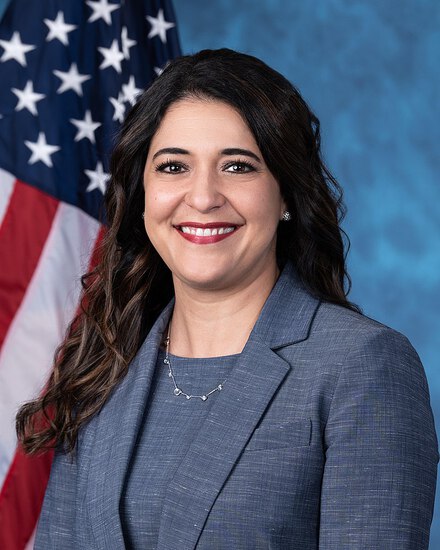
Rep. Stephanie I. Bice
Sponsored bills
Maddy summaryHR 4708, the H-2 Improvements to Relieve Employers Act, streamlines U.S. visa processes for agricultural (H-2A) and non-agricultural (H-2B) workers. It extends the validity of employer certifications and petitions for these visas from one year to three years, reducing administrative burdens. The bill also allows interview waivers for workers renewing status within four years of their previous visa expiration. Additionally, it requires the Department of Labor to publish seasonal employment data on its website at an employer's request, enhancing transparency for seasonal hiring. These changes directly affect U.S. employers seeking temporary foreign workers and the workers themselves.
Maddy summaryHR 4721, the Main Street Tax Certainty Act, makes a permanent the 20% tax deduction for eligible small business owners under Section 199A of the tax code. This provision directly affects pass-through business owners (like S-corps, partnerships, and sole proprietorships) who qualify for the deduction. The bill achieves this by removing the temporary expiration language (subsection (i)) from the existing tax code provision. The key change is ending the need for annual congressional extensions of this deduction, providing long-term tax certainty for small businesses.
Maddy summaryThis bill, HR 1282 (Major Richard Star Act), expands benefits for certain military retirees by allowing them to receive both veterans' disability compensation and military retirement pay simultaneously. It specifically affects combat-related disabled retirees under Chapter 61 of the military retirement system who have fewer than 20 years of service. The key change removes the automatic reduction of military retirement pay when these retirees also receive disability compensation, as amended in Section 1413a(b)(3) of Title 10. Technical updates to the law’s structure and effective date (starting after enactment) complete the provisions.
Orally Taken Contraception Act of 2023 or the OTC Act of 2023 This bill requires the Food and Drug Administration (FDA) to issue guidance on the approval process for over-the-counter oral contraceptives so as to encourage drug manufacturers to submit applications for approval. The FDA must also evaluate (1) whether and to what extent consumers understand the labeling on oral contraceptives, and (2) whether the labeling could be improved.
Maddy summaryHR 3358, the Mission not Emissions Act, prohibits federal contractors from being required to report greenhouse gas emissions or climate-related financial risks. The bill blocks compliance with the proposed Federal Acquisition Regulation rule that would have mandated contractors to disclose Scope 1, Scope 2, and Scope 3 emissions, create emissions inventories, or set emissions reduction targets for validation. It directly affects businesses holding federal contracts by removing these specific reporting obligations. The law focuses solely on eliminating disclosure requirements, not on changing emissions standards or reduction efforts.
Maddy summaryThe Disinformation Governance Board Prohibition Act ends the Disinformation Governance Board, a unit within the Department of Homeland Security created to address online misinformation. It prohibits using federal funds to establish or operate any new entity that would perform similar functions. This bill directly affects the Department of Homeland Security and any future government efforts to create a comparable oversight body for online disinformation. The law makes no changes to existing disinformation policies but halts the current structure and prevents its replacement.
Maddy summaryThis bill requires the Federal Housing Finance Agency (FHFA) to revert mortgage guarantee fees for single-family homes to the rates in effect before May 1, 2023, effectively undoing a 2023 fee increase. It prohibits fees based on a borrower’s debt-to-income ratio and restricts future fee adjustments without following standard federal rulemaking procedures. The bill directly affects mortgage borrowers (particularly middle-class homeowners) and lenders who pay these fees, as it changes how mortgage finance agencies charge for loan guarantees. A GAO study will also examine the FHFA’s previous fee changes and their economic impact, with a report due within 14 months.
Maddy summaryHR 4395, the Natural GAS Act of 2023, requires the Department of Energy to conduct a comprehensive energy analysis (including full fuel cycle impacts) before setting new efficiency standards for gas water heaters, furnaces, boilers, and kitchen cooktops/ranges/ovens. It mandates that new rules must not cause a significant shift from gas to electric appliances in residential or commercial settings, and requires manufacturers to prominently disclose the analysis results on product labels at point of sale. The bill specifically protects key features of gas appliances (like burner types and grates) and exempts small manufacturers from certain requirements. This affects appliance manufacturers and consumers by adding transparency requirements while preserving gas appliance functionality.
Maddy summaryHR 4417, the "Ending Agricultural Trade Suppression Act," prevents state and local governments from imposing additional production standards on agricultural products sold across state lines if those standards aren't already required by federal law or the state where the product is grown. It directly affects agricultural producers, distributors, and businesses operating in interstate commerce by allowing them to sue states in federal court to challenge such regulations. The bill creates a private right of action for affected parties to seek court invalidation of the regulations and damages for economic losses, with provisions for preliminary injunctions to halt enforcement during litigation. This aims to reduce regulatory barriers that could hinder the movement of agricultural goods between states.