

Maddy summaryHJRES 11 proposes a constitutional amendment that would limit Members of Congress to serving a maximum of three terms in the House of Representatives and two terms in the Senate. If passed and ratified, it would prevent any member who has already served the maximum terms from running for re-election, including time spent filling vacancies (for more than one year in the House or three years in the Senate). This amendment directly affects current and future members of Congress by changing eligibility rules for re-election. The proposal is currently a joint resolution in the House, requiring ratification by three-fourths of state legislatures to become part of the Constitution.
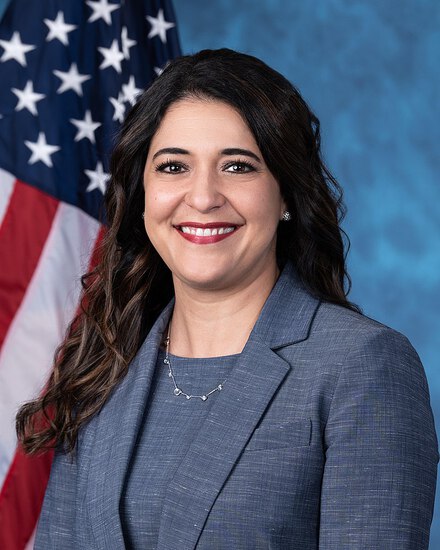
Rep. Stephanie I. Bice
Sponsored bills
Maddy summaryHR 5641, the Pay Our Troops Act, ensures military personnel and their support staff continue receiving pay during fiscal year 2024 if Congress fails to pass regular budget appropriations. It appropriates existing Treasury funds to cover pay and allowances for active-duty troops, reserve components, and civilian employees or contractors supporting military operations. The bill automatically terminates on January 1, 2025, or earlier if Congress enacts a regular budget or continuing resolution. This provision directly affects service members, Department of Defense staff, and Coast Guard personnel (when not under the Navy) during budget implementation gaps.
Maddy summaryH.J. Res. 93 proposes a constitutional amendment to withhold pay from U.S. Representatives and Senators during any government shutdown. A shutdown is defined as a period when federal agencies lack funding due to Congress failing to pass a regular budget or temporary spending bill. The amendment would require Congress to pass implementing legislation to enforce this pay restriction during shutdowns. This directly affects all members of Congress by temporarily halting their salaries when federal operations cease due to funding gaps.
Pay Our Border Patrol and Customs Agents Act This bill provides FY2024 appropriations for the salaries and expenses of certain U.S. Customs and Border Protection (CBP) employees who are required to work during a lapse in appropriations (i.e., government shutdown) in FY2024. Specifically, the bill provides appropriations to CBP for the salaries and expenses of agents of the U.S. Border Patrol and officers of the Office of Field Operations who are excepted from furlough (i.e., required to work) during a lapse in discretionary appropriations in FY2024.
Maddy summaryHR 5561, the Protecting the Right to Keep and Bear Arms Act of 2023, prevents federal agencies from using emergency declarations to implement gun control measures. It specifically prohibits the President from declaring a national emergency under the National Emergencies Act or the Robert T. Stafford Act for gun control purposes, and stops the Health and Human Services Secretary from declaring a public health emergency under the Public Health Service Act for the same reason. The bill also amends the Stafford Act to explicitly prohibit any emergency-related restrictions on possessing, manufacturing, selling, or transferring firearms, ammunition, ammunition feeding devices, or firearm accessories. This directly affects how federal agencies can respond during emergencies without violating the Second Amendment. The law aims to limit executive actions during emergencies that could restrict gun rights.
Maddy summaryHRES 684 is a symbolic congressional resolution passed by the U.S. House of Representatives on September 14, 2023, condemning New Mexico Governor Michelle Lujan Grisham's emergency order that temporarily suspended open and concealed carry firearm rights for 30 days. The resolution asserts the order violated the Second Amendment, citing Supreme Court precedents (Heller, McDonald, Bruen) and noting a federal judge had already blocked the order's firearm restrictions. It does not change any laws or impose legal consequences - it is solely a formal expression of disapproval from Congress. The resolution directly addresses the Governor's actions but has no effect on New Mexico's laws or citizens' rights.
Maddy summaryThe Veterans Benefits Improvement Act of 2023 makes administrative changes to improve veterans' experience with disability benefit exams. It requires the VA to publish most disability forms online (with limited exceptions for forms not meeting clinical standards), mandates contractors to notify veterans' power-of-attorney representatives about exam scheduling, and creates outreach about contractor contact information. The bill also requires two reports: one on reimbursing veterans' travel for overseas exams, and another on supporting governmental veterans service officers. These changes directly affect veterans, VA contractors, and veterans service organizations.
Maddy summaryHRES 697 is a non-binding resolution expressing the U.S. House of Representatives' concerns about China's "Made in China 2025" (MIC2025) industrial plan and associated actions. The resolution cites alleged Chinese practices - including state-backed intellectual property theft, forced labor, unfair subsidies, and cyber espionage - as undermining U.S. competitiveness in key technology sectors like semiconductors, AI, and clean energy. It directly affects U.S. businesses, researchers, and government entities operating in these MIC2025 priority areas, urging them to strengthen security measures against foreign interference. The resolution calls for coordinated U.S. public-private efforts to protect innovation but does not impose new legal requirements.
Maddy summaryHR 1435, the Preserving Choice in Vehicle Purchases Act, amends the Clean Air Act to restrict states from implementing vehicle emissions rules that limit the sale or use of new gasoline-powered cars. It directly affects states with stricter emissions standards (like California) by adding a new definition that blocks state rules "directly or indirectly" limiting internal combustion engine vehicles as defined in federal regulations as of January 1, 2023. The bill requires the EPA to revoke existing state emissions waivers granted between January 2022 and the bill’s enactment if they don’t comply with this new definition. This creates a concrete federal standard preventing states from advancing policies that could reduce demand for conventional vehicles.
Maddy summaryThis bill improves access to donor human milk for high-risk infants by supporting nonprofit milk banks. It amends the Child Nutrition Act to allow states to use funds for collecting, storing, and transferring unprocessed human milk to registered nonprofit milk banks, and creates $3 million in emergency grants for milk banks facing high demand or supply shortages. The bill also requires a public awareness campaign distributing educational materials to healthcare providers (like pediatricians) and WIC program participants, focusing on the safety and benefits of donor milk. These changes directly affect nonprofit milk banks, healthcare providers, and families of high-risk infants needing this resource.