

Maddy summaryThis bill requires U.S. Customs and Border Protection (CBP) to obtain fingerprints from noncitizen children under 14 years old if officers suspect they are trafficking victims upon entering the U.S. It also creates a new federal crime for adults (18+) who knowingly use a minor for entry without being a relative or guardian, punishable by fines or up to 10 years in prison. The bill mandates sharing fingerprints collected under this provision with the Department of Health and Human Services for unaccompanied minors and requires CBP to report monthly data on trafficking-related apprehensions and annual data on fingerprinting to Congress. These provisions directly affect CBP officers, unaccompanied children, and individuals suspected of exploiting minors for entry.
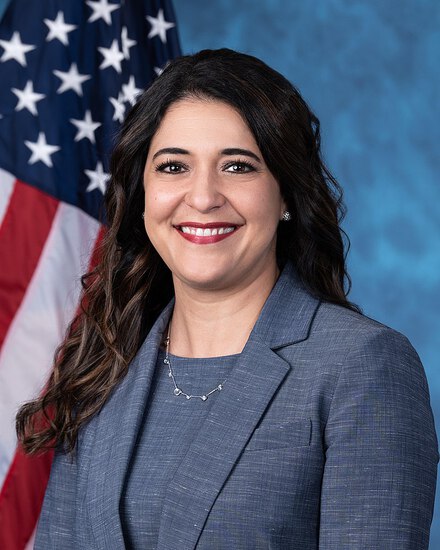
Rep. Stephanie I. Bice
Sponsored bills
Maddy summaryThis bill allows state and local governments to divest public funds (including pensions and endowments) from entities investing in China, specifically targeting those listed on U.S. government sanctions or restrictions. It defines "covered entities" as Chinese companies or their subsidiaries on lists like the OFAC Specially Designated Nationals List, military-industrial complex lists, or entities linked to forced labor. Governments must provide 90 days' notice, allow written comments, and verify an entity’s inclusion on these lists before enforcing divestment. The law explicitly excludes ERISA-covered employee benefit plans from these requirements and ensures state actions don’t conflict with federal law.
Maddy summaryThe Southern Border Transparency Act of 2023 (HR 6523) requires U.S. Customs and Border Protection (CBP), the Department of Homeland Security (DHS), and U.S. Citizenship and Immigration Services (USCIS) to publish specific immigration data online. It mandates monthly reports on parole grants at ports of entry (including numbers by nationality and family status), quarterly reports on processing outcomes for aliens encountered at the southern border (disaggregated by nationality, demographics, and processing paths), and annual reports on parolees (including employment status and status changes). These reports must be posted on agency websites and submitted to relevant congressional committees. The bill directly affects federal agencies responsible for border processing and aims to increase public and congressional transparency about immigration enforcement practices at the southern border.
Maddy summaryHRES 888 is a non-binding House resolution introduced on November 21, 2023, by multiple representatives. It formally reaffirms the State of Israel's right to exist, states that denying this right constitutes antisemitism, and rejects calls for Israel's destruction. The resolution also condemns the Hamas-led terrorist attack on Israel. As a symbolic statement, it does not create new laws or affect any specific group directly.
Maddy summaryHRES 793 is a resolution passed by the U.S. House of Representatives calling on Hamas to immediately release all 199 hostages taken during Hamas' October 7, 2023 attack on Israel. The resolution condemns Hamas for the attack, the taking of hostages, and threats against hostages, while stating that holding hostages violates international humanitarian law under the Geneva Conventions. It demands the immediate release of all hostages and expresses sympathy for victims and their families. As a symbolic resolution, it does not create legal obligations but formally expresses the House's position.
Maddy summaryHRES 683 is a non-binding resolution expressing the House's support for diplomatic efforts to encourage Mexico to fulfill annual water delivery commitments under the 1944 U.S.-Mexico treaty. The treaty requires Mexico to deliver an average of 350,000 acre-feet of water annually (over a 5-year cycle) to the U.S., but Mexico has historically delayed deliveries until the cycle ends. The resolution specifically acknowledges water shortages faced by South Texas farmers and urges Mexico to meet its annual obligations, while supporting negotiations for more reliable water agreements. It does not create new legal requirements but formally encourages diplomatic action to address the delivery delays.
Maddy summaryHRES 877 is a non-binding resolution passed by the U.S. House of Representatives that condemns Mayor Muriel Bowser, Council Chair Phil Mendelson, and Councilman Charles Allen for their handling of crime in Washington, D.C. The resolution cites rising crime statistics - including increased homicides, robberies, and property crimes - as justification for its condemnation, while noting a reduction of approximately 500 officers in the Metropolitan Police Department. As a symbolic statement with no legal effect, it does not alter any laws or policies but expresses the House's disapproval of the DC government's approach to public safety. This resolution was referred to the Committee on Oversight and Accountability after introduction on November 17, 2023.
Adding Coccidioidomycosis to the FDA Priority Review Voucher Program Act of 2023 This bill expands the priority-review voucher program for tropical diseases to include coccidioidomycosis (also known as Valley fever). A voucher entitles the holder to have a future new drug or biological product application acted upon by the Food and Drug Administration within six months.
Maddy summaryThis resolution (HRES 859) is a ceremonial House measure honoring U.S. veterans on Veterans Day 2023. It formally recognizes veterans' service and sacrifice, calling on the American public to observe Veterans Day to acknowledge their role in protecting U.S. freedoms. The resolution does not create new policies, allocate funds, or affect specific groups - it is purely symbolic. It was introduced by 33 bipartisan House members and passed by the House without committee action.
Maddy summaryHR 6335, the Voter Population Accuracy Act, requires the U.S. Census Bureau to add a citizenship checkbox to the 2030 and subsequent decennial census questionnaires. This change would ask each household member to indicate their U.S. citizenship status when completing the census form. The bill directly affects all households participating in the census, as they would need to provide this citizenship information. The key provision mandates this data collection method to improve the accuracy of population counts used for redistricting and federal funding allocation. This is a data collection change for the census, not a voting eligibility requirement.