

Maddy summaryHRES 1456 is a symbolic resolution designating September 17, 2024, as "Constitution Day" to honor the signing of the U.S. Constitution on September 17, 1787. It calls for the people of the United States to observe the day with ceremonies and activities, recognizing the Constitution's historical significance and foundational role in American governance. This resolution does not create new laws or affect any individuals or policies; it is purely a non-binding expression of support by the House of Representatives.
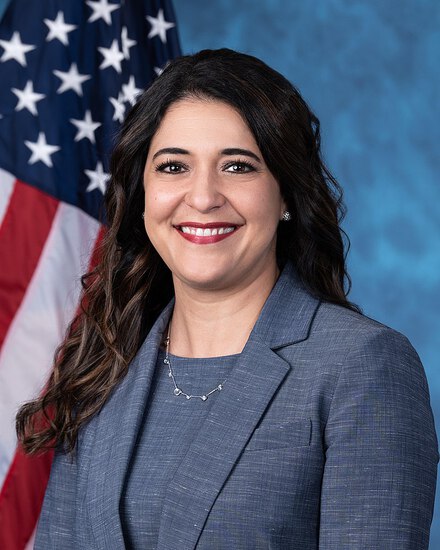
Rep. Stephanie I. Bice
Sponsored bills
Maddy summaryThe JUDGES Act of 2024 authorizes new federal district court judgeships across multiple states to address rising case backlogs in the federal judiciary. It specifies new permanent judgeships for districts including California (multiple districts), Florida, Texas, Delaware, Indiana, Iowa, New Jersey, and New York, with implementation phased through 2035, and creates temporary judgeships for Oklahoma districts with specific vacancy rules. The bill authorizes funding for these positions and requires reports on judicial caseloads and detention space needs, while mandating public access to the Judicial Conference's judgeship recommendations. The bill directly affects federal district courts in the specified locations by increasing judicial staffing to handle growing case volumes.
Maddy summaryThis bill prohibits U.S. port operators from entering contracts for ownership, leasing, or operation of ports covered by maritime security plans with entities owned by China, Russia, North Korea, or Iran - either directly or if any portion is owned by those countries. It applies to major U.S. ports managing international cargo and passenger traffic that require federal security plans under existing law. The law bans such contracts for all port facilities subject to these security requirements. This directly affects port authorities and private operators managing critical infrastructure under federal security mandates.
Maddy summaryThis bill adds the Secretary of Agriculture to the Committee on Foreign Investment in the U.S. (CFIUS) for transactions involving agricultural land, biotechnology, or agriculture-related infrastructure (like transportation, storage, or processing). It requires the Secretary to notify CFIUS about transactions where a foreign person from China, North Korea, Russia, or Iran acquires U.S. agricultural assets, as defined by existing law. CFIUS then decides whether to review such transactions or take other action. The provisions apply only to transactions involving those four countries and sunset once they are removed from the official list of "foreign adversaries" in federal regulations.
Maddy summaryHR 8399, the Preventing Foreign Interference in American Elections Act, expands restrictions on foreign contributions to U.S. elections by prohibiting foreign individuals or entities from funding specific activities like voter registration, ballot collection, voter identification, get-out-the-vote efforts, communications about political parties, or election administration. It also treats indirect funding (e.g., through intermediaries) as direct violations and requires political committees to certify compliance under penalty of perjury. The bill includes additional provisions protecting donor privacy for tax-exempt organizations by restricting federal agencies from collecting or disclosing donor identities, with limited exceptions for agencies like the IRS or FEC. These changes directly affect foreign actors attempting to influence U.S. elections and political committees handling campaign finances.
Maddy summaryHJRES 168 is a congressional resolution seeking to block a specific environmental regulation by the Council on Environmental Quality (CEQ). It targets the CEQ's "National Environmental Policy Act Implementing Regulations Revisions Phase 2" rule, published in the Federal Register on May 1, 2024 (89 Fed. Reg. 35442). If passed, this resolution would use a statutory process under Title 5, U.S. Code, to nullify the rule, preventing it from taking effect. The bill directly affects the CEQ's regulatory authority over federal environmental reviews under the National Environmental Policy Act (NEPA).
Maddy summaryThis bill allows VA health care professionals to prescribe controlled medications via telemedicine without requiring an in-person exam, directly affecting veterans receiving VA telehealth services. It permits prescriptions for controlled substances (like certain pain medications) when the provider is licensed under state law, acting within professional practice, and the prescription serves a legitimate medical purpose. The law requires the VA Secretary to establish regulations for this process but clarifies it doesn’t change existing Controlled Substances Act obligations. This expands access to telemedicine for veterans needing controlled medications while maintaining safety and licensing standards.
Maddy summaryThis symbolic resolution expresses congressional support for designating September 29, 2024, as "Veterans of Foreign Wars of the United States Day" to honor the organization's 125th anniversary. It requests the President issue a proclamation encouraging government agencies and the public to observe the day with ceremonies, though it creates no new laws or policy changes. The resolution recognizes the VFW's historical service to veterans but does not directly affect any individuals or programs.
Maddy summaryThe BIOSECURE Act prohibits U.S. federal agencies from contracting for or using biotechnology equipment and services from designated "biotechnology companies of concern," such as BGI, MGI, Complete Genomics, WuXi AppTec, and WuXi Biologics, and bans federal funds for these purposes. It requires the Office of Management and Budget to create and update a list of these companies based on national security risks, with implementation phased in over 60-180 days after regulations are issued. Exceptions include intelligence activities, overseas health care for U.S. personnel, and publicly available multiomic data, while limited waivers for national security or overseas health care are permitted with congressional notification. The law does not require new funding and mandates annual reviews of the designated companies.
Maddy summaryThis bill, HR 7593, grants the Congressional Research Service (CRS) direct authority to request and receive necessary government data from executive branch agencies, including departments, regulatory commissions, and agencies. It requires these agencies to provide the requested information in a timely manner while maintaining the same confidentiality standards as the source agency. CRS staff must follow identical confidentiality rules and face the same penalties for unauthorized disclosure as the agencies they obtain data from. This change streamlines CRS’s access to government information for its research and analysis, directly affecting how Congress receives nonpartisan policy support.