

Maddy summaryThis bill requires colleges receiving federal financial aid to prohibit events promoting antisemitism, using the International Holocaust Remembrance Alliance's 2016 working definition (including contemporary examples). It bans institutions from authorizing, funding, or otherwise supporting such events on campus. The policy change applies directly to all higher education institutions covered by the Higher Education Act of 1965. This amendment modifies existing federal funding requirements for colleges.
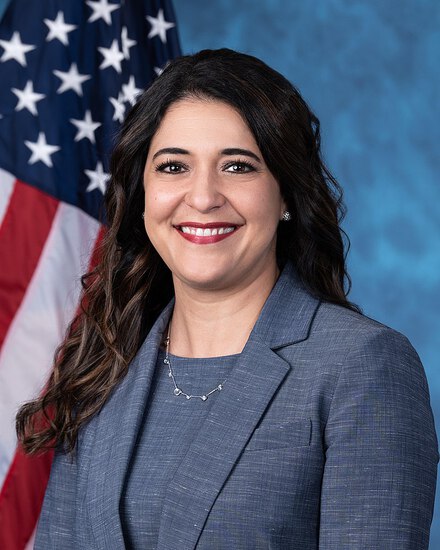
Rep. Stephanie I. Bice
Sponsored bills
Maddy summaryThis bill establishes a single "Southwestern Power Administration Fund" within the U.S. Treasury to consolidate all existing funds managed by the Southwestern Power Administration (SPA), a federal agency that markets power from federally owned dams. It combines SPA's receipts, unexpended balances from three specific legacy funds, and certain appropriations into one account. The fund will cover SPA's core operations: maintaining power transmission lines, marketing electricity, building infrastructure, and administrative costs tied to existing laws like the Flood Control Act of 1944. Any excess funds must be transferred back to the Treasury annually. The bill primarily streamlines how SPA manages its finances without creating new policy.
Maddy summaryThis bill expands benefits for National Guard members injured during State active duty (like responding to disasters). It adds "State active duty" to the definition of qualifying service for retirement pay based on disability, and requires the military to adjust retirement pay if it duplicates other federal or state disability benefits. It also creates new eligibility for VA healthcare to treat disabilities incurred during State active duty, with rules requiring exhaustion of other insurance claims before VA coverage applies. These changes directly affect National Guard members who become disabled while serving under state authority, not federal deployment.
Maddy summaryHRES 254 is a non-binding resolution recognizing the 250th anniversary of the United States Marine Corps, to be observed on November 10, 2025. The resolution honors the Corps' founding at Tun Tavern in Philadelphia on November 10, 1775, its history of service in major conflicts, and its values of honor, courage, and commitment. It encourages public participation in commemorative events and local recognition of Marines' contributions to national defense.
Maddy summaryHR 2381, the SCREENS for Cancer Act of 2025, reauthorizes and updates the National Breast and Cervical Cancer Early Detection Program (NBCCEDP). It directly affects low-income, uninsured, or underinsured women across all 50 states, territories, and tribal communities by expanding access to breast and cervical cancer screenings, diagnostic services, and patient navigation support. Key provisions include updating program language to emphasize prevention alongside detection and control, adding specific strategies to reduce disparities, and appropriating $235 million annually for fiscal years 2026-2030. The bill also requires a GAO study by 2027 to assess program eligibility, service trends, and barriers to screening access.
Maddy summaryThe Cellphone Jamming Reform Act of 2025 allows state and federal correctional facilities to operate jamming systems that block cell signals from entering or leaving the facility, specifically targeting contraband devices used by inmates. It directly affects prisons and jails by enabling them to disrupt unauthorized wireless communications without FCC approval, provided the jamming is limited to housing areas within the facility. Key requirements include state facilities covering all costs themselves, consulting with local law enforcement before implementation, and notifying the Bureau of Prisons. The law aims to address security risks from smuggled phones while restricting jamming to only necessary areas and requiring transparency.
Maddy summaryThe Safer Skies Act of 2025 requires specific smaller airlines to adopt enhanced security screening protocols currently used by larger carriers. It mandates that "covered air carrier operations" - defined as airlines operating under certain FAA rules, offering individual seats with public schedules, using planes with more than nine passenger seats, and not using TSA checkpoints - to follow the Aircraft Operator Standard Security Program (49 CFR §1544.101(a)) within 360 days of the bill's enactment. The Transportation Security Administration must revise its rules to enforce this requirement. This directly affects regional and private charter airlines that currently skip TSA checkpoint screening but serve the public with scheduled passenger flights.
Maddy summaryHRES 244 is a symbolic resolution recognizing Nowruz, the ancient Persian New Year celebrated by hundreds of millions globally, including Iranian Americans in the U.S. It formally acknowledges Nowruz's cultural and historical significance, dating back over 3,000 years, and highlights Iranian Americans' contributions to U.S. society. The resolution expresses appreciation for their observance of Nowruz and connects the holiday's themes of renewal and compassion to shared values like human rights and freedom of expression. It does not create new laws or obligations but affirms support for the holiday's spirit and the aspirations of Iranians seeking democratic rights. The resolution was introduced by a bipartisan group of House members and refers to Nowruz as embodying "virtuous" conduct and compassion across all backgrounds.
Maddy summaryThe WING Act of 2025 establishes a research program within the National Weather Service to address physical obstructions - like wind turbines and buildings - that block weather radar signals. The program requires testing technologies such as phased array radar, data replacement from commercial sources, and improved signal processing to maintain accurate storm detection and forecasting. It directly affects weather forecasting systems and communities relying on timely radar data for severe weather warnings. The initiative must report annually to Congress and conclude by September 2030, with a final recommendation due by 2030.
Maddy summaryThis bill modifies Medicare's physician self-referral rules to improve access for rural communities. It creates a new exemption for "covered rural hospitals" (defined as facilities in rural areas more than 35 miles from another hospital or critical access hospital) from certain restrictions on physicians owning hospitals. The bill also removes a prohibition on expanding existing physician-owned hospitals, allowing such expansions after the law's enactment. These changes directly affect rural hospitals seeking Medicare participation and physicians who own or operate hospitals in underserved areas.