

Maddy summaryHR 4363, the Defend Girls Athletics Act, requires public K-12 schools and colleges to certify annually that they comply with Executive Order 14201, which mandates keeping men out of women's sports. Schools must submit written compliance certifications by August 15 each year (for K-12) or July 1 (for colleges), with states reporting non-compliant agencies to the federal government. Schools or colleges failing to certify or violating the rule risk losing federal education funding, including returning unobligated funds and becoming ineligible for future federal support. The bill directly affects all public schools and colleges receiving federal education funds by tying their eligibility to adherence to this sports participation requirement.
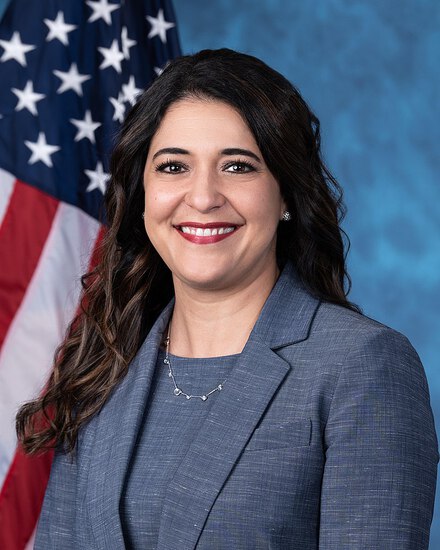
Rep. Stephanie I. Bice
Sponsored bills
Maddy summaryThis bill requires the Secret Service to record all communications between agents protecting individuals under their security detail (like presidential candidates or dignitaries). It mandates these recordings be kept for at least 90 days, or longer (up to 18 months) if requested by specific congressional committees. In cases of attempted or actual harm to a protected person, the recordings must be provided to four key committees: Appropriations, Judiciary, Oversight, and Homeland Security committees in both chambers. The law aims to establish a clear record-keeping standard for Secret Service communications during protection duties.
Maddy summaryHCONRES 43 is a non-binding congressional resolution expressing that public performances of "The Star-Spangled Banner" should use the original English lyrics written by Francis Scott Key. It encourages performers and event organizers to preserve the anthem's historical integrity by using its original English text, rather than translated or adapted versions, as a way to honor its 1814 origins and 1931 designation as the national anthem. The resolution does not create new law or impose legal requirements but formally states Congress's preference for maintaining the anthem's traditional English lyrics in public settings. It directly affects public events where the anthem is performed, such as sports games, ceremonies, and official gatherings.
Maddy summaryHRES 571 is a symbolic resolution passed by the U.S. House of Representatives to commemorate the one-year anniversary of the July 13, 2024, attempted assassination of President Donald J. Trump in Butler, Pennsylvania. It condemns two assassination attempts against the President (in Butler and West Palm Beach), honors victims Corey D. Comperatore (who died shielding his family), David Dutch, and James Copenhaver (who were critically injured), and expresses gratitude to first responders. The resolution also condemns incitement of violence against political officials and calls for unity against political violence. As a non-binding resolution, it does not create new laws or policies but formally states the House’s position on these events.
Maddy summaryHR 4153, the STRONG Act, increases maximum loan limits for two key Small Business Administration (SBA) programs. It raises the cap for standard 7(a) loans from $3.75 million to $7.5 million (and the threshold for higher amounts from $5 million to $10 million), and doubles the cap for development company loans from $5 million to $10 million (for both standard and higher thresholds). These changes directly affect small businesses seeking SBA financing by allowing them to access larger loans for growth, expansion, or recovery. The bill modifies specific provisions in the Small Business Act and Small Business Investment Act to expand access to capital.
Maddy summaryThis bill prohibits transplant centers and healthcare providers from denying organ transplants or related services solely based on a patient's disability. It requires covered entities to make reasonable modifications to policies (like considering a patient's support network or using communication aids) and to avoid denying care due to lack of auxiliary aids. The law applies to all transplant stages - including evaluation, listing, and post-transplant care - and explicitly states it complements, rather than replaces, existing disability rights laws like the ADA. It allows medical considerations only if a physician determines a disability is medically significant to the transplant, after individual evaluation.
Maddy summaryThis symbolic House resolution (HRES 521) expresses support for Israel’s military actions against Iran’s nuclear facilities, citing Iran’s nuclear enrichment progress (including 60% enriched uranium stockpiles nearing weapons-grade levels) and Iran’s attacks on Israeli civilians. It specifically endorses Israel’s "proportional" strikes on Iranian nuclear sites and military targets following Iran’s rejection of diplomatic efforts, while condemning Iran’s attacks that killed 24 Israelis and wounded 590. The resolution calls on Iran to halt nuclear enrichment and dismantle its program, reaffirms U.S. support for Israel’s security, and urges global condemnation of Iran’s nuclear activities. As a non-binding resolution, it does not enact policy but formally aligns the House with Israel’s actions against Iran’s nuclear program.
Maddy summaryThis bill proposes a constitutional amendment that would grant Congress the power to pass laws banning the physical desecration of the U.S. flag (such as burning, trampling, or defacing it). If ratified, it would directly affect individuals who engage in such acts by making them subject to federal criminal penalties under new laws Congress could create. The amendment would add a specific clause to the Constitution stating: "Congress shall have power to prohibit the physical desecration of the flag of the United States." Ratification would require approval by 3/4 of state legislatures within seven years of submission.
Maddy summaryH.J.Res. 88 disapproves an Environmental Protection Agency (EPA) rule that would have allowed California to enforce its "Advanced Clean Cars II" vehicle emission standards. This rule, submitted by the EPA on January 6, 2025, sought to grant California a waiver to override federal preemption for its stricter vehicle pollution controls. The resolution, passed by Congress and signed into law on June 12, 2025, formally nullifies the EPA rule, preventing California from implementing its Advanced Clean Cars II program under this specific waiver. The bill directly affects California's ability to set its own vehicle emission standards for passenger cars and light trucks.
Maddy summaryHJRES 89 is a congressional disapproval resolution that blocks an Environmental Protection Agency (EPA) rule concerning California's vehicle and engine pollution standards. The resolution specifically targets the EPA's "Omnibus Low NOX Regulation" and waiver of preemption, which would have allowed California to enforce stricter emissions rules. By disapproving this rule under Chapter 8 of Title 5 U.S. Code, Congress has nullified the EPA's action, meaning the regulation will have no legal effect. This directly affects the EPA's authority to approve California's state-level pollution control standards for motor vehicles.