

COVID-19 American History Project Act This bill directs the American Folklife Center at the Library of Congress to establish a history project to be known as the COVID-19 American History Project to collect and make publicly available individual stories and records of experiences during the COVID-19 pandemic in the United States. The bill includes a requirement to collect video and audio recordings of personal histories and testimonials of those who were affected by the pandemic. The Librarian of Congress may solicit and accept donations of funds and in-kind contributions to carry out the project, subject to this bill.
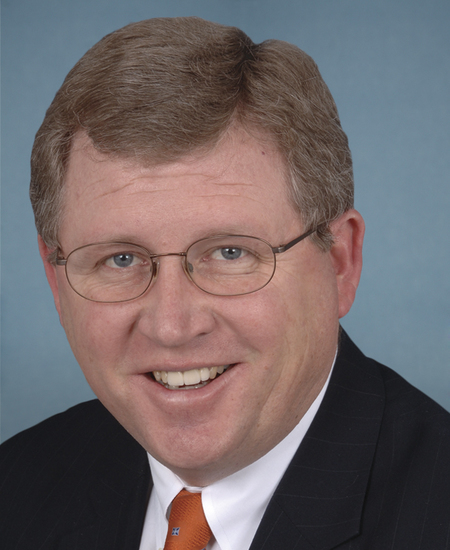
Rep. Frank D. Lucas
Sponsored bills
Securing a Strong Retirement Act of 2022 This bill makes various changes with respect to employer-sponsored retirement plans, including providing for the automatic enrollment of employees in certain plans and increasing the age at which participants are required to begin receiving mandatory distributions.
This resolution honors the life and legacy of the late Representative Don Young and directs the Sergeant at Arms to designate a Don Young Reserved Seat on the floor of the chamber of the House of Representatives.
This resolution condemns the terrorist attack on Congregation Beth Israel in Colleyville, Texas, on January 15, 2022. It also expresses support for the affected community, commends the actions of law enforcement and emergency responders, and reaffirms a commitment to combat hate, bigotry, anti-Semitism, and violence against Jewish Americans.
American Energy Independence from Russia Act This bill addresses U.S. energy security, the production of oil and gas, and the importation and exportation of oil and gas. Specifically, the President must submit an energy security plan that (1) evaluates U.S. crude oil, petroleum products, and natural gas imports and exports; (2) assesses the energy security risks of such imports; and (3) includes strategies to encourage increased domestic production of crude oil, petroleum products, and natural gas to offset Russian imports. The bill also approves the TransCanada Keystone Pipeline in Phillips County, Montana for the import of oil from Canada to the United States. In addition, the bill grants the Federal Energy Regulatory Commission the authority to approve or deny applications for facilities to export natural gas from the United States to foreign countries or import natural gas from foreign countries. The President and federal agencies must obtain congressional approval before (1) prohibiting or substantially delaying certain new energy mineral leases or permits on federal lands, or (2) withdrawing certain federal lands from mineral and geothermal leasing activities. The Department of the Interior must resume issuing oil and gas leases on federal lands and offshore submerged lands in the Outer Continental Shelf as specified under the bill. Finally, the bill limits the drawdown of petroleum in the Strategic Petroleum Reserve until the Department of Energy develops a plan to increase the percentage of federal lands leased for oil and gas production.
Prohibition on Imports of Russian Oil Act This bill requires the President to prohibit the importation of petroleum products from Russia. Petroleum product means crude oil, residual fuel oil, or any refined petroleum product, including natural gas liquid product. Further, the bill authorizes the President to (1) modify or remove the prohibition for some or all petroleum products if the President notifies Congress that such modification or removal is appropriate given the situation in Ukraine, and (2) use appropriate authorities to impose civil or criminal penalties as necessary to enforce the prohibition.
This joint resolution nullifies the rule titled Medicare and Medicaid Programs; Omnibus COVID-19 Health Care Staff Vaccination , which was issued by the Centers for Medicare & Medicaid Services on November 5, 2021. The rule requires health care providers, as a condition of Medicare and Medicaid participation, to ensure that staff are fully vaccinated against COVID-19.
This resolution supports the designation of a National FFA Week. It also (1) recognizes the important role of the National FFA Organization (Future Farmers of America) in developing the next generation of leaders who will change the world, and (2) celebrates 70 years of the National FFA Organization's membership magazine.
This resolution addresses the need for improvements to broadband infrastructure, particularly in rural areas, and the role of specified federal agencies in making such improvements.
National Institute of Standards and Technology for the Future Act of 2021 This bill reauthorizes the National Institute of Standards and Technology (NIST) through FY2026 and establishes programs and activities. The bill sets forth requirements for supporting basic measurement science, technology research for engineering biology, biomanufacturing, and biometrology; developing standards to measure greenhouse gas emissions; carrying out research on identity management, cybersecurity, biometric identification, and communications measurement; assessing identified vulnerabilities with open-source software; operating the National Advanced Spectrum and Communications Test Network; a strategic plan concerning the Center for Neutron Research; establishing in NIST an organization to facilitate the development of forensic science standards; activities in support of green and sustainable chemistry (i.e., clean, safe, and economic alternatives, technologies, and methodologies to traditional chemical products and processes); information exchange and coordination among federal agencies and with the private sector to ensure federal engagement in the development and use of international technical standards; and establishing a five-year pilot program to award grants to support increased participation by small business and academic interests in international standards organizations. The Government Accountability Office must conduct a study of NIST's policies and protocols to protect its research and combat undue foreign influence. NIST shall establish, as a part of the Hollings Manufacturing Extension Partnership, a pilot program of expansion awards among manufacturing extension centers or a consortium of centers to develop and support training and job placement services. NIST shall establish a National Supply Chain Database to assist the federal government and industry sectors in minimizing disruptions to the United States' supply chain.