

Commercial Remote Sensing Amendment Act of 2022 This bill modifies provisions relating to the licensing of commercial remote sensing systems. The bill decreases from 120 to 60 days the amount of time in which the Department of Commerce shall review and make a determination on the application for a license by a private sector party to operate a private remote sensing space system. The annual report concerning the licensing of private remote sensing systems must include (1) a list of all applications submitted and licenses granted, listed by tier, as well as the rationale for each tier categorization; and (2) all terms, conditions, or restrictions placed on licensees.
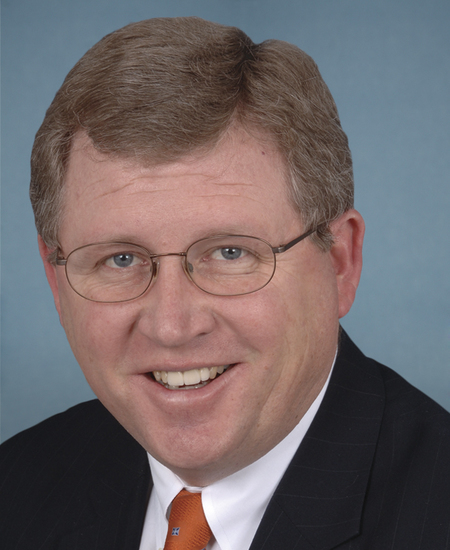
Rep. Frank D. Lucas
Sponsored bills
Scope 3 Act This bill prohibits any requirement that an issuer of securities must disclose the greenhouse gas emissions of its value chain (i.e., scope 3 emissions).
Flexibility in Addressing Rural Homelessness Act of 2022 This bill allows grants awarded under the ongoing Continuum of Care program to include grants for projects in rural areas for short-term emergency lodging; repairs to unfit housing for homeless individuals; and staff training, development, and retention.
National Mesonet Authorization Act This bill provides statutory authority for the National Mesonet Program of the National Weather Service (NWS). The program shall obtain observations from observing platforms in all geographic environments to improve understanding of and forecast capabilities for atmospheric events, with a prioritization on leveraging available commercial, academic, and other nonfederal weather data to enhance coordination across the private, public, and academic sectors of the U.S. weather enterprise. The program must carry out specified activities, including improving environmental observations used by the National Oceanic and Atmospheric Administration (NOAA) and the NWS to support baseline forecasts and warnings that protect the nation's citizens, businesses, military, and government agencies and enable such individuals and entities to operate in safe, efficient, and orderly manners. NOAA shall ensure the program has an active advisory committee of subject matter experts to identify, implement, procure, and track data needed to supplement the program, and recommend improvements, expansions, and acquisitions of available data. The advisory committee shall establish partnerships with one or more institutions of higher education to identify, evaluate, and recommend potential partnerships, regional or subregional consortia, and collaborative methods that would expand the number of participants and volume of data in the program.
Carbon Sequestration Collaboration Act This bill requires the Department of Energy to establish a research initiative to evaluate carbon sequestration.
Reducing Farm Input Costs and Barriers to Domestic Production Act This bill addresses various provisions related to the regulation of domestic agricultural products, including by requiring the Department of Agriculture to publish criteria for considering requests from meat and poultry establishments to operate at line speeds in excess of the current regulatory limitations. The bill also nullifies the final rule issued by the Council on Environmental Quality on April 20, 2022, that reinstated various National Environmental Policy Act regulatory provisions.
This bill designates the facility of the United States Postal Service located at 1233 North Cedar Street in Owasso, Oklahoma, as the Technical Sergeant Marshal Roberts Post Office Building.
Butcher Block Act This bill authorizes the Department of Agriculture (USDA) to make (or guarantee) loans and award grants for establishing, expanding, and otherwise supporting livestock and poultry processing and related activities. In awarding grants and making or guaranteeing loans, USDA shall prioritize applicants that have experience in livestock and poultry processing and can quickly scale-up to increase overall processing capacity in the region involved.
Promoting Cross-b order Energy Infrastructure Act This bill establishes a new process for approving the construction and operation of energy infrastructure across an international border of the United States and replaces the existing process established under specified executive orders. Specifically, this bill requires a person to obtain a certificate of crossing before constructing, connecting, operating, or maintaining a border-crossing facility for the import or export of oil, natural gas, or electricity across an international border. A certificate must be obtained from the Federal Energy Regulatory Commission (FERC) for a facility consisting of oil or natural gas pipelines or the Department of Energy (DOE) for an electric transmission facility. As a condition of issuing a certificate, DOE must require that an electric transmission facility be constructed, connected, operated, or maintained consistent with specified policies and standards. FERC and DOE must meet a deadline for issuing a certificate as set forth by this bill. The bill also requires FERC to meet a deadline for approving applications to import or export natural gas to or from Canada or Mexico.
Maddy summaryThe National Flood Insurance Program Extension Act of 2022 extends the federal flood insurance program until December 31, 2023, instead of ending on September 30, 2022. This directly affects homeowners, renters, and businesses in communities participating in the National Flood Insurance Program (NFIP), ensuring continued access to flood coverage. The bill amends two key sections of the 1968 law to update the program's expiration dates and includes a retroactive provision covering the period from September 30, 2022, through the new end date.