

Maddy summaryHR 277 would require Congress to approve major federal regulations before they take effect. Major rules are defined as those with significant economic impact ($100 million+ annually), major cost increases for consumers or industries, or significant adverse effects on competition, employment, or innovation. Agencies must submit detailed information about these rules to Congress, including cost-benefit analyses, before they can take effect. Congress would have 70 session days to approve the rule with a joint resolution; if they don't act within that timeframe, the rule would not take effect. This would increase congressional oversight of federal regulations and require more detailed information about proposed rules before they become law.
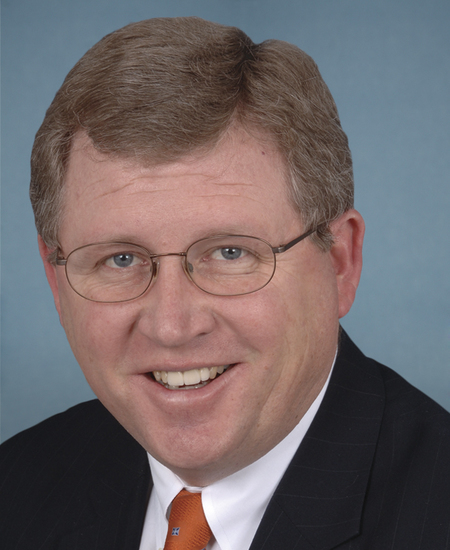
Rep. Frank D. Lucas
Sponsored bills
Maddy summaryThe Federal Prisons Accountability Act of 2023 requires the President to appoint the Director of the Bureau of Prisons with Senate confirmation, replacing the current system where the Director is appointed directly by the Attorney General. It also establishes a 10-year term limit for the Director, though the current Director may continue serving for up to three months after the bill's enactment. This change directly affects the leadership structure of the Bureau of Prisons, which oversees over 176,000 federal inmates across 122 facilities and has a budget exceeding $7 billion annually. The bill aims to increase oversight of this major Department of Justice component by aligning its leadership appointment process with other senior Justice Department officials.
Maddy summaryHR 3980 establishes the National Oceanic and Atmospheric Administration (NOAA) as an independent agency within the executive branch, headed by an Administrator appointed by the President with Senate confirmation. The bill defines NOAA's core functions, including conducting scientific research across atmospheric, oceanic, climate, and space weather domains, maintaining the National Weather Service, and managing oceanic and coastal resources. It requires the Administrator to develop a reorganization plan within 18 months to improve efficiency and coordination across NOAA's operations, and mandates a study on consolidating Endangered Species Act and Marine Mammal Protection Act management functions. The bill also creates a Science Advisory Board to provide scientific advice to NOAA and Congress, while ensuring existing NOAA functions and authorities continue without disruption.
Maddy summaryHJRES 29 is a procedural resolution seeking congressional disapproval of a U.S. Fish and Wildlife Service (FWS) rule that designated the northern lesser prairie-chicken population as "threatened" and the southern population as "endangered" under the Endangered Species Act. If passed, this resolution would prevent the FWS rule from taking effect, meaning the southern population would not be officially listed as endangered and the northern population would not be listed as threatened. The bill directly affects landowners, ranchers, and developers in states like Texas, Oklahoma, and New Mexico where the prairie-chicken habitat overlaps with agricultural or energy development. It uses the Congressional Review Act (Chapter 8 of Title 5, U.S. Code) to block implementation of the FWS rule without changing wildlife protection laws.
Maddy summaryThis bill requires that AM radio receivers be included as standard equipment in all new motor vehicles (such as cars and trucks) sold in the United States, with a rule to be issued by the Department of Transportation within one year. The rule must ensure AM radio is easily accessible on the dashboard and allows manufacturers to use digital AM radio technology instead of traditional AM. During the one-year period between the bill's enactment and the rule's effective date, manufacturers must clearly label vehicles without AM radio. The bill also directs a study to evaluate whether an alternative system could deliver emergency alerts as reliably as AM radio across the country, especially during crises.
Maddy summaryThe Pay Our Correctional Officers Fairly Act adjusts pay for Bureau of Prisons employees currently assigned to the "Rest of U.S." pay locality. It directs that if an employee's worksite is within 200 miles of another pay locality, they will be paid according to the nearest locality with the highest pay rate - replacing the lower "Rest of U.S." rate. This applies to correctional officers and other Bureau of Prisons staff, but excludes employees whose worksite is more than 200 miles from any other locality. The change takes effect 180 days after the bill is enacted.
Maddy summaryHR 3046 establishes a federal grant program to support medical education focused on primary care in underserved areas. It provides funding to eligible public colleges in states with severe primary care physician shortages, prioritizing institutions in regions with significant Indian Tribes and public-private partnerships. Grants require schools to use funds for hands-on community training, telehealth integration, mental health care coordination, scholarships, and programs specifically preparing students to serve Tribal, rural, or medically underserved communities after residency. The program authorizes $150 million annually for fiscal years 2023-2025 to expand this training pipeline.
Maddy summaryHR 2995, the National Mesonet Authorization Act, establishes a formal National Mesonet Program within the National Weather Service to enhance weather observation networks. The program leverages existing commercial, academic, and non-Federal weather data to improve severe weather forecasting, warnings, and emergency response by increasing data density and quality across the U.S. It authorizes $50-70 million annually (2024-2028) to provide financial and technical assistance to state, tribal, private, and academic entities that expand their weather monitoring systems and share data with the program. This directly affects weather data providers and the National Weather Service, aiming to reduce forecasting gaps and support a 30-minute severe weather warning target. The bill requires regular congressional reporting on program progress and data integration efforts.
Maddy summaryThis bill protects living organ donors from insurance discrimination by prohibiting life, disability, and long-term care insurers from denying coverage, raising premiums, or altering policy terms solely because someone donated an organ while alive. It also updates the Family and Medical Leave Act to include recovery from organ donation surgery as a qualifying health condition, allowing donors to take protected leave for this purpose. Additionally, the bill requires the Health and Human Services Secretary to update public educational materials about living donation benefits, risks, and insurance protections within six months of enactment. These changes directly affect living organ donors, insurers, employers, and healthcare systems by ensuring fair access to insurance and workplace leave.
This joint resolution nullifies a Department of Labor final rule entitled Adverse Effect Wage Rate Methodology for the Temporary Employment of H-2A Nonimmigrants in Non-Range Occupations in the United States and published on February 28, 2023. This rule makes changes to the methodology used to set adverse effect wage rates for H-2A workers (temporary agricultural workers), including by using Bureau of Labor Statistics wage surveys in certain instances. (Generally, the minimum wage for an H-2A worker is the highest of the adverse effect wage rate, the applicable minimum wage, the prevailing wage for that occupation in that area, or any agreed-upon collective bargaining wage.)