

Maddy summaryThe AUSTIN Act of 2024 requires cabinet-level officials, such as department heads, to notify the President and congressional leaders within 24 hours if they cannot perform their duties due to illness or absence, and to publish this notice on their agency’s website. The notice must include the reason for the inability and a timeline for when they will be unable to work and when they expect to return. The President may temporarily waive the public posting requirement for national security reasons but must explain the waiver to Congress, and congressional leaders can override such a waiver if they disagree. Failure to comply could result in the official losing federal funding for their salary and facing termination.
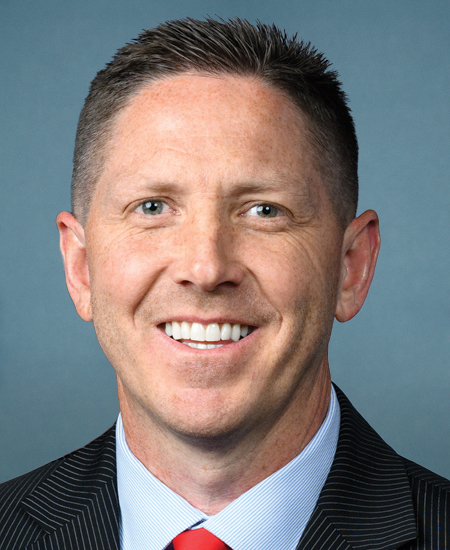
Rep. Josh Brecheen
Sponsored bills
Maddy summaryHRES 1057 is a non-binding House resolution introduced on March 5, 2024, that formally denounces public calls for a cease-fire in Gaza. It specifically demands an end to U.S. funding for Hamas through the UNRWA aid agency, condemns efforts to establish an independent State of Palestine, and calls for halting all U.S. assistance to Palestinian entities until investigations into alleged terrorism funding are completed. The resolution does not change laws or policies but serves as a symbolic statement expressing congressional opposition to cease-fire advocacy and certain aid programs. It directly addresses public discourse and policy debates, not specific individuals or organizations.
Let Injured Americans Be Legally Empowered Act or the LIABLE Act This bill prohibits COVID-19 vaccine manufacturers from being immune under federal law from lawsuits relating to their vaccines. Specifically, the bill prohibits any federal law from providing immunity for COVID-19 vaccine manufacturers from civil suits or liability, or limiting liability, with respect to the administration or use of their vaccines. Additionally, individuals may not be precluded from bringing a civil suit against a COVID-19 vaccine manufacturer because the individual sought or received compensation through specified federal vaccine injury compensation programs, nor does the bill preclude individuals from seeking compensation through these programs. The bill applies to vaccine administrations that occur before, on, or after the bill's date of enactment.
Maddy summaryHRES 1031 is a non-binding House resolution declaring the U.S. southern border situation an "invasion," citing three specific claims: over 8 million migrant crossings since 2021, a 1,000% rise in watchlist entries, and drug-related deaths. It does not create new laws or affect individuals, as resolutions like this only express legislative sentiment. The bill formally states the House's viewpoint through these cited statistics without proposing policy changes. As a symbolic gesture, it has no legal force or impact on border policy.
Maddy summaryThe Airport Immigration Enforcement Act (HR 7445) prohibits the Federal Aviation Administration from authorizing airport space to house undocumented migrants and bans federal funds from being used for this purpose. The bill directly affects the FAA and federal programs that might fund migrant housing at airports. Key provisions include a direct ban on the FAA approving airport facilities for this use and a prohibition on federal spending for housing undocumented migrants in airport settings. This legislation would prevent public airport resources and federal money from being allocated to house undocumented migrants at airports.
Maddy summaryHR 7345, the Waiving the Rules Disclosure, Transparency, and Accountability Act, modifies House procedures for handling regular appropriations bills. It prevents the House from considering rules that waive a specific procedural requirement (Section 309 of the Congressional Budget Act) without first allowing a floor vote. The bill requires the House Chair to put the question of consideration to the floor, with 10 minutes of debate for both the point-of-order initiator and an opponent, before deciding. This change applies directly to House procedures for appropriations bills, ensuring transparency in how rules affecting budget deadlines are approved. It does not alter funding levels or policy content but changes the legislative process for budget-related rules.
This resolution expresses the sense of the House of Representatives that former President Trump did not engage in insurrection or rebellion against, nor give aid or comfort to the enemies of, the United States.
Maddy summaryHJRES 107 is a congressional resolution seeking to block a Federal Communications Commission (FCC) rule published on January 22, 2024 (89 Fed. Reg. 4128). The resolution aims to disapprove the FCC's rule implementing digital discrimination protections under the Infrastructure Investment and Jobs Act, which would have required internet providers to prevent discriminatory practices. If passed, this resolution would nullify the FCC rule, preventing it from taking effect under the Congressional Review Act (Chapter 8 of Title 5, U.S. Code). The bill directly affects the FCC's regulatory authority over digital discrimination enforcement in broadband services.
Maddy summaryThe Public Health Emergency Accountability Act (HR 7093) changes how the U.S. government declares and manages public health emergencies by requiring the Secretary of Health and Human Services to publish declarations in the Federal Register and submit them to Congress. It limits initial emergency declarations to 90 days and renewals to one year, with mandatory reports to Congress about the emergency's status, duration, and how emergency authorities are being used. The bill establishes a process for Congress to approve or terminate emergency declarations through joint resolutions, with specific procedures for consideration in both the House and Senate. This legislation increases transparency and congressional oversight of emergency powers during public health crises.
Maddy summaryHR 7083, the RAZOR Act, prohibits federal agencies from removing or altering barriers (like fences or fences) built by states along the U.S. border to prevent unlawful crossings. It directly affects federal departments and agencies, such as the Department of Homeland Security, by restricting their ability to modify state-constructed border infrastructure. The key provision is a clear ban on any federal action that would change or remove these state-built barriers. This bill makes a specific policy change regarding federal-state border infrastructure authority without altering broader immigration law.