

Drug Cartel Terrorist Designation Act This bill directs the Department of State to designate four specified drug cartels as foreign terrorist organizations. (Among other things, such a designation allows the Department of the Treasury to require U.S. financial institutions to block transactions involving the organization.) The four specified cartels in the bill are the Gulf Cartel, the Cartel Del Noreste, the Cartel de Sinaloa, and the Cartel de Jalisco Nueva Generacion. The bill also requires the State Department to submit a detailed report on those four cartels and any other cartels it may identify. Based on this report, the State Department must designate as a foreign terrorist organization any such identified cartel (or faction thereof) that meets certain criteria for designation as a foreign terrorist organization. The bill specifies that it may not be construed to expand eligibility for asylum.
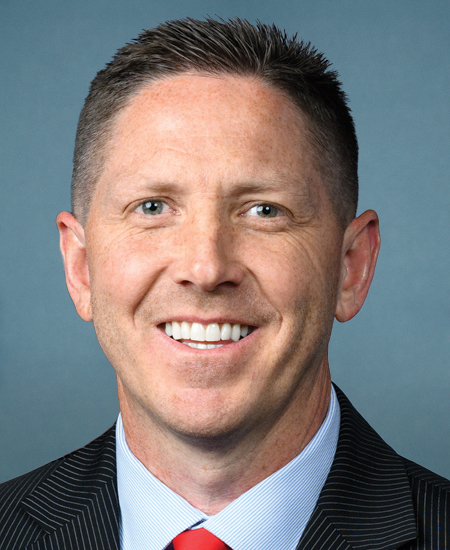
Rep. Josh Brecheen
Sponsored bills
Maddy summaryThe RULES Act requires asylum seekers to apply only at official U.S. ports of entry, not elsewhere in the country. It prohibits releasing applicants into the United States while their asylum application is pending. This directly affects individuals seeking asylum who cross the border without entering through designated ports. The law does not apply to people already inside the U.S. without authorization or who overstayed their visa.
Maddy summaryThis bill increases criminal penalties for individuals who re-enter the U.S. after being deported, removed, or excluded. It sets a maximum 5-year prison sentence for most cases, but adds up to 10 years for those with prior drug/crime convictions or multiple prior removals. For serious cases - such as aggravated felonies or two prior reentry convictions - it mandates a 5-20 year prison term. The law directly affects people who return without authorization after formal immigration removal proceedings.
Maddy summaryThis bill prohibits the Department of Health and Human Services (HHS) and the Food and Drug Administration (FDA) from treating pregnancy as an illness when approving or regulating abortion drugs. It specifically bans using this framework for approvals under the Federal Food, Drug, and Cosmetic Act or for risk management strategies. The bill also nullifies existing approvals of abortion drugs (like mifepristone) that relied on treating pregnancy as an illness. This directly affects how the FDA regulates abortion medications, changing the basis for their safety and efficacy evaluations.
Maddy summaryThe America First Act (HR 746) would restrict access to numerous federal benefits and programs for certain non-citizens by requiring citizenship verification and denying eligibility to individuals with specific immigration statuses. It affects programs including Medicaid, Medicare, Head Start, WIC, school meals, housing assistance, tax credits, and community development funds by denying benefits to people granted parole, temporary protected status (TPS), deferred action (including DACA), asylum, or who are unlawfully present. The bill also reduces funding for schools in "sanctuary jurisdictions" and limits refugee resettlement for certain Haitian immigrants. It mandates that federal agencies verify immigration status before providing benefits and prohibits use of federal funds for services to certain non-citizens.
Maddy summaryHR 778, the Safeguarding American Workers’ Benefits Act, modifies Social Security Number (SSN) requirements for claiming the Child Tax Credit (CTC) and Earned Income Tax Credit (EITC). It requires taxpayers to provide SSNs issued to U.S. citizens or under specific legal provisions (as defined in the bill) before the tax return deadline, replacing previous allowances for certain alternative numbers. This directly affects individuals filing taxes who seek these credits, as they must now use only eligible SSNs to qualify. The changes apply to taxable years beginning after December 31, 2025. The bill does not alter the credit amounts but tightens verification rules for eligibility.
Maddy summaryHR 756, the 287(g) Program Protection Act, makes it easier for state and local law enforcement agencies to partner with federal immigration authorities under the 287(g) program. It requires the Secretary of Homeland Security to enter written agreements with any state or local agency that requests participation within 90 days, prohibits arbitrary denials without 180 days' notice to Congress, and bans termination of existing agreements without compelling reasons and 180 days' notice. The bill also mandates uniform federal training standards for participating officers, requires annual reports on program performance (including apprehensions, removals, and compliance), and establishes dedicated funding for the program. This directly affects state and local police departments seeking to enforce federal immigration laws within their jurisdictions.
Maddy summaryHR 719, the "No Abortion Coverage for Medicaid Act," would prohibit federal Medicaid funds from covering abortions under any Medicaid demonstration projects or waivers, with limited exceptions. It specifically blocks federal financial assistance for abortion services or related expenses (like travel) in Medicaid programs, except in cases of rape or incest, life-threatening pregnancy conditions, or treatment for miscarriage or ectopic pregnancy. This bill directly affects Medicaid recipients in states participating in federal demonstration projects, preventing them from using Medicaid funds for abortion services except under the narrow exceptions listed. The bill aims to permanently align Medicaid funding with the longstanding Hyde Amendment restrictions.
Maddy summaryHR 720, the "Protecting Life in Health Savings Accounts Act," prohibits using Health Savings Accounts (HSAs), Archer MSAs, health flexible spending accounts, and retiree health accounts to pay for abortions, except in specific cases. The bill defines "excluded abortion" to include abortions related to rape or incest, or those necessary to prevent a life-threatening physical condition caused by pregnancy (as certified by a physician). This change would affect individuals relying on these tax-advantaged accounts for healthcare expenses, making most abortion costs non-reimbursable through such plans. The provisions would take effect for taxable years beginning after December 31, 2025.
Life at Conception Act This bill declares that the right to life guaranteed by the Constitution is vested in each human being at all stages of life, including the moment of fertilization, cloning, or other moment at which an individual comes into being. Nothing in this bill shall be construed to authorize the prosecution of any woman for the death of her unborn child.