

Maddy summaryThe SNAP Reform and Upward Mobility Act of 2025 modifies the Supplemental Nutrition Assistance Program (SNAP) and improves how poverty is measured in the United States. It requires states to gradually increase their matching funds for SNAP from 10% to 50% over nine years, raises the age for certain work requirements from 60 to 65, and mandates states to report on employment and training program outcomes for SNAP recipients. The bill also establishes a Commission to recommend how to value non-cash benefits for poverty measurement and requires the Census Bureau to collect additional data on federal benefit participation to improve poverty calculations. These changes directly affect SNAP recipients, state agencies administering the program, and the methodology used to measure poverty in the U.S.
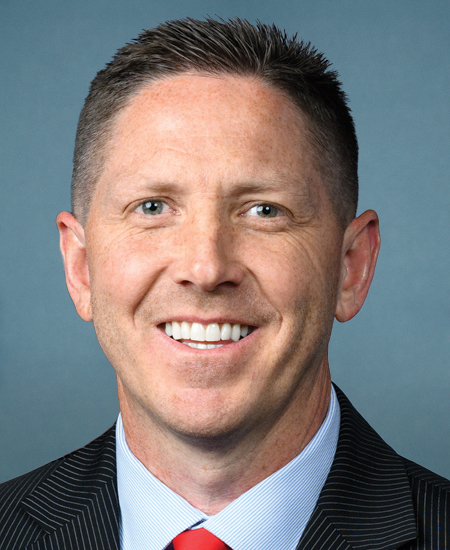
Rep. Josh Brecheen
Sponsored bills
Maddy summaryHR 2841, the "Putting Trust in Transparency Act," requires nonprofits receiving any federal funding to publicly disclose unredacted donor information (including name, zip code, and contribution amount) within 60 days of filing their annual IRS Form 990. This applies specifically to tax-exempt organizations that receive federal funds, making their major donors' details accessible to the public. Nonprofits failing to file the required Schedule B of Form 990 face automatic revocation of their tax-exempt status after a 60-day grace period. The bill aims to increase transparency around how federal funds are leveraged by nonprofits, requiring disclosure that was previously restricted under IRS rules. It amends tax code provisions to enforce this disclosure and maintain public access to donor information.
Maddy summaryHR 2819, the DRIVE Act, prohibits the Federal Motor Carrier Safety Administration from requiring speed limiting devices on trucks weighing over 26,000 pounds operating in interstate commerce. This directly affects commercial truck drivers and carriers that operate large vehicles across state lines. The bill blocks the agency from implementing any rule mandating speed limiters that would cap these trucks' maximum speed. It prevents a potential new federal requirement for trucking companies without altering existing safety standards.
Safeguard American Voter Eligibility Act or the SAVE Act This bill requires individuals to provide documentary proof of U.S. citizenship when registering to vote in federal elections. Specifically, the bill prohibits states from accepting and processing an application to register to vote in a federal election unless the applicant presents documentary proof of U.S. citizenship. The bill specifies what documents are considered acceptable proof of U.S. citizenship, such as identification that complies with the REAL ID Act of 2005 that indicates U.S. citizenship. Further, the bill (1) prohibits states from registering an individual to vote in a federal election unless, at the time the individual applies to register to vote, the individual provides documentary proof of U.S. citizenship; and (2) requires states to establish an alternative process under which an applicant may submit other evidence to demonstrate U.S. citizenship. Each state must take affirmative steps on an ongoing basis to ensure that only U.S. citizens are registered to vote, which shall include establishing a program to identify individuals who are not U.S. citizens using information supplied by certain sources. Additionally, states must remove noncitizens from their official lists of eligible voters. The bill allows for a private right of action against an election official who registers an applicant to vote in a federal election who fails to present documentary proof of U.S. citizenship. The bill establishes criminal penalties for certain offenses, including registering an applicant to vote in a federal election who fails to present documentary proof of U.S. citizenship.
Maddy summaryHR 2754 expands the Committee on Foreign Investment in the United States (CFIUS) review process to require mandatory scrutiny of foreign real estate purchases or leases near military sites. It directly affects foreign entities connected to the governments of Russia, China, Iran, or North Korea that seek to buy or lease property within 100 miles of military installations or 50 miles of military training routes, special use airspace, firing areas, or military operations areas. The bill mandates CFIUS to review these transactions and delays approval of energy projects on such properties until CFIUS concludes its review. This ensures national security concerns are addressed before foreign ownership near critical military infrastructure is finalized.
Maddy summaryThis resolution recognizes Tren de Aragua members as "alien enemies" under the 1798 Alien Enemies Act, affirming the President's authority to apprehend and remove them from the U.S. It does not create new law but supports the executive action taken under existing legal authority. The resolution specifically references the President's March 2025 proclamation declaring Tren de Aragua's activities constitute an invasion, citing its presence in 19 states and alleged violent actions against law enforcement.
Nuclear Family Priority Act This bill imposes limits on various types of family-sponsored immigration visas. The non-U.S. national ( alien under federal law) parents of U.S. citizens shall not qualify for visas for immediate relatives, which are not subject to any direct numerical limits. Currently, the spouses, unmarried children under 21, and parents of citizens are considered immediate relatives. The bill also creates a nonimmigrant visa for such parents of citizens. Such non-U.S. nationals shall not be eligible for employment or any public benefits. The bill also reduces the baseline annual cap for family-sponsored visas from 480,000 to 88,000, and revises the methods for calculating the cap. Currently, the 480,000 cap may be adjusted depending on various factors but shall not be less than 226,000. The bill eliminates preference allocations (visa categories subject to various annual caps) for various family-sponsored visas, including those for the siblings and married children of citizens. The bill provides for a preference allocation for the unmarried children under 21 and spouses of permanent residents, subject to the 88,000 annual cap.
Maddy summaryThis bill amends immigration law to expand mandatory detention for non-citizen immigrants convicted of specific property crimes. It adds trespassing, vandalism, and arson to the list of offenses that trigger detention under Section 236(c) of the Immigration and Nationality Act, alongside burglary and serious bodily injury. Non-citizen immigrants convicted of these crimes would now face automatic detention without bond, rather than potentially being released pending removal proceedings. The key change modifies existing detention criteria to include these three property crimes as grounds for mandatory immigration detention.
Maddy summaryHR 2685, the Crime Doesn’t Fly Act of 2025, prohibits the Transportation Security Administration (TSA) from accepting Immigration and Customs Enforcement (ICE) arrest warrants (Forms I-200 or I-205) as valid identification at airport security checkpoints. This directly affects travelers who might present these specific ICE forms as ID. The bill includes an exception allowing TSA to accept such forms only when an individual is being removed from the U.S. under immigration law. The law changes checkpoint procedures to prevent the use of immigration enforcement documents for identification purposes.
Maddy summaryHR 2124 (LAND Act) restricts foreign purchases of U.S. agricultural land by requiring foreign buyers to follow the same rules as U.S. citizens would face in their home country, plus applicable state laws. It defines "home country" based on citizenship (using the most restrictive foreign law for dual nationals or companies) and mandates sellers to report sales to the USDA, which then notifies relevant lawmakers. A new U.S. Land Protection Task Force (including USDA, Justice, and State departments) will monitor compliance, track land sales data, and report to Congress every six months. The bill directly affects foreign individuals, companies, and governments purchasing agricultural land, with no changes to existing U.S. citizen purchasing rules.