

Ending Importation of Russian Oil Act This bill prohibits the importation of energy products from Russia. Specifically, the bill prohibits the importation of Russian products that are classified under chapter 27 of the Harmonized Tariff Schedule (which includes mineral fuels, mineral oils and products of their distillation, bituminous substances, and mineral waxes). The President may terminate this prohibition, subject to congressional disapproval, if the President certifies that Russia (1) has reached an agreement to withdraw Russian forces and cease military hostilities in Ukraine, (2) poses no immediate military threat of aggression to any North Atlantic Treaty Organization member, and (3) recognizes the right of the Ukrainian people to independently and freely choose their own government.
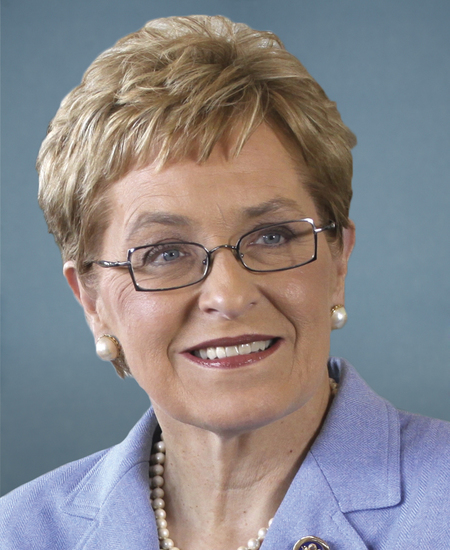
Rep. Marcy Kaptur
Sponsored bills
Federal Contracting for Peace and Security Act This bill requires executive agencies to terminate their contracts with companies conducting business operations in Russia. This requirement ends when Russia takes steps to restore the safety, sovereignty, and condition of Ukraine. The bill shall not apply to the procurement of products or services for (1) the benefit, either directly or through the efforts of regional allies, of Ukraine; or (2) humanitarian purposes to meet basic human needs. The bill provides for a waiver where in the national interest of the United States.
Postal Service Reform Act of 202 2 This bill addresses the finances and operations of the U.S. Postal Service (USPS). The bill requires the Office of Personnel Management (OPM) to establish the Postal Service Health Benefits Program within the Federal Employees Health Benefits Program under which OPM may contract with carriers to offer health benefits plans for USPS employees and retirees. The bill provides for coordinated enrollment of retirees under this program and Medicare. The bill repeals the requirement that the USPS annually prepay future retirement health benefits. Additionally, the USPS may establish a program to enter into agreements with an agency of any state government, local government, or tribal government, and with other government agencies, to provide certain nonpostal products and services that reasonably contribute to the costs of the USPS and meet other specified criteria. The USPS must develop and maintain a publicly available dashboard to track service performance and must report regularly on its operations and financial condition. The Postal Regulatory Commission must annually submit to the USPS a budget of its expenses. It must also conduct a study to identify the causes and effects of postal inefficiencies relating to flats (e.g., large envelopes). The USPS Office of Inspector General shall perform oversight of the Postal Regulatory Commission.
This resolution reaffirms unequivocal support for the North Atlantic Treaty Organization (NATO) as an alliance founded on democratic principles. The resolution urges NATO to continue to provide unwavering support to the people of Ukraine as they fight for their sovereignty, territorial integrity, and a democratic future. The resolution calls on the President to use the voice and vote of the United States to adopt a new Strategic Concept for NATO that is clear about its support for shared democratic values and committed to enhancing NATO's capacity to strengthen democratic institutions within NATO member, partner, and aspirant countries. Finally, the resolution calls on the President to use the voice and vote of the United States to establish a Center for Democratic Resilience within NATO headquarters.
This bill prohibits using federal funds to support or facilitate (1) Russia's participation in a Group of Seven (G-7) proceeding, or (2) a reconstituted Group of Eight (G-8) that includes Russia. (The G-7 is an informal group consisting of seven of the world's largest advanced economies. In 2014, the G-8 became the G-7 when Russia 's membership was suspended following Russia's annexation of the Crimea region of Ukraine.)
Ensuring Lasting Smiles Act This bill requires private health insurance plans to cover diagnosis and treatment of congenital anomalies and birth defects, such as reconstructive services and items. Coverage must include services and items that functionally improve, repair, or restore any body part that is medically necessary for normal bodily functions or appearance, as determined by the treating physician. Coverage limits and cost-sharing requirements for such services and items may not be more restrictive than those applicable to all medical and surgical benefits under the plan.
Supply Chain Disruptions Relief Act This bill modifies the treatment of liquidations of new motor vehicle inventory as qualified LIFO (last in first out accounting method) inventory. It allows new motor vehicle dealers to elect to wait until the end of 2025 to replace their inventory for purposes of determining income attributable to the sale of such inventory during 2020 and 2021.
Transforming Student Debt to Home Equity Act of 2022 This bill requires the Department of Housing and Urban Development (HUD) and the Federal Housing Finance Agency to jointly establish and implement a pilot demonstration program to provide, to eligible applicants with federal student loan debt, assistance in purchasing eligible properties. Specifically, the program may provide for (1) discounts on the appraised value of eligible properties, (2) flexibility in certain underwriting standards, (3) the development of new mortgage products specifically targeted to eligible applicants, and (4) other appropriate assistance. The program must provide for the development of a program that uses actuarial information to determine how the repayment of federal student loans may be integrated into a mortgage repayment schedule to allow eligible applicants to accumulate home equity. An eligible property is a property (1) that is designed as a dwelling for occupancy by one to four families; (2) that is safe and habitable; (3) the occupancy of which will promote community revitalization; and (4) that is owned by HUD, the Federal National Mortgage Association (Fannie Mae), the Federal Home Loan Mortgage Corporation (Freddie Mac), a local land bank, the Department of Agriculture, or the Department of Veterans Affairs.
Children's Act for Responsible Employment and Farm Safety of 2022 or the CARE Act of 20 22 This bill revises labor provisions for protecting child workers, including those employed in agriculture, and increases the civil penalties for violations of such provisions and imposes new criminal penalties for violations resulting in the death or serious injury or illness of a child worker. Specifically, the bill revises the definition of oppressive child labor to prohibit the employment of children under 14 years of age and imposes new employer reporting requirements for work-related injuries or deaths of agricultural employees under the age of 18. The Department of Labor must analyze, collect, and report on data concerning children under the age of 18 who are employed in agriculture and each work-related injury, illness, or death of any such child. Labor must also revise regulations to prohibit the employment of a child under the age of 18 as a pesticide handler.
Great Lakes Authority Act of 2022 This bill establishes the Great Lakes Authority to promote economic development and job creation; restore and protect fresh water; foster innovation to strengthen and expand manufacturing; promote cleaner and more sustainable power production; establish and administer funding mechanisms to finance clean energy, green infrastructure, water infrastructure, wastewater infrastructure, and broadband infrastructure projects in the region; create a regional development plan; promote affordable access to energy and broadband services in the region; provide technical assistance to entities receiving financial assistance from the authority; and select a location for the National Energy Recycling and Conservation Laboratory established by this bill. The authority must be composed of (1) a chairperson appointed by the President; and (2) one member from each of the following states: Illinois, Indiana, Michigan, Minnesota, New York, Ohio, Pennsylvania, and Wisconsin.