

This resolution expresses support for the designation of Pi Day. (Pi is an irrational number that equals the ratio of the circumference of a circle to its diameter; it is a fundamental mathematical constant and central in mathematics, science, and engineering.)
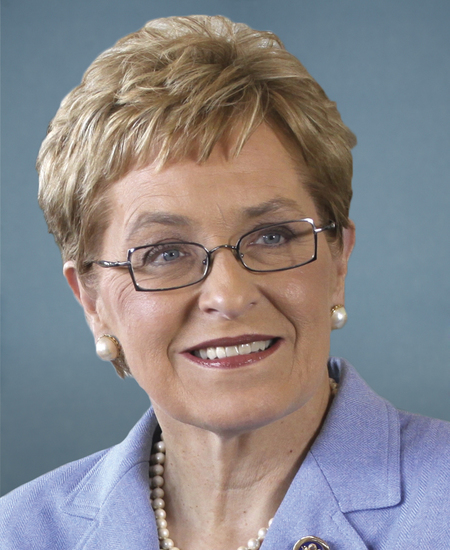
Rep. Marcy Kaptur
Sponsored bills
Maddy summaryHR 1499, the Good Jobs for Good Airports Act, requires airports receiving federal funding to pay covered service workers a minimum wage of at least $15 per hour (or higher if state/local laws or federal standards require it) and provide minimum fringe benefits. It directly affects workers in specific airport roles like security, ticketing, concessions, cleaning, and ramp services at small, medium, or large hub airports. The bill mandates annual certification from airport operators to verify compliance with these wage and benefit standards, tied to eligibility for federal airport grants under the Infrastructure Investment and Jobs Act. It does not override stricter state or local laws but ensures minimum standards for workers supporting airport operations.
Maddy summaryThe Paycheck Fairness Act (HR 17) strengthens equal pay protections by amending the Fair Labor Standards Act. It prohibits pay discrimination based on sex, pregnancy, childbirth, sexual orientation, gender identity, and sex characteristics. The bill modifies employer defenses for pay differences to require demonstration that any disparity is job-related, consistent with business necessity, and accounts for the entire pay differential. It also prohibits employers from relying on wage history when making hiring decisions or setting pay, enhances penalties for violations, and requires the EEOC to collect compensation data disaggregated by sex, race, and national origin.
Maddy summaryHCONRES 22 is a symbolic resolution recognizing the persistent gender pay gap in the U.S., documenting that women earn significantly less than men across racial groups (e.g., Black women earn 67 cents for every dollar earned by White men). It highlights the economic impact of this disparity, noting women lose over $958 billion annually in wages and face barriers like occupational segregation and workplace harassment. The resolution does not create new laws or policies but formally acknowledges the issue and reaffirms Congress’s commitment to addressing the gap. It references specific Equal Pay Days (e.g., March 14 for all women) to underscore the time women must work to earn what men did the previous year.
Maddy summaryHR 742, the TELL Act, requires U.S.-based websites and mobile apps that store user data in China to clearly inform users that their data is stored there and whether the Chinese government or state entities have access to it. The bill mandates two specific disclosures in plain language at the point of use, aiming to increase transparency about data handling. Violations would be treated as deceptive practices under the Federal Trade Commission Act, allowing the FTC to enforce the law using existing authority. This directly affects companies operating in the U.S. that store user data in China, giving users clearer information about data location and access.
Maddy summaryHR 1447 prevents employers from ending health insurance coverage for workers during a lawful strike or a lockout (when an employer stops work to pressure union demands). It directly affects unionized workers participating in strikes or facing lockouts, ensuring they maintain healthcare coverage during these labor disputes. The bill adds penalties: employers violating this rule face up to $75,000 per violation for lockouts ($150,000 for repeat offenses or serious harm) and up to $50,000 per violation for strikes ($100,000 for repeat offenses or serious harm). These penalties apply to employers who cut healthcare during strikes or lockouts, with the National Labor Relations Board enforcing the fines.
Maddy summaryHRES 198 is a non-binding House resolution recognizing the Girl Scouts of the United States of America on its 111th anniversary. It celebrates the organization’s role in providing girls with safe, inclusive spaces for leadership development, skill-building, and community engagement through programs like STEM education, outdoor activities, and civic initiatives. The resolution specifically acknowledges Girl Scouts’ 111-year legacy, congratulates Gold Award recipients, and encourages continued support for their mission. As a ceremonial resolution, it does not create new policies, allocate funds, or directly affect any individuals or organizations.
Don't BLock Our Communities Act or the D-BLOC Act This bill prohibits railroad carriers from obstructing travel at public highway-rail crossings for more than 10 minutes, except under limited circumstances (e.g., safety issues). The Department of Transportation (DOT) must investigate and send notices to carriers of repeated incidents; carriers are subject to civil penalties for violations that occur after having received notice. Additionally, each Class I railroad carrier must publish on its home page an active link to the blocked highway-rail crossing portal that is maintained by the Federal Railroad Administration. The portal is used to (1) collect information from the public, including first responders, regarding blocked highway-rail grade crossing events; (2) solicit the apparent cause of the blocked crossing and provide examples of common causes of blocked crossings; (3) provide each complainant with the contact information for reporting a blocked crossing to the relevant railroad; and (4) encourage each complainant to report the blocked crossing to the relevant railroad.
American Patriots of WWII through Service with the Canadian and British Armed Forces Gold Medal Act of 2023 This bill provides for the award of a single Congressional Gold Medal to all U.S. nationals who voluntarily joined the Canadian and British Armed Forces and their supporting entities during World War II in recognition of their dedicated service.
Maddy summaryThe Protecting America's Meatpacking Workers Act of 2023 establishes new safety standards for meat and poultry processing facilities to protect workers from injuries and unsafe conditions. The bill prohibits "no fault attendance policies" that penalize workers for taking legally protected leave and requires employers to provide adequate toilet facilities without punishment. It mandates new ergonomic standards to prevent musculoskeletal injuries, increases OSHA inspection resources through $60 million in annual funding, and requires facilities to report infections and deaths during pandemics. The bill directly affects meat and poultry processing workers, their employers, and federal agencies overseeing workplace safety through concrete policy changes to improve working conditions.