

CBDC Anti-Surveillance State Act This bill limits the ability of the Federal Reserve to (1) provide direct services to individuals, and (2) use a central bank digital currency. A central bank digital currency is a digital currency (e.g., Bitcoin or Ether) issued by a government-backed central bank. Specifically, the bill prohibits the Federal Reserve and the Federal Open Market Committee from using any central bank digital currency to implement monetary policy. In addition, a Federal Reserve bank is prohibited from offering products or services directly to an individual, maintaining an account on behalf of an individual, or issuing a central bank digital currency directly to an individual. The Federal Reserve must (1) consult with each Federal Reserve bank with respect to any central bank digital currency study or pilot program, and (2) issue quarterly reports on the findings and determinations of any such study or program.
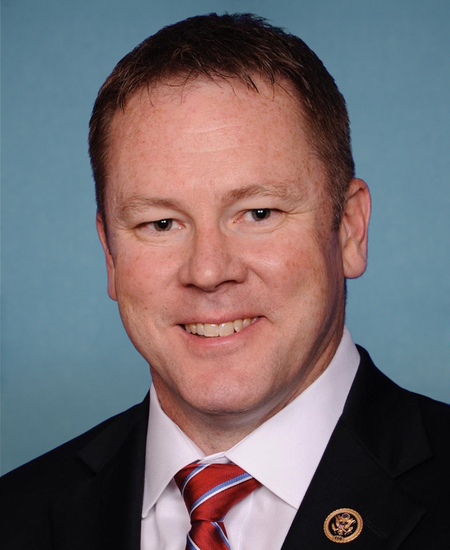
Rep. Warren Davidson
Sponsored bills
Maddy summaryThis bill would require the U.S. to withhold funding for the UNRWA (United Nations refugee agency for Palestinians) unless the State Department certifies UNRWA staff, materials, and facilities comply with specific conditions. Key conditions include confirming no ties to terrorism or anti-Israel rhetoric (like denying Israel's right to exist or promoting BDS), no misuse of UNRWA resources for terrorist activities, and adherence to international financial audits. It also caps U.S. contributions to UNRWA at levels comparable to Arab League countries and mandates annual reports to Congress on phasing out UNRWA support. These changes directly affect U.S. foreign aid decisions for Palestinian refugees in Jordan, Lebanon, Syria, Gaza, and the West Bank.
Maddy summaryThis bill authorizes a single Congressional Gold Medal to honor all U.S. Army Dustoff crews who served during the Vietnam War (1962-1973). It recognizes their critical role in evacuating nearly 900,000 wounded personnel, including U.S., South Vietnamese, and allied forces, under extreme combat conditions. The medal, designed with input from the Secretary of Defense, will be presented to the U.S. Army Medical Department Museum for permanent display. Duplicate bronze medals may be sold to cover costs, but the primary action is the commemorative recognition of these crews' service.
Maddy summaryHJRES 24 is a congressional disapproval resolution targeting a District of Columbia law. It formally rejects the D.C. Council's approval of the "Local Resident Voting Rights Amendment Act of 2022" (D.C. Act 24-640), which would have granted voting rights to D.C. residents in local elections. The resolution prevents this D.C. law from taking effect by disapproving the Council's action under the District of Columbia Home Rule Act. This is a procedural measure affecting D.C. residents' local voting rights, not a new federal policy.
Maddy summaryHR 185 ends a Centers for Disease Control and Prevention (CDC) rule requiring foreign travelers entering the U.S. by air to show proof of a COVID-19 vaccination. The bill takes effect immediately upon enactment, terminating the specific requirement outlined in the CDC’s April 2022 order (and any similar future orders). It also prohibits federal funding from being used to enforce this rule. This change directly affects foreign air travelers entering the United States, removing a vaccination proof requirement for their entry. The bill does not impact domestic travel, other entry methods, or vaccination requirements for U.S. citizens.
Maddy summaryHR 978, the "Drain the Swamp Act of 2023," requires most U.S. federal executive agencies to relocate their headquarters outside the Washington, D.C. metropolitan area. The bill repeals a law mandating agencies to remain in the D.C. area and mandates that agency heads submit relocation plans by September 30, 2024, identifying new locations, limiting Washington-based staff to 10% after relocation, and maximizing cost savings. Agencies must implement these plans by September 30, 2028, while considering national security impacts. This directly affects all executive agencies (excluding the White House Office) and their operations, with the Washington metro area defined as D.C., specific Maryland and Virginia counties, and Alexandria.
Maddy summaryHR 772, the Vaccine Passport Prevention Act of 2023, prohibits governments (federal, state, tribal, and local) from issuing vaccine passports or requiring proof of COVID-19 vaccination or recovery to access services, benefits, or public accommodations. It also bans private businesses in interstate commerce from mandating vaccination documentation for products or services, with exceptions for schools and healthcare providers. The bill includes penalties for violations, such as ineligibility for federal grants, and requires schools that mandate vaccines for enrollment to offer religious, medical, and natural immunity exemptions. It directly affects governments, businesses, and schools, while exempting healthcare records and specific educational settings from the requirements.
Future Agriculture Retention and Management Act of 2023 or FARM Act of 2023 This bill makes solar and wind electricity ineligible for certain renewable energy tax credits if the electricity was generated by facilities that a public utility placed on agricultural land.
Maddy summaryHR 899 would end the U.S. Department of Education by requiring its termination on December 31, 2023. This bill directly affects the Department of Education itself, eliminating its federal structure and operations. The key provision is a specific termination date, ending the agency's existence as a standalone cabinet-level department. No other mechanisms or affected groups are specified in the bill text.
Maddy summaryHR 932 repeals two key congressional authorizations for military force in Iraq: the 1991 resolution (Public Law 102-1) and the 2002 resolution (Public Law 107-243). This bill removes the legal foundation that has permitted U.S. military operations in Iraq for over two decades. It directly affects the executive branch’s authority to conduct military actions under these specific resolutions, requiring future operations to seek new congressional approval. The repeal is a procedural change that would end the statutory basis for ongoing military engagement in Iraq without altering other laws or policies.