

Maddy summaryThis bill ensures U.S. Border Patrol Agents and Customs and Border Protection officers who continue working during a government shutdown receive their salaries. It authorizes funding from the Treasury for fiscal year 2026 to cover their salaries and expenses during any lapse in discretionary appropriations. The measure specifically applies to employees "excepted from furlough," meaning those required to work during shutdowns. It does not change eligibility for pay but guarantees funding for these personnel during funding gaps.
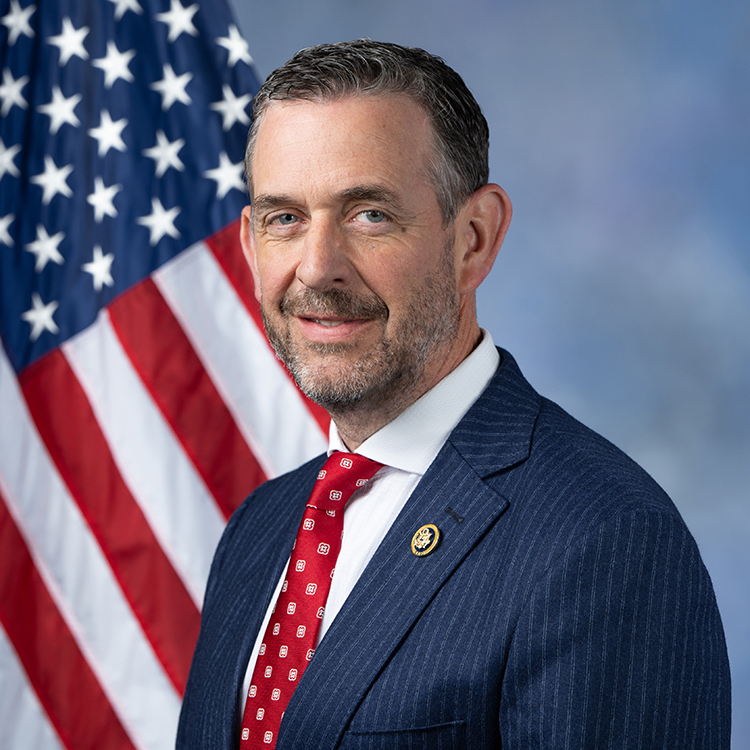
Rep. Michael A. Rulli
Sponsored bills
Maddy summaryHR 5156, the COUNT Act, requires federal agencies to share specific immigration and demographic data with the Department of Commerce to improve national citizenship statistics. It mandates agencies like DHS, SSA, and HHS to provide access to records including immigration files, passport applications, and Medicaid data, while directing the Census Bureau to add a citizenship question to the 2030 census and American Community Survey. The bill also directs the Commerce Department to seek state administrative records for citizenship data and requires annual reports to Congress on state cooperation. This directly affects federal and state agencies by altering data-sharing protocols for immigration and citizenship tracking.
Maddy summaryHR 4018 aims to accelerate U.S. access to critical minerals (like nickel, cobalt, and rare earths) found in seabed resources on the continental shelf. It requires federal agencies to expedite permits for exploration and commercial recovery under the Deep Seabed Hard Mineral Resources Act and the Outer Continental Shelf Lands Act within 60 days of enactment. The bill also mandates a seabed mapping plan, identifies critical minerals for defense/energy use, and directs engagement with allies to support U.S. companies in developing these resources. This directly affects U.S. mining companies seeking seabed mineral rights and federal agencies managing offshore resource development.
Maddy summaryHR 5075, the GRACE Act, requires schools receiving federal education funds to allow religious exemptions from vaccination requirements without requiring documentation. It directly affects K-12 public schools and school agencies that receive federal funding, as they must permit students (or their parents/guardians for minors under 18) to skip vaccinations based on religious belief. The key provision mandates that schools cannot demand proof of a religious belief to grant such exemptions. This changes how schools handle vaccination policies for enrollment, attendance, and school activities when receiving federal education dollars.
Maddy summaryHR 5042 repeals a 2021 Department of Energy (DOE) rule defining showerheads and reinstates a 2020 DOE definition for determining acceptable water pressure standards. This bill directly affects showerhead manufacturers and consumers by clarifying which regulatory definition applies to water pressure requirements under energy conservation rules. The key mechanism is the formal replacement of the 2021 rule (86 Fed. Reg. 71797) with the 2020 rule (85 Fed. Reg. 81341), ensuring the older definition governs future compliance. It does not change the actual water pressure limits but resolves regulatory ambiguity in existing standards.
Maddy summaryThis bill creates a federal database identifying state or local governments that conflict with immigration enforcement laws. It prohibits federal funding for any jurisdiction listed in this database, which includes entities that block cooperation with immigration detainers, restrict arrests of certain immigrants, or prevent officials from interviewing incarcerated individuals about immigration status. The database must be updated quarterly and made public within 90 days of the bill's enactment. This directly affects local governments that have policies limiting collaboration with federal immigration authorities.
Maddy summaryThis bill prohibits the U.S. Department of Agriculture (USDA) from using race-based or sex-based criteria when making decisions about 10 specific farm programs. It applies to programs including pandemic aid for farmers, crop insurance, conservation programs like the Conservation Reserve Program, farm loans, and rural development grants. The law requires USDA to administer these programs based on merit, fairness, and equal opportunity for all applicants. It directly affects farmers, ranchers, and agricultural businesses applying for these federal programs.
Maddy summaryHR 4788 would amend a 1932 District of Columbia law to allow Members of Congress (Senators and Representatives) to carry concealed firearms in Washington, D.C., if they hold a valid concealed carry license from a state where they are permitted to carry, or are otherwise legally allowed to carry concealed in their home state. The bill requires these members to not be federally prohibited from possessing firearms, to carry a valid state-issued license or proof of residency rights, and to present photo identification. This exception applies only to Members of Congress and does not alter D.C.'s general concealed carry laws for other individuals. The provision would take effect upon the bill's enactment.
Maddy summaryHR 4793, the SOS Act, requires the government to add a specific graph to annual reports about Social Security trust funds. The graph must compare two different funding assumptions: the amount assumed under current law (based on dedicated funding sources) versus the amount assumed under the Balanced Budget Act of 1985. This bill does not change Social Security payments or benefits; it only modifies how the government reports on trust fund finances. The requirement applies to reports prepared by the Congressional Budget Office and Treasury Department, affecting the transparency of federal budget documentation.
Maddy summaryHRES 614 is a non-binding resolution honoring Dr. Edwin J. Feulner, former President of the Heritage Foundation and Executive Director of the Republican Study Committee, following his death on July 18, 2025. The resolution commemorates his founding of the Heritage Foundation in 1973, his 36-year leadership as its president, and his role in establishing the Republican Study Committee. It specifically calls for the House to mourn his passing, honor his legacy, and recommend he receive the Presidential Medal of Freedom posthumously. This resolution does not create new law or affect any policies, as it is purely commemorative.