

Maddy summaryHR 5483, the Chloe Cole Act, prohibits health care professionals, hospitals, or clinics from providing certain gender-affirming treatments to minors under 18 that aim to alter their body to align with a gender identity different from their sex assigned at birth. This includes puberty blockers, sex hormones, and specific surgeries, unless the treatment falls under narrow exceptions like medically necessary care for disorders of sexual development, injuries, or detransition. The bill creates a private right for affected minors or their guardians to sue providers for damages in federal court, with strict liability for violations. It applies when interstate commerce is involved (e.g., payments, travel, communications) and sets a 25-year statute of limitations from the minor’s 18th birthday.
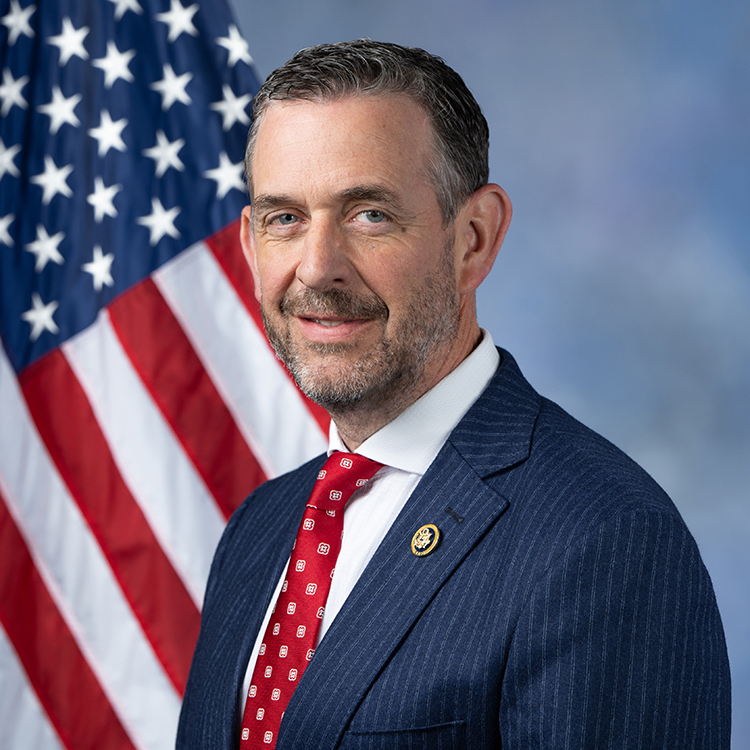
Rep. Michael A. Rulli
Sponsored bills
Maddy summaryHRES 729 is a symbolic resolution designating September 17, 2025, as "Constitution Day" to honor the 250th anniversary of the U.S. Constitution's signing (September 17, 1787). It does not create new laws or affect any specific group; instead, it urges the American public to observe the day with ceremonies and activities. The resolution emphasizes the Constitution's historical significance and its role in establishing American democracy. As a commemorative measure, it has no binding effect on policy or governance.
Maddy summaryHR 5394, the Freedom from Automated Speed Enforcement Act of 2025, requires states to certify annually that no jurisdiction within the state uses automated speed enforcement systems (devices that photograph speeding vehicles without an officer present) to avoid losing 10% of federal highway funds. States must submit this certification to the Transportation Secretary by the first day of each fiscal year starting in 2027, with the Secretary able to audit compliance. Exceptions allow automated systems in school zones during posted hours and construction zones with clear signage indicating the system's use and speed limits below 55 mph. The bill directly affects states operating such systems by threatening funding penalties unless they comply, while permitting limited use in specific safety zones.
Maddy summaryThis bill ensures continued pay for specific Department of Homeland Security (DHS) personnel and Coast Guard members during government shutdowns in fiscal years 2026-2027. It directly affects DHS law enforcement officers (including those in job series like 0083, 1801, and 1811), DHS administrative and payroll staff, and Coast Guard personnel. The bill authorizes emergency funding from the Treasury to cover their pay and allowances when regular appropriations are not in place. This funding expires on January 1, 2027, or earlier if Congress passes a new appropriations bill covering these costs.
Maddy summaryHR 5401, the Pay Our Troops Act of 2026, ensures military personnel, civilian Defense workers, and supporting contractors receive pay during government funding gaps in fiscal year 2026. It appropriates emergency funds for active-duty service members, reserves, and their supporting personnel (including Coast Guard staff under DHS) if regular appropriations aren't enacted by the end of the fiscal year. The bill provides necessary pay and allowances during any period when full-year funding is unavailable, covering both active service and support roles. Funding expires when regular appropriations are passed, a funding resolution is enacted, or January 1, 2027, whichever comes first. This is a procedural measure to prevent pay delays for military and support staff during fiscal year 2026 funding lapses.
Maddy summaryThis bill (HCONRES 48) is a ceremonial resolution authorizing the use of the U.S. Capitol rotunda for a "lying in honor" ceremony for Charles James Kirk, a recognized advocate for free speech, civil discourse, and youth political engagement. It grants permission for his remains to be displayed in the rotunda, with timing and duration to be determined by the House Speaker, Senate President pro tempore, and the Capitol Architect. The resolution does not create new laws or policies but formally permits a traditional honor reserved for individuals who have made significant contributions to the nation. It affects no specific group or legislation, serving only as a commemorative gesture for Kirk's legacy.
Maddy summaryThis symbolic resolution (HRES 700) condemns the assassination of Charlie Kirk, a conservative campus advocate and founder of Turning Point USA, who was killed on September 10, 2025, at Utah Valley University. It expresses the House's deepest condolences to Kirk’s family, including his wife and children, and honors his work promoting civil discourse among college students. The resolution does not create new laws or policies but serves as a formal expression of the House’s stance on the incident. It directly affects no individuals or groups through legislative action, as it is purely a ceremonial statement.
Maddy summaryHRES 702 is a symbolic resolution condemning the September 10, 2025, assassination of Charlie Kirk, founder of Turning Point USA and a conservative political activist. It expresses condolences to his family, praises first responders, and reaffirms the right to peaceful assembly. As a non-binding resolution, it does not create new laws or policies but serves as a formal statement of condemnation. The resolution directly addresses the House of Representatives' stance on this event, with no direct impact on constituents or legislation.
Maddy summaryHRES 695 is a commemorative resolution honoring Charlie Kirk, a conservative speaker and Turning Point USA leader, following his assassination on September 10, 2025, in Orem, Utah. The resolution condemns the attack, offers condolences to his family, and recognizes first responders. It reaffirms the First Amendment right to peaceful assembly and emphasizes that violence cannot silence democratic participation. This non-binding resolution does not create new laws or policies but serves as a symbolic tribute to Kirk's memory and the principles of democratic engagement.
Maddy summaryThe RESULTS Act (HR 5269) changes how Medicare calculates payment rates for clinical diagnostic laboratory tests. It requires Medicare to collect data on private payor rates for widely available non-Advanced Diagnostic Laboratory Tests (non-ADLTs) from a qualifying independent claims data entity (a national nonprofit organization meeting specific criteria) rather than relying on data reported directly by laboratories. For tests where data is unavailable, the bill establishes default payment rates based on previous years' rates adjusted for inflation. The law also requires Medicare to publicly explain payment rates with supporting data, affecting Medicare beneficiaries, clinical laboratories, and private payors that provide services covered by Medicare.