

Maddy summaryThis bill restores access to VA housing loans and educational benefits for Black World War II veterans who were denied GI Bill benefits due to racial discrimination, as well as for their living spouses, children, grandchildren, or direct descendants. It defines eligibility by requiring applicants to certify that their veteran relative was denied GI Bill benefits on racial grounds, with a five-year application window starting from the bill's enactment date. The VA must process these applications within 90 days and report to Congress on the number of recipients and total benefit value within one year. This addresses historical discrimination by creating new pathways to benefits for affected individuals and their families.
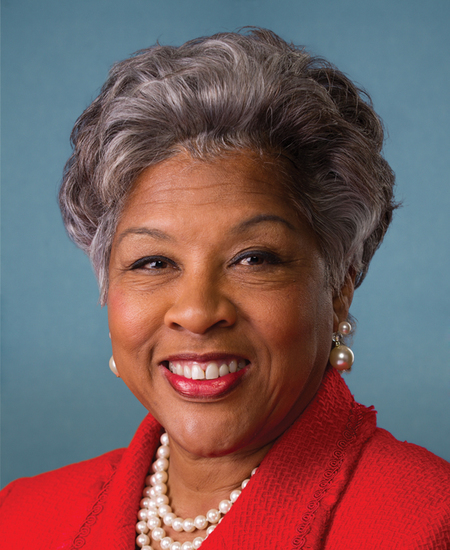
Rep. Joyce Beatty
Sponsored bills
Maddy summaryHR 1723, the Abortion is Health Care Everywhere Act of 2023, amends the Foreign Assistance Act to remove restrictions on using U.S. foreign aid funds for abortion services. It explicitly allows U.S. foreign assistance programs to fund comprehensive reproductive health care, including abortion services, training, and equipment. This change directly affects U.S. international health programs and recipient countries, enabling them to integrate safe abortion care into broader reproductive health services. The bill aims to align U.S. policy with global health guidelines by making abortion services a standard part of reproductive health care funded through foreign assistance.
Maddy summaryThe Food Deserts Act creates a federal grant program to help establish grocery stores in underserved communities by funding state revolving funds. States receive capitalization grants (up to $150 million for FY2022) to provide low-interest loans to grocery stores that meet specific criteria, such as selling unprocessed, affordable healthy foods and matching 20% of the loan with non-federal funds. Priority is given to stores hiring local workers, offering nutrition education, sourcing from local farms, and having established supply chains. The program directly supports grocery store operators in areas with limited access to fresh food, aiming to improve community health outcomes through increased access to nutritious options.
This resolution recognizes the deadly impact colorectal cancer; acknowledges racial disparities in the impact of colorectal cancer, particularly in the Black community; and encourages actions to address colorectal cancer and those disparities.
Maddy summaryThe Dental and Optometric Care Access Act of 2023 (DOC Access Act) requires health insurance plans covering dental and vision care to allow providers (like dentists and optometrists) to charge patients the usual and customary rate for uncovered services, with a specific rule limiting dental cleanings to the network fee even if it exceeds annual coverage limits. It prohibits plans from restricting providers' choices of laboratories or suppliers for patient care. This law directly affects dental and vision care providers and the health insurance plans that offer these services. The bill establishes concrete billing and coverage standards to improve access to necessary dental and vision care.
Maddy summaryThis bill authorizes a Congressional Gold Medal to honor the "Hello Girls" - female telephone operators who served in the Army Signal Corps during World War I. They provided critical battlefield communications in France (connecting 26 million calls), wore military uniforms, and faced combat risks, but were denied veteran benefits for 60 years due to being classified as civilian contractors. The medal recognizes their pioneering service, devotion, and the decades-long struggle to gain military recognition. The award follows similar recognition for other WWII women veterans and aims to correct the historical injustice they faced.
Maddy summaryHRES 219 is a symbolic resolution (not a binding bill) expressing the House’s support for inclusive public schools. It urges schools to adopt historically accurate, diverse educational materials that reflect the nation’s diversity, foster parent-educator partnerships, and eliminate discrimination based on race, disability, LGBTQ+ identity, or other factors. The resolution emphasizes creating safe, well-rounded learning environments that prepare all students for success while protecting students’ civil rights. It directly affects public school districts, educators, families, and students by encouraging practices that promote equity and inclusion.
Maddy summaryThis resolution (HRES 175) is a symbolic recognition of cardiovascular disease as the leading preventable cause of death and disability globally, and it supports designating February 2023 as "American Heart Month." It does not create new laws or policies but formally acknowledges the public health impact of heart disease through congressional language. The resolution highlights statistics on heart disease deaths, costs, and disparities, while encouraging awareness, research, and access to care. It has no direct effect on individuals or funding but aligns with annual presidential proclamations recognizing February as American Heart Month.
Maddy summaryHR 1328, the Medical Device Nonvisual Accessibility Act of 2023, requires certain home-use medical devices (like blood pressure monitors and sleep apnea machines) to include nonvisual accessibility features - such as voice commands or audio feedback - by 2025. It directly affects blind or low-vision users who rely on these devices for independent, safe, and private care at home. The bill mandates that devices classified as Class II or III (and cleared via FDA processes) must meet accessibility standards ensuring equal usability for blind or low-vision individuals, with limited waivers allowed for manufacturers facing undue hardship. The FDA will develop and enforce these standards within two years, consulting with accessibility experts and blind users.
Maddy summaryThe Paycheck Fairness Act (HR 17) strengthens equal pay protections by amending the Fair Labor Standards Act. It prohibits pay discrimination based on sex, pregnancy, childbirth, sexual orientation, gender identity, and sex characteristics. The bill modifies employer defenses for pay differences to require demonstration that any disparity is job-related, consistent with business necessity, and accounts for the entire pay differential. It also prohibits employers from relying on wage history when making hiring decisions or setting pay, enhances penalties for violations, and requires the EEOC to collect compensation data disaggregated by sex, race, and national origin.