

Maddy summaryThe EXPERTS Act of 2025 requires agencies to disclose funding sources and potential conflicts of interest for studies submitted during rulemaking, including who funded research and any financial relationships that might influence findings. It establishes an Office of the Public Advocate within the Office of Management and Budget to assist public participation in rulemaking, conduct social equity assessments, and improve outreach to underrepresented groups. The bill also mandates that agencies consider social equity impacts when creating rules and requires detailed explanations for withdrawing proposed regulations. These provisions aim to increase transparency, inclusivity, and accountability in the federal regulatory process.
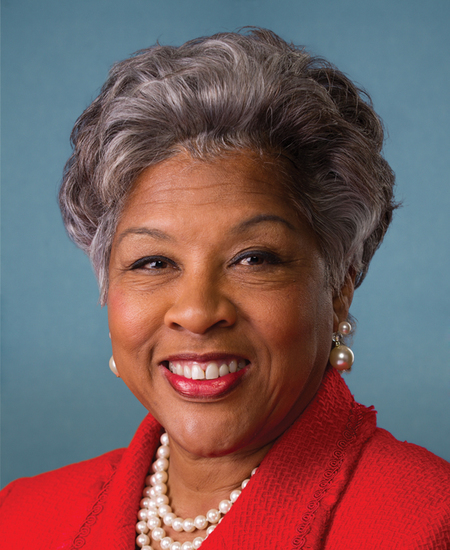
Rep. Joyce Beatty
Sponsored bills
Maddy summaryHR 6056, the International Human Rights Defense Act of 2025, establishes a permanent Special Envoy at the State Department to lead U.S. foreign policy efforts addressing discrimination and violence against LGBTQI+ people globally. The bill requires the U.S. government to develop and update a biannual global strategy to prevent criminalization and violence against LGBTQI+ individuals, mandate detailed reporting on such abuses in annual country reports, and ensure all U.S. foreign assistance programs include inclusive nondiscrimination policies. This legislation directly affects U.S. foreign policy implementation, federal agencies receiving funding, and LGBTQI+ communities facing persecution worldwide. The bill aims to coordinate U.S. government efforts across departments and with international partners to advance LGBTQI+ rights globally through concrete policy mechanisms.
Maddy summaryHCONRES 59 is a symbolic congressional resolution recognizing the historical challenges Black veterans faced upon returning home after military service, including systemic discrimination despite their sacrifices in conflicts from the Revolutionary War through Vietnam. It highlights their dual struggle - fighting for the U.S. abroad while confronting racism at home - and their pivotal role in advancing civil rights, citing examples like the Tuskegee Airmen and the 369th Infantry. The resolution specifically calls on the Department of Veterans Affairs to address ongoing health and benefit disparities affecting minority veterans. As a non-binding resolution, it does not create new laws but formally acknowledges this history and the need for equitable veteran care.
Maddy summaryThis non-binding resolution (HRES 862) asks the House of Representatives to express support for issuing a new commemorative postage stamp honoring the Buffalo Soldiers. It directs the Citizens’ Stamp Advisory Committee to recommend such a stamp to the Postmaster General. The resolution highlights the Buffalo Soldiers’ historical service - 6 all-Black regiments formed in 1866, their role in frontier patrols, and 23 Congressional Medals of Honor earned over 82 years. It does not create funding or require the Postal Service to issue a stamp, but formally requests the advisory committee’s consideration. This procedural resolution affects only the stamp selection process, not policy or funding.
Maddy summaryHR 5940, the Seniors Deserve SMARTER Care Act of 2025, prohibits the implementation of the Medicare WISeR model (described in a July 2025 federal notice). The bill specifically blocks the Secretary of Health and Human Services from using the WISeR model, which would have required prior authorization for certain medical services under Medicare. This directly affects Medicare beneficiaries and healthcare providers who would have been subject to the model's requirements. The key provision is a clear ban on implementing WISeR or any substantially similar payment model, preventing changes to Medicare's service authorization process. The bill does not create new programs but stops a specific proposed Medicare policy change.
Maddy summaryThis bill ensures continuous funding for SNAP (food assistance) and WIC (nutrition program for mothers/children) during government funding gaps. It authorizes emergency Treasury funds to cover SNAP/WIC benefits and reimburse states for costs if Congress fails to pass regular appropriations for the Department of Agriculture by September 30, 2025. The funding covers missed payments retroactively from September 30, 2025, through the bill’s enactment date, and continues until either regular appropriations pass or September 30, 2026. It directly affects low-income households relying on these programs and state agencies administering them during funding lapses.
Maddy summaryThis bill, HR 5973, requires federal immigration enforcement personnel to follow strict limits on force use, including proportional application, mandatory de-escalation efforts, and prohibitions on equipment like flash bangs or rubber bullets except for specific public safety threats. It mandates body-worn and vehicle cameras for all operations, with footage retained for one year (three years for force incidents or complaints), and grants affected individuals the right to inspect recordings. The law also requires annual training on force policies, First Amendment compliance, and racial bias avoidance, while demanding detailed quarterly reports to Congress on force usage, assaults on agents, and equipment approvals. These provisions directly affect all federal immigration agents conducting enforcement actions, aiming to increase transparency and accountability during operations.
Maddy summaryThis bill extends the annual open enrollment period for health insurance marketplaces (Exchanges) to cover the 2026 plan year. It requires the Health and Human Services Secretary to adjust the enrollment window to begin November 1, 2025, and end May 1, 2026 - significantly lengthening the typical enrollment period. This change directly affects individuals and families purchasing health insurance through federal or state-based marketplaces who rely on the annual enrollment period to select or change coverage. The key provision modifies the existing enrollment timeline under the Affordable Care Act, providing a longer window for enrollment decisions.
Maddy summaryHR 5913, the Community Investment and Prosperity Act, amends two existing banking regulations by increasing a percentage threshold from 15% to 20% in two specific legal provisions. It revises the Revised Statutes (12 U.S.C. 24) and the Federal Reserve Act (12 U.S.C. 338a), specifically altering the fifth sentence of designated paragraphs. These changes directly affect how national banks and financial institutions calculate certain regulatory requirements under federal law. The bill makes a technical adjustment to existing banking rules without creating new programs or altering broader community investment policies.
Maddy summaryThis joint resolution designates October 2025 as Head Start Awareness Month to symbolically recognize the program's 60-year impact. It highlights Head Start's service to over 40 million children and families nationwide, emphasizing its role in early childhood development, health screenings, and educational support. The resolution serves as a ceremonial acknowledgment of the program's legacy and achievements, not as a policy change or funding measure. It was introduced by multiple representatives to honor Head Start's contributions to child well-being and educational outcomes.