

Maddy summaryHR 4546, the FIRE Act, prohibits federal, state, and local governments from restricting or banning firearm magazines based on their capacity (how many rounds they hold). It bans federal enforcement of such restrictions, nullifies state or local laws imposing capacity-based limits on magazines, and defines "firearm magazine" and "capacity" for clarity. This directly affects firearm owners who use magazines of certain capacities and law enforcement agencies responsible for enforcing firearm regulations. The law takes effect 30+ days after enactment.
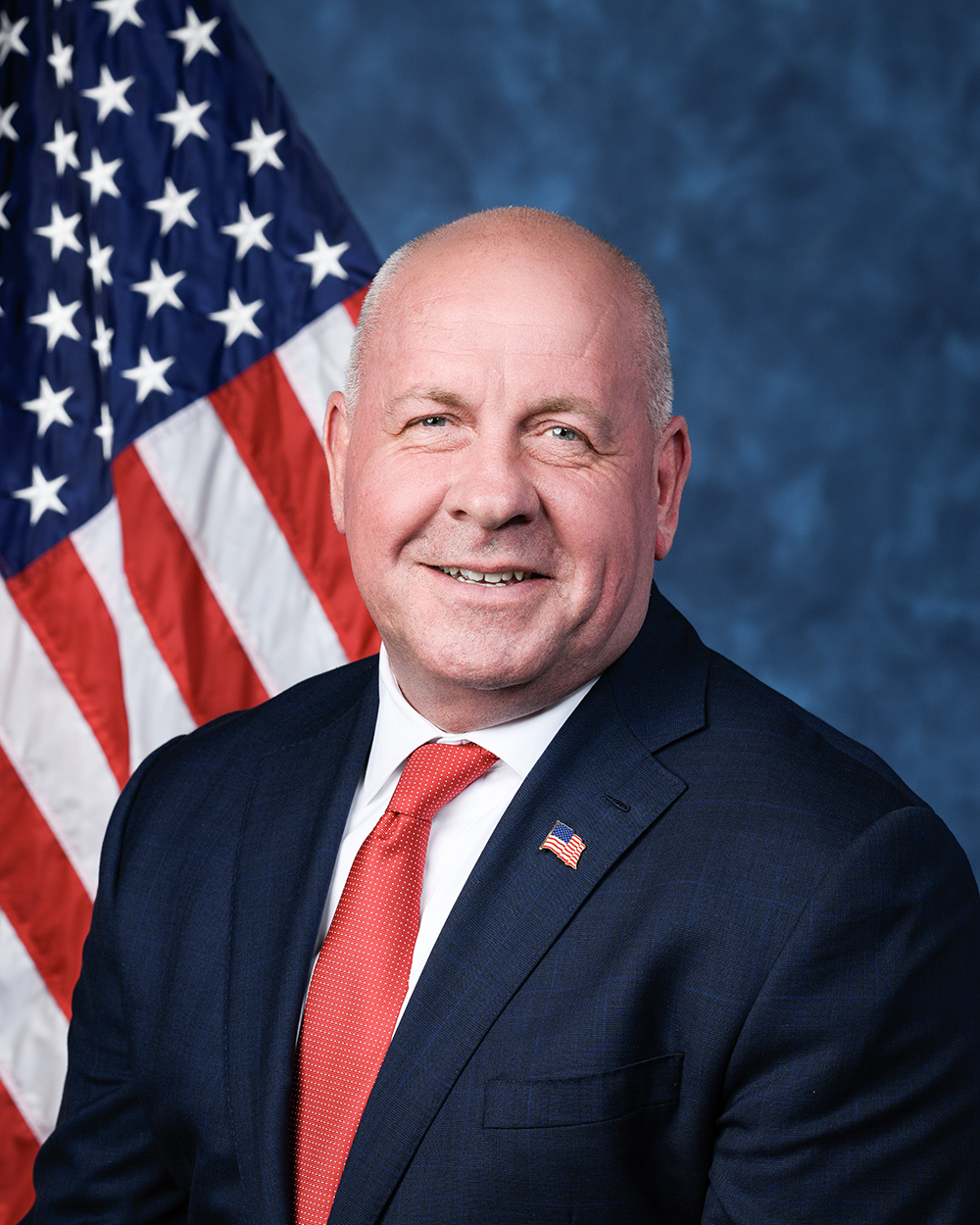
Rep. David J. Taylor
Sponsored bills
Maddy summaryThis bill, officially titled the Make American Guns Again Act of 2025, requires the Secretary of Defense to study the use of foreign-made or foreign-owned U.S.-manufactured small arms and light weapons by the military. The study must identify weapons and parts made outside the U.S. or by foreign-owned U.S. subsidiaries, and the Secretary must submit a report with procurement recommendations within 180 days of the bill's enactment. The bill directly affects military procurement practices by mandating a review focused on increasing U.S.-made weapons, without altering current regulations or imposing immediate spending changes.
Maddy summaryHR 1919, the "Anti-CBDC Surveillance State Act," prohibits the Federal Reserve from developing, testing, or issuing any central bank digital currency (CBDC) or similar digital assets. It specifically bans the Fed from offering direct financial products to individuals, maintaining individual accounts, or issuing CBDCs directly or indirectly through intermediaries like banks. The bill also blocks the Fed from using any digital asset for monetary policy and clarifies that physical currency's privacy protections remain intact. This policy directly affects the Federal Reserve System's ability to create or manage digital monetary tools.
Maddy summaryHR 4448, the Restoring Equal Opportunity Act, prohibits lawsuits alleging discrimination based on "disparate impact" in employment and housing. It amends the Civil Rights Act of 1964 and Fair Housing Act to ban claims where a neutral policy (like a test or screening rule) unintentionally disadvantages protected groups (such as race or gender), even if there was no discriminatory intent. The bill also nullifies specific federal regulations implementing civil rights laws, removing legal grounds for such claims under current enforcement rules. This directly affects employers, housing providers, and federal agencies that enforce civil rights laws, changing how discrimination claims can be brought in court.
Maddy summaryHR 4450, the National Education Association Charter Repeal Act, repeals the federal charter granted to the National Education Association (NEA) under 36 U.S. Code Chapter 1511. This bill directly affects the NEA by removing its status as a federally chartered organization, though the NEA will continue operating as a private entity. The key provision is the complete repeal of the specific statutory provision (36 U.S. Code Chapter 1511) that had provided the NEA with its federal charter since 1961. This is a procedural change with no direct impact on education policy or public funding.
Maddy summaryThis bill prohibits the use of autopen devices or any other automatic signing mechanism for the President to sign engrossed bills, executive orders, pardons, or commutations. It requires the President to personally sign these documents, banning all other individuals or machines from doing so. The law also retroactively invalidates any past document signed in violation of this rule, regardless of when it was signed. This directly affects the President's signing authority and the legal validity of past executive actions involving machine signatures.
Maddy summaryHR 4382 authorizes the U.S. Mint to produce commemorative coins for the 2028 Los Angeles Olympics/Paralympics and 2034 Salt Lake City Winter Olympics/Paralympics. It specifies gold, silver, and half-dollar coin designs with defined mintage limits (e.g., up to 100,000 $5 gold coins for each event), all bearing inscriptions like "2028" or "2034" and standard coin features. A surcharge ($5-$50 per coin) is added to sales, with all funds directed to the respective Olympic committees to support event hosting and legacy programs like youth sports. The bill ensures no net cost to the government by requiring surcharge revenues to cover all design, production, and marketing expenses before funds are disbursed.
Maddy summaryHRES 571 is a symbolic resolution passed by the U.S. House of Representatives to commemorate the one-year anniversary of the July 13, 2024, attempted assassination of President Donald J. Trump in Butler, Pennsylvania. It condemns two assassination attempts against the President (in Butler and West Palm Beach), honors victims Corey D. Comperatore (who died shielding his family), David Dutch, and James Copenhaver (who were critically injured), and expresses gratitude to first responders. The resolution also condemns incitement of violence against political officials and calls for unity against political violence. As a non-binding resolution, it does not create new laws or policies but formally states the House’s position on these events.
Maddy summaryThe LEDGER Act (HR 4091) requires the Treasury Department to create a system tracking every government payment within 180 days of enactment. It mandates that all federal departments, agencies, and branches (executive, legislative, judicial) must report disbursements from every funding source, including how long funds remain available for spending. This system will detail each payment's origin, recipient, and timing across all government accounts. The bill directly affects all federal spending entities by standardizing expenditure tracking previously handled inconsistently.
Maddy summaryHR 3897, the Confidence in Clean Water Permits Act, clarifies compliance requirements for facilities holding permits under the Clean Water Act. It directly affects industrial and wastewater facilities by expanding what counts as "compliance" with permit conditions, including pollutants not explicitly listed but identified during application or operations. Key provisions require that water quality-based limits in permits must clearly specify the pollutant and describe how compliance is achieved - either through numerical limits or detailed narrative requirements. The bill also includes minor technical corrections to existing permit language. These changes aim to reduce ambiguity in permit enforcement without altering the underlying regulatory framework.