

Maddy summaryThis bill prohibits federal agencies from using government funds to purchase or operate drones (unmanned aircraft systems) made by "covered foreign entities," primarily targeting entities linked to foreign governments, especially those tied to China as defined in the bill. It directly affects federal agencies and contractors receiving federal funding for drone acquisitions or operations. Key provisions include specific exemptions for national security research, counterterrorism, or cybersecurity needs, and a waiver process requiring approval from Homeland Security or Defense. The law aims to reduce reliance on potentially risky foreign drone technology by restricting federal funding for such systems.
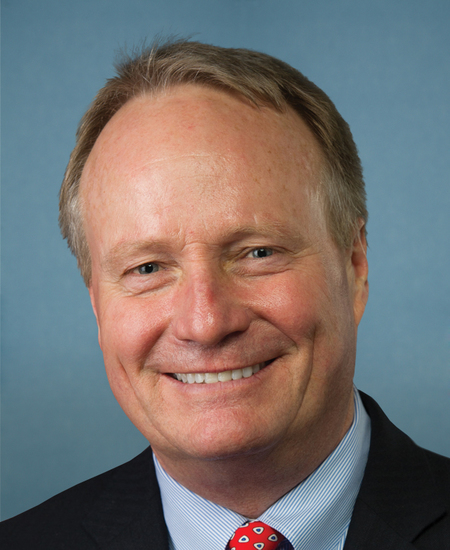
Rep. David P. Joyce
Sponsored bills
Maddy summaryThe Urban Indian Health Confer Act (HR 630) requires federal health agencies, including the Indian Health Service, to consult with urban Indian organizations when implementing health care programs for Native Americans. It amends the Indian Health Care Improvement Act to mandate that the Secretary of Health and Human Services must confer with these organizations to the maximum extent practicable. This directly affects urban Indian organizations - which provide health services to American Indians and Alaska Natives in cities - and federal agencies managing Indian health care. The key provision is a procedural requirement for collaboration, ensuring urban Native communities' input in health care planning without creating new funding or services.
Maddy summaryHR 3770, the LIBERTY Act, modifies how federal agencies define "major rules" to include significant guidance documents. It sets a $100 million annual economic impact threshold as a key factor in determining whether a rule or guidance qualifies as "major." Federal agencies must then submit such major rules and significant guidance documents to Congress for review before they take effect. This bill directly affects federal agencies issuing regulations and the businesses or entities subject to those regulations.
Maddy summaryHR 3713 creates federal grants to fund comprehensive school-based mental health programs for students in grades K-12, including those in Bureau of Indian Education schools. It requires partnerships between schools and community mental health providers to deliver trauma-informed, culturally appropriate services addressing suicide risk, grief, violence, and trauma exposure. The bill authorizes $300 million annually (2024-2027) for these programs, mandating privacy protections under HIPAA and FERPA, and requires annual reporting on program effectiveness.
Maddy summaryThe Sailor Standard of Care Act of 2023 requires the Navy to improve mental health support for service members designated for "limited duty" (temporarily restricted from full duties due to medical needs). It mandates quarterly mental health screenings for these members, additional medical staff in units with over 15 such personnel, and a framework for centralized care coordination during their limited duty period. The bill also directs the Navy to study multiple suicides within units, report on TRICARE mental health provider credentialing timelines and reimbursement rates, and establish a dashboard tracking quality-of-life program usage. These provisions directly affect active-duty Navy members in limited duty status and aim to address systemic gaps in mental health care access and response.
Historic Preservation Fund Reauthorization Act This bill extends through FY2033 and increases funding for the National Park Service's Historic Preservation Fund. The funding is provided from revenues from Outer Continental Shelf oil and gas leases, and awards from the fund are made to states and other entities, including tribes and nonprofits.
This resolution expresses support for the designation of DIPG Awareness Day. DIPG is diffuse intrinsic pontine glioma, a terminal childhood brain cancer.
Maddy summaryThis bill requires that AM radio receivers be included as standard equipment in all new motor vehicles (such as cars and trucks) sold in the United States, with a rule to be issued by the Department of Transportation within one year. The rule must ensure AM radio is easily accessible on the dashboard and allows manufacturers to use digital AM radio technology instead of traditional AM. During the one-year period between the bill's enactment and the rule's effective date, manufacturers must clearly label vehicles without AM radio. The bill also directs a study to evaluate whether an alternative system could deliver emergency alerts as reliably as AM radio across the country, especially during crises.
Maddy summaryThis bill recognizes service in the U.S. Cadet Nurse Corps during World War II (July 1, 1943-December 31, 1948) by allowing qualifying individuals to receive VA headstones, markers, or other commemorative benefits. It requires the Secretary of Defense to issue honorable discharges to eligible former cadet nurses within one year of enactment, designating their service termination date. The bill does not grant full veteran benefits (like Arlington National Cemetery burial), but honors these individuals as veterans for specific commemorative purposes only. It directly affects surviving cadet nurses who served during that period and were honorably discharged.
Maddy summaryHRES 363 is a resolution expressing support for recognizing National Police Week, an annual observance established by law to honor law enforcement officers who have died in the line of duty. The resolution acknowledges 556 officers killed in the line of duty during 2022 and calls for ensuring law enforcement officers have necessary equipment, training, and resources to protect both themselves and the public. It encourages the American public to observe National Police Week by honoring law enforcement personnel and recognizing their essential mission in serving communities across the United States. This resolution does not create new law but formally expresses congressional support for an existing observance.