

Maddy summaryHR 6727 establishes the United States Foundation for International Conservation, a nonprofit organization that will provide grants to support long-term management of protected and conserved areas in eligible countries. The Foundation requires a 2:1 cost match from other sources, demands host country and community consent through binding agreements, and prioritizes areas with high biodiversity or species of significant importance. It will be governed by a Board of Directors including government officials and private sector experts, operate for 10 years with $1 million authorized for 2024 and $100 million annually from 2025-2035, and must follow international conservation standards while prohibiting funding for countries supporting terrorism or violating human rights.
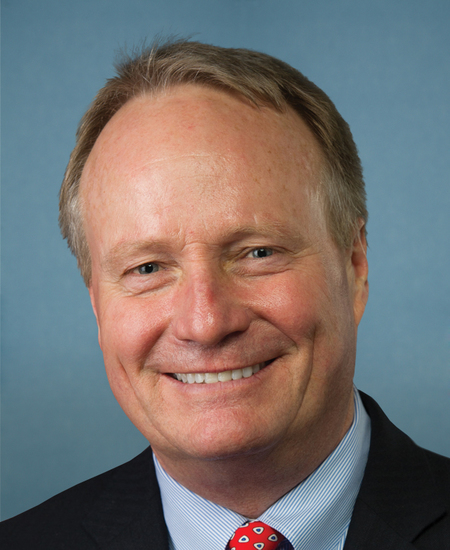
Rep. David P. Joyce
Sponsored bills
Maddy summaryThis bill requires the Department of Veterans Affairs (VA) to study how different forms of cannabis might affect veterans' health, specifically focusing on those enrolled in VA care with chronic pain, PTSD, or other conditions. It mandates research into various cannabis types (full plants, extracts, specific strains, and chemical analogs) and delivery methods (topical, inhalation, ingestion), while requiring all data to be preserved for future study. The VA must develop an implementation plan for this research, submit annual reports to Congress over five years, and follow all applicable federal research regulations. This is strictly research-focused; the bill does not change current VA policies on cannabis access for veterans.
Maddy summaryThis non-binding resolution supports designating April 2024 as "National Native Plant Month" to raise public awareness about native plants. It highlights their ecological benefits, including preventing erosion, supporting wildlife (like pollinators and birds), and restoring ecosystems. The resolution does not create new laws or funding but formally recognizes native plants' role in environmental resilience and U.S. natural heritage.
Maddy summaryHR 7577, the CHEERS Act, creates a new tax deduction for restaurants, bars, and entertainment venues by expanding eligibility under the energy efficiency tax code (Section 179D). It defines "qualified energy-efficient draft property" as stainless steel or aluminum containers and tap equipment used for alcohol distribution in these businesses, treating them as eligible for the existing energy efficiency tax deduction. This change applies to equipment placed in service after the bill's enactment date, directly benefiting hospitality businesses that own or lease such equipment. The provision modifies existing tax code language without creating new tax rates or altering other regulations.
Maddy summaryThe Farm to Fly Act of 2023 amends USDA programs to include sustainable aviation fuel (SAF) as a qualifying product for financial assistance, directly affecting farmers, biorefineries, and agricultural producers. It defines SAF as liquid fuel meeting strict environmental standards - requiring at least a 50% reduction in lifecycle greenhouse gas emissions compared to jet fuel and excluding sources like palm oil or petroleum. The bill mandates the Secretary of Agriculture to lead a cross-agency initiative focused on advancing SAF development, leveraging agricultural resources, and fostering public-private partnerships to expand the domestic SAF market. This aims to support rural economic growth, strengthen U.S. energy security, and align with national clean energy goals in aviation.
Maddy summaryHR 7361, the Flowers for Fallen Heroes Act of 2024, requires the American Battle Monuments Commission to establish a low-cost program allowing the public to order flowers for military gravesites at Commission-managed cemeteries. The bill mandates the Commission to partner with third-party florists (without excess fees) and create a user-friendly website and phone system for ordering by one year after enactment. It also authorizes credit card and electronic payment processing for these orders, with customers responsible for any third-party processing fees, and requires annual reports to Congress detailing program implementation, including order data and florist engagement. This bill directly affects the public seeking to honor fallen service members and the Commission’s operations at 25 overseas military cemeteries.
Maddy summaryThe Uyghur Policy Act of 2023 establishes a U.S. Special Coordinator for Uyghur Issues within the State Department to coordinate policy and advocate for the protection of Uyghur cultural, religious, and linguistic identity in Xinjiang. It authorizes $250,000 annually for Uyghur human rights advocates to speak at public diplomacy events in Muslim-majority countries and mandates Uyghur language training for U.S. diplomats. The bill also directs the U.S. government to support United Nations monitoring of Xinjiang human rights issues and oppose efforts to block discussions of Xinjiang at the UN. These provisions focus on diplomatic advocacy and information-sharing, not direct sanctions or enforcement actions against China.
Maddy summaryThe SCHEDULES Act of 2024 requires the Department of Veterans Affairs (VA) to establish specific timeframes for scheduling appointments after a veteran is referred for care: 3 business days for VA facility appointments and 7 calendar days for community care. It directly affects veterans seeking VA care by setting measurable standards for timely access to services. The bill mandates quarterly reports to Congress detailing how many referrals meet these standards, broken down by facility, care specialty (like mental health or cardiology), and state, with all data made publicly available online. These reports must also include annual progress updates on VA efforts to meet the scheduling goals. The law focuses on creating transparency and accountability in VA scheduling processes without altering benefits or funding.
Maddy summaryHR 7091, the Counting Veterans’ Cancer Act of 2024, requires the Department of Veterans Affairs (VA) to share cancer diagnosis data for veterans receiving VA care with state cancer registries. This affects veterans diagnosed with cancer through VA facilities and state registries participating in CDC’s National Program of Cancer Registries or NCI’s SEER program. The bill mandates that the VA share this data "as complete and timely as possible" without requiring new data-sharing agreements between the VA and states. The goal is to ensure all veteran cancer cases are included in national cancer statistics, improving data for research, identifying disparities, and informing veteran-specific cancer care programs.
Maddy summaryHRES 1014 is a symbolic House resolution commemorating the Ukrainian people's sacrifices two years after Russia's February 24, 2022, invasion. It recognizes the war's devastating toll, including over 10,000 civilian deaths, 19,000 abducted children, and 10 million displaced people, while condemning Russia's actions. The resolution reaffirms U.S. support for Ukraine, condemns Vladimir Putin's regime, and stands in solidarity with Ukraine's defense of democratic values. As a commemorative resolution, it has no binding effect but formally acknowledges Ukraine's struggle and resilience. It directly honors Ukrainian civilians, soldiers, and those displaced by Russia's war of aggression.