Maddy summaryHJRES 98 is a congressional resolution seeking to block a National Labor Relations Board (NLRB) rule that defined how businesses are considered "joint employers" for labor law purposes. The bill targets the NLRB's October 2023 rule (88 Fed. Reg. 73946), which would have changed how companies like franchisors or staffing agencies are held responsible for workers' rights. If passed, this resolution would cancel the rule, directly affecting businesses managing multiple employer relationships and labor organizations enforcing workplace standards. The measure uses a standard process under federal law to disapprove an agency rule, not creating new policy but reversing an existing regulation.
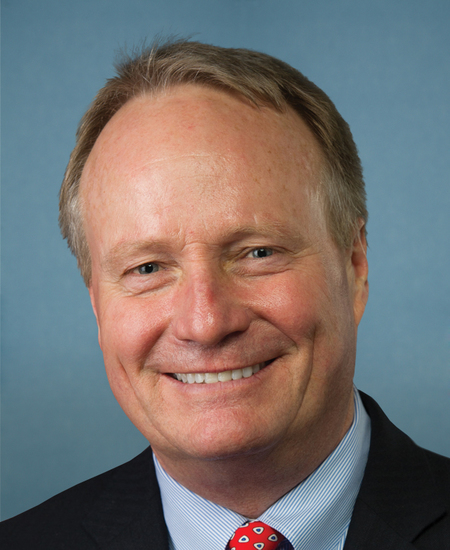
Rep. David P. Joyce
Sponsored bills
Maddy summaryHR 8231, the James Earl Jones Congressional Gold Medal Act, authorizes a Congressional Gold Medal to be awarded to actor James Earl Jones in recognition of his distinguished career in theater and film, and his role in advancing inclusion and equal opportunities for people of all backgrounds in the entertainment industry. The Treasury will strike the medal with an image and inscription of Jones, and may produce and sell bronze duplicates to cover costs, with proceeds deposited into the U.S. Mint's public enterprise fund. This bill serves as a ceremonial honor with no new legal requirements or policy changes.
Maddy summaryHRES 1177 designates May 5, 2024, as the "National Day of Awareness for Missing and Murdered Indigenous Women and Girls." The resolution expresses congressional support for this designation, calls on the public to commemorate affected individuals and show solidarity with families, and recommends the Department of Justice commission a new study on the crisis to update statistics since the 2016 report. It directly affects awareness efforts for Indigenous communities and families impacted by violence, while acknowledging ongoing gaps in addressing the crisis despite prior legislation like Savanna’s Act. The resolution does not create new laws or funding but focuses on recognition and data collection.
Maddy summaryHR 4389, the Migratory Birds of the Americas Conservation Enhancements Act of 2023, amends the Neotropical Migratory Bird Conservation Act to increase federal funding for conservation projects from 25% to 33.3% of eligible costs. It extends the authorization period for funding through 2028 and requires the Secretary to submit a report to Congress on collaboration efforts with partners. This bill directly affects conservation organizations, state governments, and local groups that receive federal funds to protect migratory birds traveling between the U.S. and the Neotropics (Central and South America, Caribbean). The changes provide more stable financial support and accountability for existing bird conservation programs.
Maddy summaryHR 8066, the Ammunition Supply Chain Act, requires the Secretary of the Army to submit a report to Congress within 180 days of enactment. The report must assess the U.S. supply chain for ammunition components like nitrocellulose and smokeless gunpowder, focusing on improving sourcing, avoiding single points of failure, managing global demand risks, and leveraging private sector capacity. This bill directly affects the Department of Defense and ammunition manufacturers by mandating a review of supply chain vulnerabilities. It is procedural in nature, establishing a reporting requirement without creating new regulations or funding.
Maddy summaryHR 5530, the VA Emergency Transportation Access Act, prevents the Department of Veterans Affairs (VA) from lowering payment rates for specialized transportation used by veterans and eligible individuals (like ambulances or wheelchair vans) without strict requirements. It mandates that any rate change that could reduce access to care must first undergo a detailed review analyzing economic impacts on the VA and transportation industry, and ensure the new rate covers actual costs. The VA must also develop a formal process for rate changes and consult with industry experts, veterans' groups, and healthcare agencies before implementing such changes. This bill directly affects veterans relying on specialized transportation for medical care, particularly those in rural or underserved communities, by safeguarding their access to necessary emergency transport services.
Maddy summaryThe Love Lives On Act of 2023 modifies benefits for surviving spouses of military veterans and service members. It removes an expiration date on the Marine Gunnery Sergeant John David Fry Scholarship for surviving spouses, ensures remarriage doesn't automatically end eligibility for veterans' dependency and indemnity compensation, and expands access to commissary and exchange privileges for remarried surviving spouses. The bill also clarifies that remarried widows or widowers whose subsequent marriage ended (due to death, divorce, or annulment) can still be considered dependents under TRICARE. These changes directly affect surviving spouses of veterans and military members who have remarried or are considering remarriage, providing more consistent benefits regardless of marital status.
Maddy summary# Summary of the Federal Appropriations Bill This document is a comprehensive appropriations bill for fiscal year 2024, allocating funds across various federal departments and agencies. It contains five main titles: 1. **Department of the Treasury Appropriations Act, 2024**: Allocates funds for Treasury operations including the Internal Revenue Service (over $12 billion), the Bureau of Engraving and Printing, and the Financial Crimes Enforcement Network. Includes numerous restrictions on IRS activities, such as prohibitions on targeting citizens for First Amendment rights and restrictions on conference spending. 2. **Executive Office of the President Appropriations Act, 2024**: Funds the White House, Office of Management and Budget, National Security Council, and other executive offices. Includes requirements for budget impact statements on executive orders. 3. **Judiciary Appropriations Act, 2024**: Allocates over $5.9 billion for federal courts, including salaries for judges, court operations, defender services ($1.45 billion), and court security ($750 million). Includes provisions for court security improvements and judicial training. 4. **District of Columbia Appropriations Act, 2024**: Provides federal funding for District of Columbia programs including $40 million for resident tuition support, $292 million for District courts, $46 million for defender services, and $286 million for the Court Services and Offender Supervision Agency. 5. **Independent Agencies Appropriations Act**: Funds various independent agencies including the Consumer Product Safety Commission ($150.9 million), Election Assistance Commission ($55 million), and Administrative Conference of the United States. Key restrictions across the bill include: - Prohibitions on using funds to target citizens based on First Amendment rights - Restrictions on IRS activities related to taxpayer targeting - Requirements for transparency in information technology spending - Specific limitations on how funds may be transferred between accounts - Prohibitions on certain regulatory actions (like banning gas stoves) The bill contains numerous administrative provisions, reporting requirements, and specific funding allocations for various programs and services across the federal government.

Maddy summaryHR 7504, the Rural Veterans Transportation to Care Act, expands a VA transportation grant program to specifically assist rural veterans and tribal organizations. The bill modifies eligibility by adding "rural or highly rural" to program criteria, allows tribal organizations to apply for grants, and sets a maximum grant amount of $60,000 (up to $80,000 for ADA-compliant vehicles). It defines "rural" using USDA's RUCA system and "tribal organization" per the Indian Self-Determination Act, ensuring grants directly support transportation access for veterans in remote areas and tribal communities.
Maddy summaryThis bill designates the U.S. Postal Service facility at 265 Main Street in Philo, Ohio, as the "Samuel J. Mitchell Jr. Post Office." It requires all federal documents, maps, and references to this specific location to use the new name going forward. The change applies only to the physical post office building and its official documentation, with no other policy or funding changes. This is a purely administrative naming resolution with no direct impact on residents or services beyond the facility's official designation.