

Maddy summaryThis bill designates the U.S. Postal Service facility at 265 Main Street in Philo, Ohio, as the "Samuel J. Mitchell Jr. Post Office." It requires all federal documents, maps, and references to this specific location to use the new name going forward. The change applies only to the physical post office building and its official documentation, with no other policy or funding changes. This is a purely administrative naming resolution with no direct impact on residents or services beyond the facility's official designation.
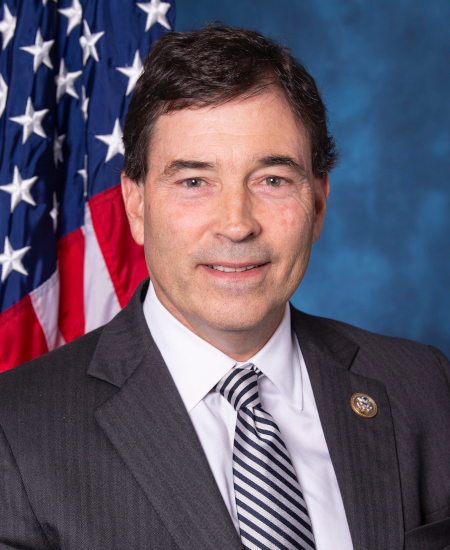
Rep. Troy Balderson
Sponsored bills
Maddy summaryThe Protecting American Energy Production Act (HR 1121) states that Congress believes states should have primary authority to regulate hydraulic fracturing for oil and gas production on state and private lands. It prohibits the President from declaring a moratorium on hydraulic fracturing without specific authorization from Congress. This bill directly affects federal and state governments by limiting the executive branch’s power to halt hydraulic fracturing operations and reinforcing state regulatory control. The key provision ensures any federal restriction on hydraulic fracturing would require a new law passed by Congress, not a presidential order.
Maddy summaryThis bill amends the Clean Air Act to change how national air quality standards are implemented and reviewed. It extends the timeline for reviewing air quality standards from 5 to 10 years, requires consideration of economic impacts and feasibility when setting standards, and mandates that the EPA issue implementing regulations and guidance at the same time as new standards. It also gives states more time (up to 3 years) to correct deficiencies before federal plans are imposed, and adds wildfire mitigation measures as factors that can be considered in air quality designations. The bill directly affects states, local governments, and businesses that must comply with air quality regulations, particularly those in ozone and particulate matter nonattainment areas. These changes aim to create a more balanced implementation process that considers both environmental protection and practical economic considerations.
Maddy summaryHR 5499, titled "Congressional Oversight of the Antiquities Act," would amend the Antiquities Act to impose time limits on national monument designations. It requires that any national monument established by presidential proclamation under the law expires after six months unless Congress extends it, and if not extended, the land cannot be re-designated as a monument for 25 years. This directly affects federal land managers and future presidents, who would need congressional action to maintain or expand monument boundaries. The bill changes the current process by adding automatic expiration and a long-term moratorium on re-designation, shifting authority to Congress.
Maddy summaryThis resolution (HRES 1086) is a symbolic gesture expressing the House's support for designating March 19, 2024, as "National Agriculture Day." It does not create new laws or policies, but instead formally recognizes agriculture as a vital industry in the U.S. economy. The resolution celebrates agriculture's broad economic impact without imposing any requirements or changes on farmers, consumers, or government programs. It is a commemorative statement, not a substantive legislative action.
Maddy summaryHR 6421, the Affordable HOMES Act, repeals federal requirements for energy efficiency standards in manufactured housing. It removes the authority established under the Energy Independence and Security Act of 2007 to set such standards and invalidates a 2022 Department of Energy rule implementing those standards. This bill directly affects manufactured home manufacturers by eliminating a federal regulatory requirement related to energy conservation.
Maddy summaryThe Laken Riley Act (HR 7511) would require federal authorities to detain non-citizens charged with or convicted of burglary, theft, larceny, or shoplifting offenses. It also creates new legal standing for state attorneys general to sue federal immigration officials in federal court if they believe immigration enforcement decisions (like releasing aliens or granting parole) cause financial harm exceeding $100 to the state or its residents. The bill amends immigration laws to expand detention requirements for certain property crimes and allows states to seek court orders to enforce immigration policies. It does not create new criminal penalties but modifies existing immigration enforcement procedures. The bill’s findings and political language about the Laken Riley case are not part of its policy provisions.
Maddy summaryHR 3277, the Energy Emergency Leadership Act, reassigns specific energy emergency and security responsibilities to an Assistant Secretary within the Department of Energy. It adds new duties for the Assistant Secretary to handle infrastructure protection, cybersecurity, supply chain issues, and emergency response planning. The bill also authorizes the Department to provide technical assistance to states, local governments, or energy companies upon request when facing energy security threats. This is a procedural bill clarifying existing agency roles, not creating new programs or funding.
Maddy summaryThe Uyghur Policy Act of 2023 establishes a U.S. Special Coordinator for Uyghur Issues within the State Department to coordinate policy and advocate for the protection of Uyghur cultural, religious, and linguistic identity in Xinjiang. It authorizes $250,000 annually for Uyghur human rights advocates to speak at public diplomacy events in Muslim-majority countries and mandates Uyghur language training for U.S. diplomats. The bill also directs the U.S. government to support United Nations monitoring of Xinjiang human rights issues and oppose efforts to block discussions of Xinjiang at the UN. These provisions focus on diplomatic advocacy and information-sharing, not direct sanctions or enforcement actions against China.
Maddy summaryHR 7384, the Creating Hope Reauthorization Act of 2024, extends the deadline for issuing priority review vouchers to pharmaceutical companies developing treatments for rare pediatric diseases. The bill amends the Federal Food, Drug, and Cosmetic Act to push the program’s expiration from 2024 to 2028 and adjusts another related deadline to 2030. This directly affects drug manufacturers seeking faster FDA review for new treatments targeting rare childhood illnesses. The extension ensures continued incentives for developing these critical therapies without altering the core voucher mechanism.