

Religious Exemptions for Social Security and Healthcare Taxes Act This bill allows taxpayers who have a religious objection to participation in the Social Security system a credit or refund of employment taxes deducted to fund benefits under such system.
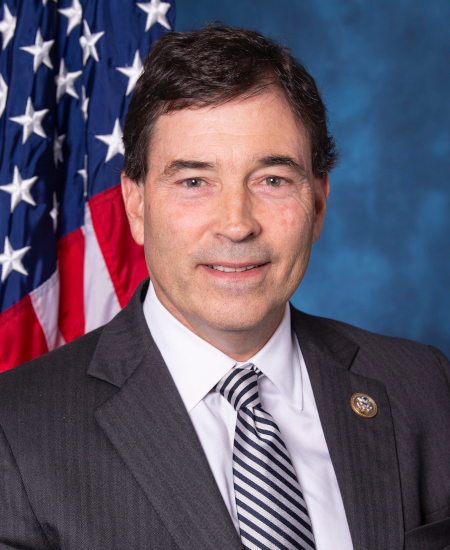
Rep. Troy Balderson
Sponsored bills
Maddy summaryThis bill amends the Northern Border Security Review Act to establish a new annual deadline for threat analysis (September 2, 2025, and each year after) and requires the Department of Homeland Security to update its northern border strategy within 90 days of each analysis. It mandates that the Secretary provide a classified briefing to congressional committees within 30 days of each threat analysis and develop performance measures for U.S. Customs and Border Protection's Air and Marine Operations to secure the northern border in air and maritime areas within six months of enactment. The bill directly affects the Department of Homeland Security and congressional committees by imposing specific reporting deadlines and review requirements. These changes focus on improving the frequency and structure of security assessments without altering existing border security operations.
Maddy summaryHR 5012 (SHINE for Autumn Act of 2023) authorizes federal funding to improve stillbirth research and data collection. It provides $5 million annually for states to collect standardized stillbirth data (including risk factors) while protecting privacy, $1 million annually for developing public educational materials and data collection guidelines, and $3 million annually for medical fellowships training pathologists in perinatal autopsy and stillbirth research. The bill directly affects state health departments, medical professionals (like obstetricians and pathologists), and families who experience stillbirth by improving data quality for future research. It requires federal reports on guidelines and program effectiveness within five years but does not provide direct medical care or financial assistance to families.
Maddy summaryHR 537 authorizes a Congressional Gold Medal to honor 60 diplomats who saved Jewish lives during the Holocaust by issuing visas and passports against their governments' orders, risking expulsion and personal danger. The medal will be presented to the next of kin of these diplomats, alongside representatives from their home countries, and permanently displayed at the United States Holocaust Memorial Museum. The bill also permits the sale of bronze duplicates to cover production costs, with proceeds going to the U.S. Mint. This legislation recognizes the diplomats' humanitarian actions without creating new government programs or altering existing laws.
Maddy summaryHR 8693, the "No American Land for Communist China Act," prohibits U.S. citizens or entities from purchasing real estate adjacent to specific federal lands if owned by the Chinese government or businesses with 25%+ Chinese government ownership. It directly affects Chinese government entities and Chinese-owned businesses operating in the U.S., restricting their ability to buy land near protected federal areas. The bill requires the President to take necessary actions to block such purchases, covering lands managed by Interior, Defense, Agriculture (Forest Service), or designated Indian country. This is a policy restriction, not a funding measure, targeting land transactions near sensitive federal properties.
Maddy summaryHR 8653 authorizes the posthumous award of a Congressional Gold Medal to Major Thomas D. Howie, a U.S. Army officer who died during the Battle of Normandy in WWII. The bill specifies the medal will be presented to his nephew, Tom Howie, or his next of kin, and then permanently displayed at The Citadel Museum. It also permits the U.S. Mint to produce and sell bronze duplicates to cover costs. This is a commemorative measure honoring Major Howie's military service and sacrifice, with no substantive policy changes.
Maddy summaryHR 784, the Internet Application I.D. Act, requires app and website owners with Chinese Communist Party or Chinese non-state ownership to clearly disclose this fact to users during download or use. It prohibits falsely claiming ownership or omitting this disclosure. The Federal Trade Commission would enforce the law under existing FTC Act rules for unfair or deceptive practices. This directly affects developers and distributors of mobile apps or websites with significant Chinese ownership ties.
Maddy summaryHR 5403, the CBDC Anti-Surveillance State Act, prohibits the Federal Reserve from issuing or facilitating central bank digital currency (CBDC) directly or indirectly to individuals through financial institutions. It specifically bans Federal Reserve banks from offering digital products to individuals, maintaining individual accounts, or using CBDC for monetary policy implementation. The bill also clarifies that its restrictions do not apply to existing physical cash or private, permissionless digital payment systems. This bill directly affects the Federal Reserve's ability to develop or deploy a government-run digital dollar. The law aims to prevent the Federal Reserve from creating a digital currency that could enable transaction tracking or government oversight of personal financial activity.
Maddy summaryHJRES 153 is a joint resolution seeking congressional disapproval of a Federal Communications Commission (FCC) rule titled "Safeguarding and Securing the Open Internet; Restoring Internet Freedom," which was submitted on May 22, 2024. If passed, this resolution would nullify the FCC rule, preventing it from taking effect and preserving the previous regulatory framework that required internet service providers to treat all online content equally. The bill directly affects the FCC’s authority to implement this specific rule and would maintain existing net neutrality protections. It follows a procedural mechanism under Chapter 8 of Title 5, U.S. Code, for congressional disapproval of agency rules. The resolution does not alter current law but blocks the FCC’s proposed changes to internet regulation.
Maddy summaryThe CAUTION Act of 2023 requires app sellers to clearly inform users at the time of download or update if a mobile application is banned for government devices under existing law (Public Law 117-328, which targets Chinese-owned apps). This applies specifically to apps prohibited for use on government-owned devices, directly affecting app developers and distributors who sell such applications. The law treats violations as deceptive business practices under the FTC Act, enabling the Federal Trade Commission to enforce disclosure requirements with penalties up to $46,517 per violation. The bill focuses on transparency for users and enforcement against non-compliant app sellers, without altering the underlying ban on Chinese-owned apps.