

Maddy summaryThis bill modifies Medicare's physician self-referral rules to improve access for rural communities. It creates a new exemption for "covered rural hospitals" (defined as facilities in rural areas more than 35 miles from another hospital or critical access hospital) from certain restrictions on physicians owning hospitals. The bill also removes a prohibition on expanding existing physician-owned hospitals, allowing such expansions after the law's enactment. These changes directly affect rural hospitals seeking Medicare participation and physicians who own or operate hospitals in underserved areas.
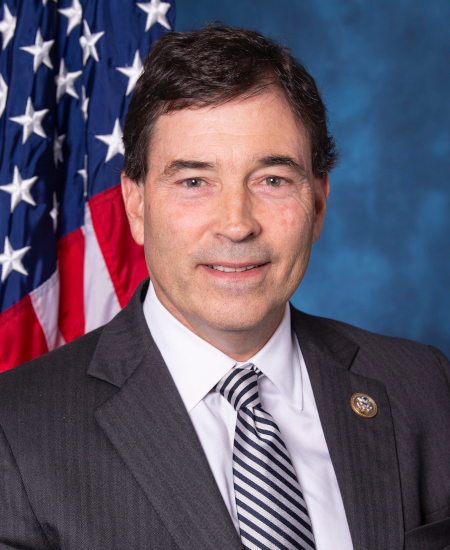
Rep. Troy Balderson
Sponsored bills
Maddy summaryHR 2171, the Spectrum Coordination Act, requires federal agencies to publicly document coordination efforts before spectrum reallocations that could impact government operations. It mandates the Assistant Secretary to file specific information - including dates, affected agencies, and technical/policy concerns - with the public record before the FCC finalizes spectrum rules. The bill also requires the FCC to publish a summary of any resolved concerns in the Federal Register alongside final rules, improving transparency for federal entities like the military or emergency services that rely on radio spectrum. This procedural bill affects the FCC, NTIA, and federal agencies managing spectrum use.
Maddy summaryHJRES 35 is a congressional resolution disapproving an Environmental Protection Agency (EPA) rule that established procedures for emissions charges on petroleum and natural gas systems. Specifically, it targets the EPA’s November 2024 rule titled "Waste Emissions Charge for Petroleum and Natural Gas Systems: Procedures for Facilitating Compliance, Including Netting and Exemptions," which would have required companies to pay fees based on emissions. The resolution, passed by both chambers in February 2025, nullifies the rule, preventing it from taking effect. This directly affects oil and gas companies subject to the EPA’s emissions regulations, removing a specific compliance mechanism they would have faced.
Radiation Oncology Case Rate Value Based Program Act of 2025 or the ROCR Value Based Program Act This bill establishes a specialized payment program under Medicare for providers and suppliers of radiation oncology services. Specifically, the Centers for Medicare & Medicaid Services (CMS) must establish a program under which radiation therapy providers (i.e., hospital outpatient departments) and suppliers (i.e., physician group practices and freestanding radiation therapy centers) receive payments for each episode of care provided to individuals with specified types of cancer. An episode of care means the period beginning on the day radiation therapy planning is furnished to the individual and ending (1) for individuals with bone or brain metastases, 30 days later; and (2) for individuals with other cancer types, 90 days later. Participation in the program is mandatory for providers and suppliers that participate in Medicare, unless the provider or supplier is part of a state-based Center for Medicare & Medicaid Innovation model or qualifies for a significant hardship exemption. The CMS must set payment rates for the program based on national payment rates with specified adjustments (e.g., geographic adjustments). Providers and suppliers who provide certain transportation services for individuals under their care may receive an additional payment. Providers and suppliers must be accredited in accordance with certain standards, subject to payment reductions. The Government Accountability Office must report on (1) implementation of the program, and (2) underserved areas that are in need of more or newer radiation therapy resources.
Maddy summaryHR 2168, the BO’s Act, requires the Secretary of Health and Human Services to study home cardiorespiratory monitors used for infants. The study must assess the monitors' effectiveness in tracking heart rate and oxygen levels, evaluate new care models for safe infant sleep environments, and examine health insurance coverage criteria. A report on these findings must be submitted to Congress within one year of the bill’s enactment. This bill does not change current policy but aims to inform future decisions about monitor coverage and infant safety practices, directly affecting parents, healthcare providers, and insurers.
Maddy summaryThis bill requires the U.S. government to impose sanctions on Chinese police departments and related personnel operating in the United States. Specifically, it mandates freezing assets and blocking entry for: (1) provincial/municipal police departments in China (including Xinjiang and Fujian), their senior leaders, and entities linked to China's United Front Work Department operating covertly in the U.S.; and (2) employees of these entities, their immediate family members, or individuals aiding their U.S. presence. Key mechanisms include revoking all existing visas immediately, blocking new visas, and freezing U.S.-based assets under existing economic authority. The sanctions apply to both foreign entities and individuals, with limited 30-day national security waivers possible.
Maddy summaryThis bill changes how individual investors in mutual funds (regulated investment companies) are taxed on certain dividends. It allows investors to defer paying tax on capital gain dividends that are automatically reinvested in additional fund shares through a dividend reinvestment plan. The deferred tax is recognized later when the investor sells shares or upon their death. It also establishes that shares acquired through this reinvestment are treated as held for over one year from the start, potentially qualifying for long-term capital gains rates. The rule applies only to individual investors (not estates, trusts, or dependents claimed by others).
Maddy summaryThe Infant Formula Made in America Act of 2025 creates two tax credits to incentivize domestic infant formula production. It offers a 30% investment credit for manufacturers who build or expand facilities to make U.S.-made infant formula (with a total credit cap of $750 million), plus a $2 per pound production credit for formula sold in the U.S. (capped at 18 million pounds annually). The credits are limited to manufacturers with global revenue under $750 million and require at least 50% of formula produced with the investment credit to be sold within the U.S. within one year. The bill includes recapture provisions if manufacturers fail to meet these requirements, and applies to facilities starting construction after the bill's enactment.
Maddy summaryHRES 189 is a procedural resolution censuring Representative Al Green (D-TX) for disrupting a joint session of Congress on March 4, 2025, when he interrupted the President's address. The resolution states his conduct breached proper decorum, leading to his removal by the Sergeant at Arms. It mandates Green to appear in the House chamber for the public pronouncement of censure, with the resolution to be read aloud by the Speaker. This is a formal disciplinary action by the House, not a policy change affecting constituents or legislation.
Maddy summaryHJRES 66 is a congressional resolution seeking to reject an Environmental Protection Agency (EPA) rule related to Ohio's air quality program. Specifically, it targets the EPA's approval of Ohio's withdrawal of a technical amendment to its air plan, as published in the Federal Register on January 21, 2025. If passed, the resolution would block the EPA rule from taking effect under a specific federal procedure for congressional disapproval. This action directly affects Ohio's implementation of air quality regulations by preventing the EPA from formally approving the state's technical amendment change. The resolution does not create new policy but aims to halt a specific administrative action.