

Maddy summaryHJRES 61 is a congressional resolution that formally disapproves an Environmental Protection Agency (EPA) rule setting new air pollution standards for rubber tire manufacturing. It directly affects tire manufacturers by blocking the EPA’s proposed rule (published November 29, 2024), which would have required them to meet specific limits on hazardous air pollutants. The resolution’s key mechanism is a formal congressional vote to nullify the rule, making it legally ineffective under Title 5, U.S. Code. This action stops the EPA rule from taking effect without creating new regulations.
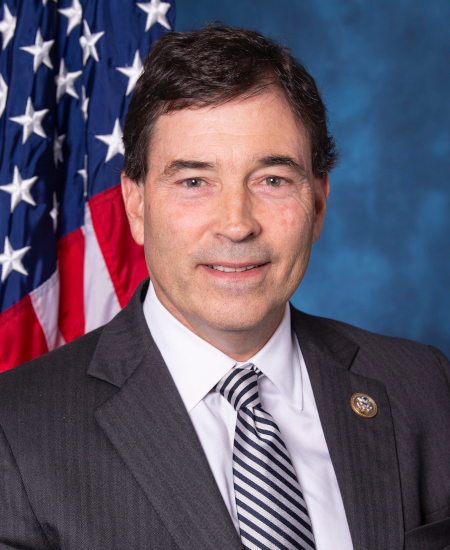
Rep. Troy Balderson
Sponsored bills
Maddy summaryHRES 447 is a non-binding House resolution condemning antisemitism and honoring Yaron Lischinsky and Sarah Milgrim, two Israeli Embassy employees killed during a peace-focused panel discussion in 2023. The resolution specifically condemns all forms of antisemitism - including violence, vandalism, and online harassment - and remembers the victims, who were killed by a far-left activist affiliated with the Party for Socialism and Liberation. It calls for enforcing existing hate crime laws and protecting religious freedom, without creating new legislation. This resolution symbolically supports Jewish communities and victims of antisemitic violence but does not alter legal requirements.
Maddy summaryHR 3577, the END CELLS Act, prohibits providing, facilitating the introduction of, or possessing wireless communications devices (like cell phones) in U.S. detention facilities (e.g., prisons) in violation of federal or state law. It imposes civil penalties of up to $50,000 per violation (capped at $1 million total) and criminal fines of up to $50,000 per violation for violations. The bill specifically targets contraband devices used to bypass security, while exempting authorized law enforcement activities and state enforcement powers. It applies to all correctional, detention, or penal facilities within the United States. The law takes effect after its enactment date.
Maddy summaryHR 513, the Offshore Lands Authorities Act of 2025, reverses multiple existing presidential protections that blocked oil and gas leasing on offshore federal lands. It nullifies 8 specific presidential withdrawals (including areas in the Arctic, Atlantic, Gulf of Mexico, and Pacific) and restricts future presidential actions by limiting withdrawals to 150,000 acres per action, capping them at 20 years, and requiring Congressional approval for cumulative withdrawals exceeding 500,000 acres. The bill mandates that before any withdrawal, the Secretary must complete four assessments covering mineral resources, economic/energy value, revenue impacts, and national security. It also establishes a fast-track process for Congress to disapprove withdrawals within 20 days, with limited debate (10 hours) on the resolution.
Maddy summaryHR 3463 (COUNTER Act) expands the U.S. military's authority to counter drone threats by allowing the Department of Defense and Coast Guard to neutralize unmanned aircraft systems without being restricted by certain federal laws. It exempts related technology, procedures, and protocols from public disclosure requirements under federal and state laws, and permits military commanders to delegate these actions. The bill applies to both domestic and overseas operations, clarifying that other federal laws do not apply to U.S. military or Coast Guard activities mitigating drone threats abroad. Key changes include broadening legal authority beyond previous restrictions and extending reporting deadlines for related activities.
This joint resolution eliminates new, more stringent energy conservation standards for commercial refrigerators, freezers, and refrigerator-freezers. Under the joint resolution, such equipment is no longer required to comply with the new standards. Specifically, the joint resolution nullifies the rule titled Energy Conservation Program: Energy Conservation Standards for Commercial Refrigerators, Freezers, and Refrigerator-Freezers and published by the Department of Energy's Office of Energy Efficiency and Renewable Energy on January 21, 2025. Under the rule, the office adopted new energy conservation standards for commercial refrigeration equipment to achieve the maximum improvement in energy efficiency that is technologically feasible and economically justified. The rule required the equipment to comply with the those standards by January 22, 2029.
Access to Prescription Digital Therapeutics Act of 2025 This bill provides for Medicare and Medicaid coverage of prescription digital therapeutics (i.e., software applications that are used to prevent, manage, or treat medical conditions). The Centers for Medicare & Medicaid Services must establish a Medicare payment methodology for payments to manufacturers that takes into account certain factors (e.g., ongoing use); manufacturers must report specified information about private payors, subject to civil penalties.
Maddy summaryThis bill amends the Small Business Act to improve how federal agencies support small businesses in turning research into market products through the SBIR and STTR programs. It shortens peer review timelines from one year to 180 days, requires reviewers to assess commercialization potential alongside technical merit, and mandates agencies to appoint dedicated Technology Commercialization Officials. Agencies must also track success through annual reports measuring revenue from new products, patents, follow-on funding, and spin-out companies. The changes directly affect small businesses receiving SBIR/STTR grants and federal agencies managing these programs.
Maddy summaryHRES 367 is a non-binding House resolution expressing support for designating May 2025 as "Motorcycle Safety Awareness Month." It recognizes motorcycles as part of the transportation mix, highlights the motorcycling community's safety efforts, and encourages rider education, proper gear use, and shared road safety for all users. The resolution does not create new laws or funding but symbolically promotes existing safety initiatives like those by the National Highway Traffic Safety Administration. It directly affects the motorcycling community and public awareness efforts, not specific individuals or regulations.
Maddy summaryHR 3147, the "Transparency and Honesty in Energy Regulations Act," prohibits federal agencies from using estimates of the climate damage costs from carbon, methane, and nitrous oxide emissions (known as the "social cost" metrics) when creating new rules or guidance. This applies to all agencies, including the EPA, and bans these calculations from cost-benefit analyses required under major executive orders. The bill also requires agencies to report to Congress within 120 days of enactment on how often they previously used these metrics in rulemaking since 2009. The law directly affects how agencies develop environmental regulations by removing specific climate cost estimates from their decision-making process.