

Maddy summaryHR 4194 would shield manufacturers of critical infrastructure equipment from lawsuits related to wildfires caused by their products, unless they intentionally caused harm through willful misconduct. This law applies to companies defined as critical infrastructure manufacturers under existing federal law (per the Cyber Incident Reporting Act of 2022). It creates legal immunity for these manufacturers against both federal and state lawsuits regarding wildfire-related losses, but requires proof of intentional wrongdoing to override the protection. The bill directly affects companies producing essential infrastructure equipment like power grid components and communication systems.
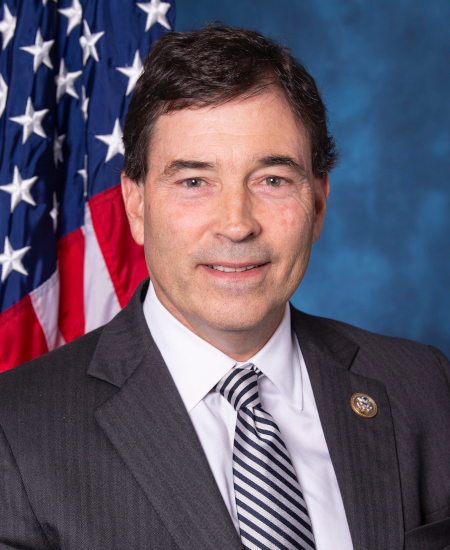
Rep. Troy Balderson
Sponsored bills
Maddy summaryThe Awning Safety Act of 2025 directs the Consumer Product Safety Commission (CPSC) to establish a new safety standard for fixed and freestanding retractable awnings within 18 months of enactment. The standard must specifically address risks of death or serious injury from hazards like awnings unexpectedly opening while removing bungee tie-downs. This requirement directly affects manufacturers and sellers of these awnings, who will need to comply with the new safety rules. The CPSC will determine which awning types are covered, and the resulting standard will be treated as a formal consumer product safety rule under existing law.
Maddy summaryHR 3824, the Reducing Regulatory Burdens Act of 2025, removes a requirement for permits under the Clean Water Act for discharges of authorized pesticides into navigable waters. It amends the Federal Insecticide, Fungicide, and Rodenticide Act (FIFRA) and the Clean Water Act to state that EPA or states cannot mandate a permit for pesticide discharges resulting from legally authorized applications. The bill specifically exempts discharges from violations of pesticide law, stormwater, industrial manufacturing effluent, treatment works, and vessel operations. This directly affects pesticide users (like farmers) and regulatory agencies by eliminating a permitting step for routine pesticide applications already approved under FIFRA.
Maddy summaryH.J.Res. 88 disapproves an Environmental Protection Agency (EPA) rule that would have allowed California to enforce its "Advanced Clean Cars II" vehicle emission standards. This rule, submitted by the EPA on January 6, 2025, sought to grant California a waiver to override federal preemption for its stricter vehicle pollution controls. The resolution, passed by Congress and signed into law on June 12, 2025, formally nullifies the EPA rule, preventing California from implementing its Advanced Clean Cars II program under this specific waiver. The bill directly affects California's ability to set its own vehicle emission standards for passenger cars and light trucks.
Maddy summaryHJRES 89 is a congressional disapproval resolution that blocks an Environmental Protection Agency (EPA) rule concerning California's vehicle and engine pollution standards. The resolution specifically targets the EPA's "Omnibus Low NOX Regulation" and waiver of preemption, which would have allowed California to enforce stricter emissions rules. By disapproving this rule under Chapter 8 of Title 5 U.S. Code, Congress has nullified the EPA's action, meaning the regulation will have no legal effect. This directly affects the EPA's authority to approve California's state-level pollution control standards for motor vehicles.
Maddy summaryHR 3884, the Telemental Health Care Access Act of 2025, expands Medicare coverage for mental and behavioral health services provided via telehealth. It removes geographic restrictions that previously limited telehealth mental health coverage to rural areas, allowing beneficiaries nationwide to access these services through telehealth. The bill amends the Social Security Act to explicitly include "mental and behavioral health services furnished through telehealth" under Medicare coverage rules. This change directly affects Medicare beneficiaries seeking remote mental health care, making it easier to receive these services regardless of location. The policy change applies to all Medicare Part B beneficiaries using telehealth for qualifying mental or behavioral health services.
Maddy summaryHR 1182, the Compressed Gas Cylinder Safety and Oversight Improvements Act of 2025, requires foreign manufacturers of gas cylinders used to transport hazardous materials in the U.S. to obtain annual safety approvals (with a possible 5-year extension under strict conditions) instead of indefinite ones. The bill mandates that these manufacturers answer specific safety-related questions about past penalties, sanctions, or compliance issues before approval and requires public comment periods for new applications. It also establishes a process for reevaluating approvals based on evidence of inaccurate information and strengthens oversight through annual inspections and cost recovery for foreign inspections. The law directly affects foreign cylinder manufacturers seeking to sell into the U.S. market, aiming to improve safety oversight through stricter, time-limited approvals and transparency.
Maddy summaryHRES 481 is a symbolic resolution condemning recent antisemitic attacks in the U.S., specifically referencing the June 1, 2025, Boulder, Colorado, assault on a Jewish community gathering and other incidents like the May 2025 Washington, D.C., embassy shooting. It formally recognizes a pattern of violence targeting Jewish individuals and institutions, including attacks during religious events. The resolution calls on law enforcement to thoroughly investigate and prosecute such incidents and urges elected officials to publicly oppose antisemitism and politically motivated violence. As a non-binding resolution, it does not create new laws or allocate funding but serves to affirm congressional stance against antisemitism.
Maddy summaryHR 3843, the Baseload Reliability Protection Act, prohibits the retirement or fuel-source conversion of certain large, reliable power plants (over 25 megawatts, not relying on intermittent renewables like solar/wind without storage) in areas designated as high or elevated risk for electricity shortages. It directly affects power plant operators in these high-risk regions, requiring them to maintain existing facilities unless they qualify for an exemption. Exemptions can be granted if operators demonstrate financial hardship, safety risks, or prove they’ll replace the plant with a comparable reliable unit, with potential federal grants or loans from the Department of Energy to cover operational costs. The bill explicitly blocks consideration of greenhouse gas emissions in exemption decisions and mandates standardized risk assessment criteria for identifying high-risk areas.
Maddy summaryHR 649, the Whole Milk for Healthy Kids Act of 2025, amends the National School Lunch Act to allow schools participating in the program to offer students both organic and non-organic whole milk, in addition to reduced-fat, low-fat, and fat-free options. Key provisions include clarifying that milk fat in whole milk should not count toward saturated fat limits for meal compliance, prohibiting schools from purchasing milk from Chinese state-owned enterprises, and ensuring schools cannot be barred from offering the full range of milk types listed. The bill directly affects public and private schools serving the National School Lunch Program by expanding their milk options for students. It focuses on concrete policy changes to dietary offerings and sourcing restrictions within the school nutrition program.